There is a moment every car owner in Bengaluru knows well. You pull out of the service centre after a fresh paint correction job. The car looks exactly like the way it did the day you bought it. Three weeks later, you are doing a Sunday wash, and you see it, a fresh stone chip on the bonnet, two or three small ones on the front bumper, and a light scuff near the lower sill that you cannot explain. The correction money is gone, and so is the confidence that came with it.
This is not a story about bad luck. It is just what driving in Bengaluru does to paint. The city has a particular set of conditions: ongoing road construction, dense traffic, tight urban parking, and consistent UV exposure; that work against a car’s paint in ways that feel gradual until they become obvious. By the time most owners notice, the damage is already layered in.
Paint Protection Film addresses this at the source. And among the brands available in the Indian market, Llumar PPF has built a reputation that holds up to scrutiny, not because of marketing, but because of what the product does and how it performs over time.
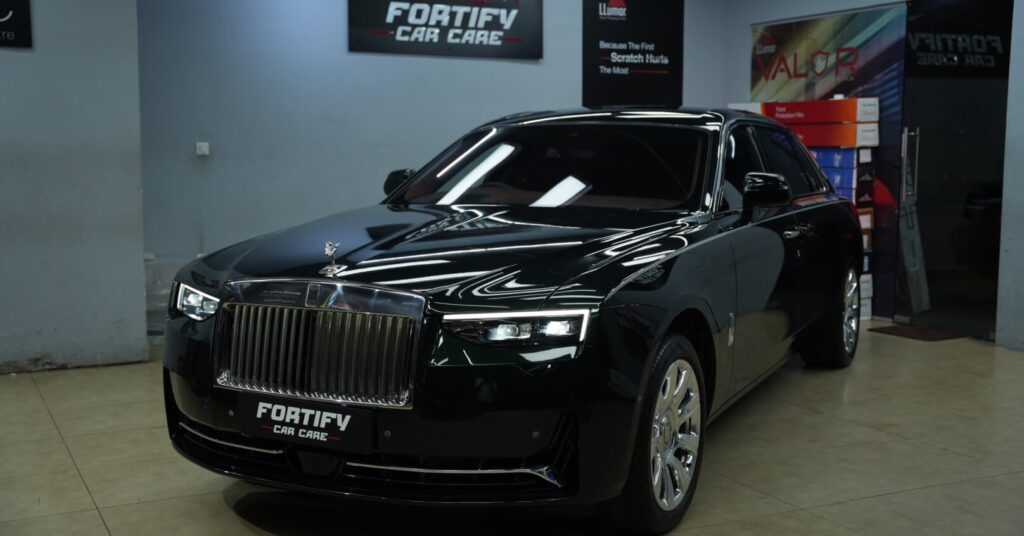
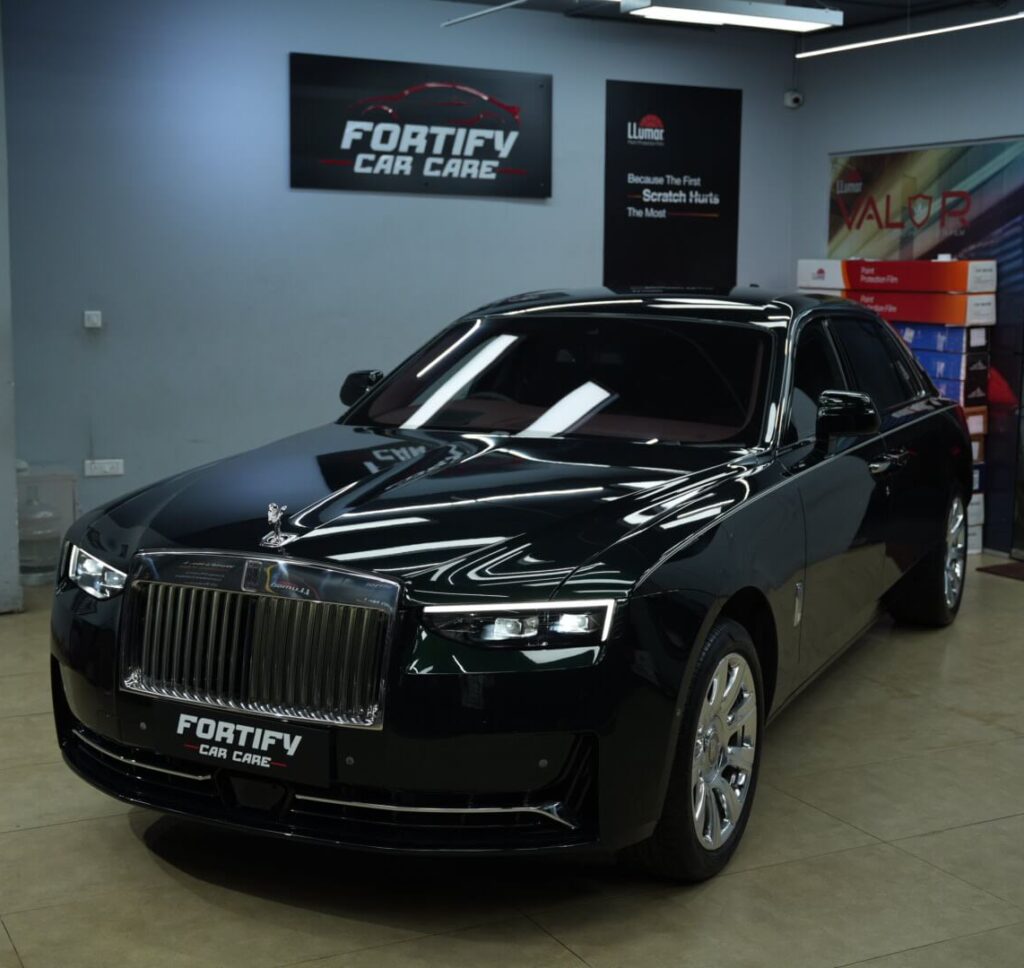
At Fortify Car Care, our car detailing studio in Banaswadi, we have installed Llumar PPF on everything from daily Hyundai Cretas to track-day Porsches. This is a straightforward account of what makes it worth the investment, what the installation involves, and what you should know before committing.
Protecting your car in Bengaluru is not a luxury decision. It is a practical one. The question is whether you spend once on the right solution or repeatedly on corrections that never quite get you back to where you started.
What Llumar PPF Is and Why the Brand Matters
Paint Protection Film is a thermoplastic polyurethane film applied directly over your car’s painted panels. Its job is simple: to take the damage instead of your paint. Stone chips, light scratches, bird dropping etching, UV degradation, the film absorbs or resists all of it, and the factory paint underneath stays untouched.
What most car owners do not realise when they start researching PPF is that there is a significant quality gap between products in the market. Budget-tier films peel, yellow, bubble at the edges, and lose clarity within a couple of years. Installing a low-quality film is not protection, it is a problem you have paid for and will have to remove later.
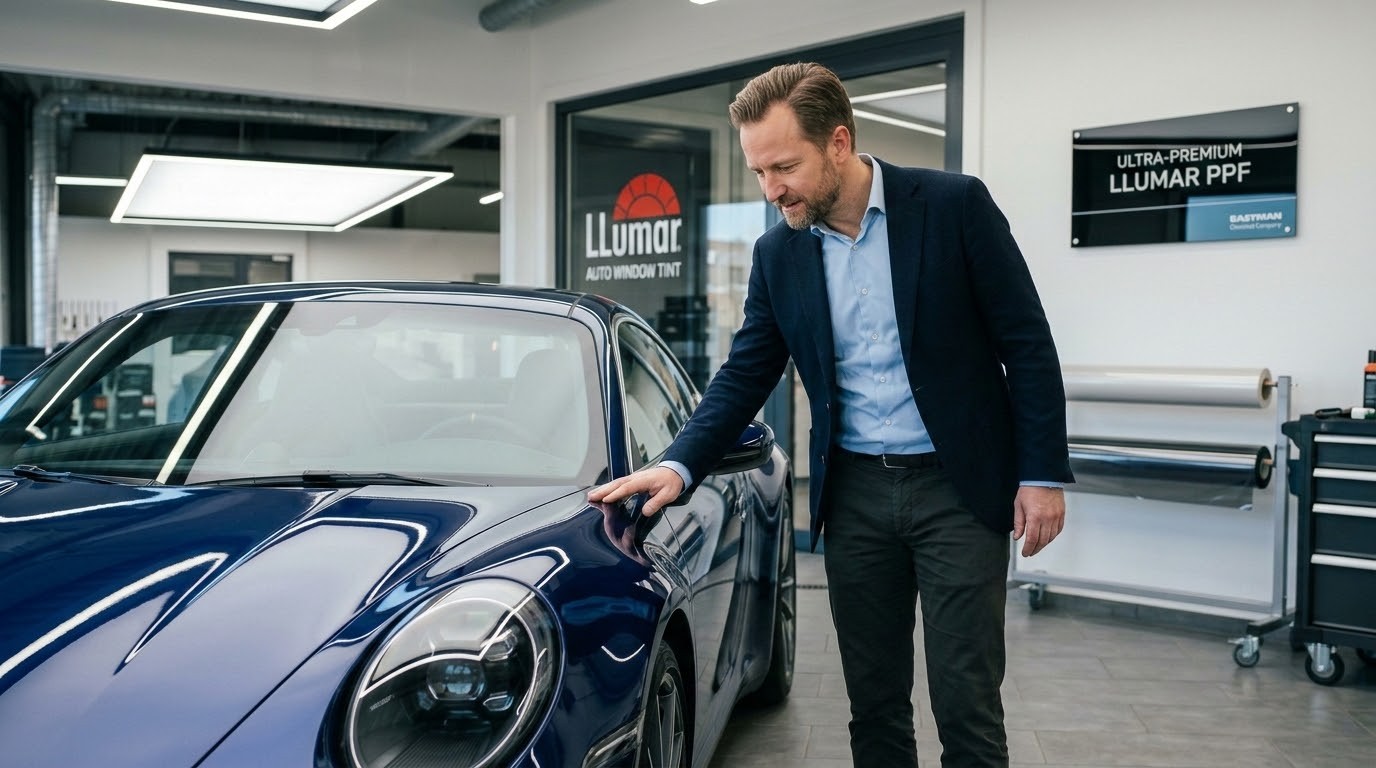
Llumar is a brand with a different history. It is manufactured by Eastman Chemical Company, one of the largest speciality materials companies in the world. Llumar’s automotive films are used globally by car manufacturers, fleet operators, and specialist detailing studios. The product line is engineered to specific performance standards, not assembled to meet a price point.
In practical terms, this means several things. Llumar PPF uses a multi-layer construction with a clear polyurethane topcoat, an elastomeric polymer base, and a pressure-sensitive adhesive that bonds correctly to automotive paint. The clarity does not degrade over time the way it does with lower-grade films. The edges do not lift in humid environments. And the film’s performance characteristics, self-healing, UV resistance, hydrophobic properties, are built into the product from the start, not sprayed on as an afterthought.
At Fortify Car Care, we work with Llumar alongside other premium brands like Garware and Saint-Gobain. We stock Llumar because it performs consistently across Bengaluru’s specific climate and road conditions, and because it backs that performance with a manufacturer warranty that is enforceable.
Why Bengaluru’s Roads Make PPF a Practical Decision, not a Premium One
Perpetual road construction and loose aggregate
Bengaluru has been under continuous infrastructure development for years. The Namma Metro expansion, road widening projects, junction upgrades, and utility work mean there is almost always a stretch of disrupted road surface somewhere on your regular route. Loose gravel, broken tarmac edges, and fresh aggregate get picked up by tyres and thrown at following vehicles. The front bumper, bonnet, and front quarter panels absorb the worst of this. A week of normal Bengaluru driving can put a dozen new chips on an unprotected bonnet.
Traffic density and contact damage.
The city’s traffic means your car spends significant time moving very slowly alongside two-wheelers, autos, and buses whose operators are not always conscious of your car’s panels. Tight neighbourhood streets in areas like Indiranagar, Koramangala, and Basavanagudi create situations where door edges, wing mirrors, and bumper corners take low-speed contact regularly. Basement parking structures in commercial and residential buildings add to this. The damage from each incident is minor. Accumulated over a year, it adds up in ways that become expensive to correct.
The deceptively aggressive climate
Bengaluru’s weather feels mild, and that mildness is misleading. The city receives strong UV exposure year-round because of its elevation and consistent sunshine. Tree cover, which is extensive in older parts of the city, deposits sap continuously onto bonnets and roofs. This sap bonds chemically to clear coat in a matter of hours. Bird droppings, which are mildly acidic, etch into paint surfaces within hours on a warm day. And monsoon rain in Bengaluru carries suspended industrial particulates from the city’s manufacturing zones, which settles on horizontal surfaces and causes slow surface degradation.
None of this is catastrophic on its own. All of it together, acting on unprotected paint over months and years, is why cars in Bengaluru look visibly older faster than they should. Llumar PPF installed on the high-impact surfaces stops most of this from reaching the paint at all.
What Llumar PPF Actually Does: The Benefits That Hold Up in Practice
1. Physical impact protection where it matters
Llumar PPF runs at 8 to 10 mils in thickness, roughly 200 to 250 microns. That is a meaningful physical barrier. The film absorbs the kinetic energy of stone chips and road debris before it reaches the paint surface. For performance cars with aggressive front ends, low splitters, extended bumpers, power domes on the bonnet, this protection on the leading panels makes a difference that is immediately visible the first time you compare a PPF-protected car to an unprotected one after a highway run.
2. Self-healing that works as advertised
Llumar PPF includes a self-healing elastomeric topcoat. This is not a marketing claim; it is a physical property of the polymer structure. When the film surface receives light scratches, the material flows back into its original state under heat. Sunlight does this gradually. Warm water accelerates it. For car owners who use automatic washes occasionally or who pick up swirl marks from hand washing, this matters practically. You spend less time managing the film’s appearance than you would managing unprotected paint.
3. UV protection that preserves your colour long-term
UV radiation is the main cause of automotive paint fading and oxidation. It acts on the pigments in your paint layer, causing chemical breakdown that shows first as subtle colour shift and eventually as the chalky, faded texture you see on older cars. Dark colours, blacks, deep blues, jewel-tone greys, show this earliest. Llumar PPF contains UV-absorbing additives that intercept UV radiation before it reaches the paint. For a car parked outdoors in Bengaluru, which most privately owned cars are, this is one of the most impactful long-term benefits of PPF installation.
4. Chemical resistance that can handle what Bengaluru’s environment throws
Tree sap, bird droppings, industrial fallout, and road film are all chemically active on automotive paint. Llumar’s film creates a surface that resists chemical bonding far better than clear coat alone. Contamination sits on the film surface rather than etching into the clear coat. Washing removes it cleanly before it has time to cause permanent damage. For owners who cannot wash their car immediately after every exposure, this resistance provides a meaningful buffer.
5. Resale value that reflects at the point of sale
Bengaluru’s used car market is informed and competitive. Platforms like Cars24, CarDekho, and OLX have made paint condition immediately visible in listing photographs, and buyers who use these platforms have learned to look. Factory paint in genuine excellent condition, not corrected, not resprayed, but well-preserved, commands a real premium. For a premium vehicle, the gap between paint that looks its age and paint that looks new can be Rs. 75,000 to Rs. 2,50,000 at the point of sale. When you eventually sell the car, you remove the film. The paint underneath has been sealed since installation day. Buyers notice, and they pay for it.
6. Full reversibility with no compromise to factory paint
This is the benefit that matters most for buyers who are still weighing options. Llumar PPF is a film applied over factory paint. Remove it correctly, and the paint underneath is untouched. This is not possible with a respray, and it is not reliably possible with a vinyl wrap. For owners who lease their vehicles, who want to maintain manufacturer paint warranty coverage, or who simply want to keep their options open, reversibility is a serious practical advantage.
Llumar PPF vs. Vinyl Wrap: The Distinction That Matters
These two products look similar when you are reading about them online. They are fundamentally different in what they actually do.
A vinyl wrap is a pigmented adhesive film. Its primary purpose is appearance change. It can give your car a different colour or finish, gloss, matte, satin, metallic, but it provides minimal physical protection. A stone chip passes through vinyl the same way it passes through bare paint. Vinyl also has a limited lifespan, typically three to five years, before edges begin lifting and the surface loses its original appearance.
Llumar PPF is a clear polyurethane film significantly thicker than vinyl. It is engineered for physical protection, not appearance change. The self-healing properties, UV resistance, and chemical resistance are built into the product. Quality PPF from a brand like Llumar lasts eight to twelve years under normal conditions, longer with proper maintenance.
The right choice depends on what you actually want. If appearance change is the goal and physical protection is a secondary consideration, vinyl is the honest recommendation. If protecting your paint investment is the priority, Llumar PPF is in a different category. At Fortify Car Care, we do not push PPF on customers who are better served by a different solution. But for owners who care about what happens to the paint underneath, the comparison between these two products is not close.
Which Cars Get the Most Value from Llumar PPF
Every car can benefit from PPF. The value proposition is strongest in specific situations.
- Dark-coloured cars with long ownership plans. Deep blacks, midnight blues, gunmetal greys, and jewel-tone colours show stone chips and surface damage most clearly. A single chip on a black bonnet stands out immediately. If you own a dark car and plan to keep it for four years or more in Bengaluru, protecting the front-impact panels from day one is a straightforward financial calculation.
- Luxury and performance cars with high original paint value. When the paint on your car costs Rs. 30,000 or more per panel to respray correctly, protecting it with a film that costs a fraction of that replacement cost makes obvious sense. We have applied Llumar PPF to Range Rovers, BMWs, Porsches, Audis, and Mercedes. The common thread is that the cost of damage on these cars exceeds the cost of prevention by a wide margin.
- Factory matte and satin finish cars. Factory matte finishes from BMW’s Frozen series, Porsche’s Chalk and Frozen Blue Metallic, Audi’s Nardo Grey, and Mercedes’ Magno paint are exceptional to look at and genuinely difficult to maintain. These surfaces cannot be machine-polished, cannot be conventionally corrected, and a single visible scratch on a factory matte panel can cost more to address than most owners expect. PPF on these finishes from delivery day is, in our view, not optional.
- Performance cars used for track days. Gravel, rubber debris, and stone chips at track speeds create impact damage that accumulates fast. Cars that regularly see track use benefit most from full-nose coverage, bumper, bonnet, front quarters, and headlights.
- Cars parked outdoors in areas with heavy tree-cover or foliage. If your parking has significant tree canopy, common in older Bengaluru neighbourhoods like Sadashivanagar, Jayanagar, and Malleswaram, the sap exposure alone justifies front-end protection.
At Fortify Car Care, our car detailing studio serves the full range. The standard of work is the same whether the car is a Hyundai Creta or a Porsche Macan.
How Llumar PPF Installation Works at Fortify Car Care
A correct Llumar PPF installation is skilled work. The film must be cut accurately to each panel’s geometry, applied without air bubbles or stretch marks, and sealed at edges so it does not lift in Bengaluru’s combination of heat, humidity, and dust. An installation done without proper preparation or technique looks worse than no installation at all, and it causes problems when it eventually needs to be removed.
This is the process at our Banaswadi studio.
Pre-installation paint inspection and correction
Before any film is applied, we inspect the paint under LED lighting for swirl marks, scratches, water spots, and embedded contamination. If the paint needs correction, we do that first. Applying PPF over compromised paint traps the damage permanently underneath the film, visible, unchangeable, and no longer accessible for correction. We use clay bar decontamination and machine polishing where needed to bring each panel to the best possible condition before the film goes on.
Panel preparation
Every panel is cleaned with isopropyl alcohol solution to remove all wax, silicone, ceramic coating residue, and polish. The surface must be completely clean for the Llumar adhesive to bond correctly and evenly. Residue left on the panel causes adhesion failures that show up weeks later as clouding, lifting, or bubbles.
Computer-aided cutting
We use cutting patterns specific to your car’s make, model, and year. Computer-generated patterns produce clean, accurate cuts that match the panel geometry without hand-trimming at the paint edge. Hand-trimming on a luxury car is a risk that no competent studio takes. The difference in precision between computer-cut and hand-cut film is visible on complex panel shapes, and it affects how the film ages at the edges over time.
Film application
Our technicians apply Llumar PPF using professional slip solution and squeegees, working air from the centre of each panel toward the edges systematically. Complex surfaces, bonnets with character lines or power domes, bumpers with deep curves and integrated sensors, pillars with tight radii, require technique and patience. We do not rush this stage. Film applied too quickly picks up contamination, traps air and does not conform correctly to compound curves.
Edge sealing and curing
Edges are the most common failure point on any PPF installation. We tuck or seal every exposed edge correctly so the film cannot lift from humidity, heat cycles, or pressure washing. After application, the car rests in a controlled environment for the adhesive to cure fully before it is washed or exposed to the elements.
Final inspection and handover
We inspect every completed installation under LED lighting for bubbles, contamination under the film, lifting edges, or tension marks before the car leaves the studio. You receive written care instructions for the first 48 to 72 hours and ongoing maintenance guidance. If anything in the inspection does not meet standard, it is addressed before handover.
What Llumar PPF Costs in Bengaluru and How to Think About That Number
Pricing varies based on the size of the vehicle, the coverage area, and the specific Llumar product selected. Partial front-end coverage, bumper, bonnet, and headlights, on a hatchback or compact sedan starts from around Rs. 28,000. Full-body Llumar PPF on a mid-size luxury SUV typically falls in the Rs. 1,30,000 to Rs. 2,20,000 range.
That upfront number deserves some context. A single bumper respray on a luxury car in Bengaluru costs Rs. 15,000 to Rs. 35,000, and the colour match is rarely perfect on metallic or special-effect colours. A factory matte panel respray costs considerably more and the result is almost never invisible. A full paint correction job, done properly, costs Rs. 20,000 to Rs. 60,000 depending on the vehicle and the state of the paint. These are recurring costs on an unprotected car. Llumar PPF, installed once and maintained properly, eliminates most of them.
For a specific quote on your car, contact us directly. We assess the vehicle, understand how you use it, and give you a clear number before any work begins. We do not add costs after the fact.
Llumar PPF and Ceramic Coating: The Combination That Makes Sense
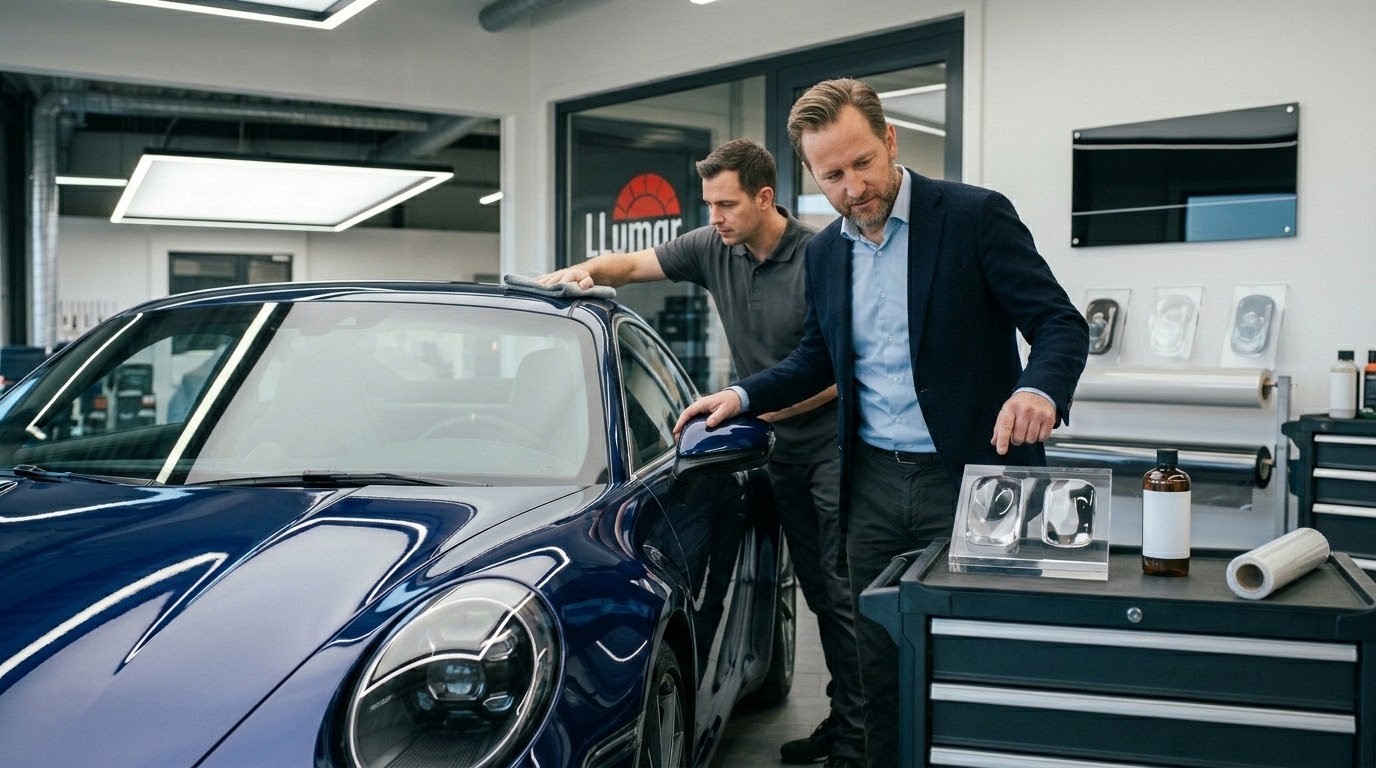
Many of the owners who come to Fortify Car Care choose both, and the logic is sound.
PPF goes on first, over corrected bare paint, providing the physical protection layer. A compatible ceramic coating is then applied on top of the PPF, adding hydrophobic properties to the film surface. The resulting stack gives you two levels of protection: PPF handles physical impacts, chips, abrasion, and heavy contamination. The ceramic layer handles the film’s ongoing surface maintenance, water beads off cleanly, dust and bird droppings do not bond easily, and washing the car takes a fraction of the time and effort.
The order matters and is not negotiable. Ceramic coating goes over PPF, not under it. Applying PPF over ceramic-coated paint causes adhesion failures. We do both at Fortify Car Care and can advise on the right combination for how you use and park the car.
If partial front-end PPF with ceramic coating on the remaining panels is the right answer for your situation, we will say that. We do not recommend full-body coverage to every customer regardless of their actual situation and usage pattern.
Five Questions to Ask Any Car Detailing Studio Before Llumar PPF Installation
- Do they stock genuine Llumar PPF? Brand names are often misused in this industry. Ask to see the product packaging and confirm the Llumar branding and country of origin. Authorized dealers receive products with clear brand identification.
- Do they perform paint corrections before installation? Any studio that goes straight from wash to film application is skipping the step that determines the finished result. Ask explicitly whether paint prep and decontamination are part of the process.
- How do they cut the film? Computer-aided cutting is the standard at any competent studio. Hand-cutting on complex panel geometry is a risk no serious installer takes with a luxury car.
- What warranties do they offer? There should be two separate warranties: the Llumar manufacturer warranty on the product itself, and the studio’s workmanship warranty on the installation quality. Ask for both in writing.
- Can they show you examples of previous Llumar PPF work? Clear PPF on a clean car reveals installation quality. Bubbles, tension marks, lifting edges, and contamination under the film all show on a close inspection. A studio confident in their work will have examples to share.
Caring for Llumar PPF After Installation
Llumar PPF is not high maintenance, but it rewards correct care.
For the first 48 to 72 hours after installation, avoid washing the car and keep it out of heavy rain. The adhesive needs this time to cure fully. After curing, wash with a pH-neutral automotive shampoo and a clean microfibre wash mitt. Avoid automatic car washes with spinning brush mechanisms, these stress the film’s edges over time and can introduce surface scratches. If you pressure-wash, keep the nozzle at least 30 centimetres from the film’s edges and avoid directing the stream at a sharp angle to the edge.
Do not apply conventional wax or polish to Llumar PPF. Wax contains fillers that accumulate in the film’s surface texture and alter its appearance over time. If you want a sealant layer on top, which is a sensible choice, use one specifically formulated for PPF or consult us about a compatible ceramic coating.
Light surface marks and swirl marks on the film self-heal with a few hours of sun exposure. Warm water from a rinse accelerates this. For marks that do not self-heal, a heat gun applied gently to the surface typically resolves them within a few minutes.
Inspect the film’s edges every few months, particularly around the bonnet front edge and bumper lower lip. Lifting caught early is a simple repair. Left unattended, it allows dust and water to work under the film and creates a much larger remediation job.
Why Fortify Car Care for Llumar PPF in Bengaluru
We are a specialist car detailing studio in Banaswadi, North Bengaluru. Our work covers PPF installation across Llumar, Saint-Gobain, and Garware, ceramic and graphene coatings, sun control films, and car wraps. We do not do mechanical work. We do not do interior modifications. Paint protection is the entire focus of the studio, and that focus is what allows us to do it well consistently.
Our technicians have applied Llumar PPF to the full range of vehicles that come through Bengaluru, from Maruti Swifts to Porsche 911s. The process is the same for every car because the quality standard does not change based on the vehicle’s value.
We are at Ward No. 88/27, 4DC-544, 6th A Main Road, HRBR Layout 2nd Block, Banaswadi, Bengaluru 560043.
To discuss your car and get a specific quote, call or WhatsApp us at +91 9945562288. We will look at the car, explain what we recommend based on how you use it, and give you a clear number before any work begins.
A properly installed Llumar PPF is not something you notice every time you look at the car. It is something you appreciate two years in, when the paint underneath still looks exactly the way it did on the day the film went on.
Questions We Get Asked About Llumar PPF
How long does Llumar PPF last in Bengaluru conditions?
Quality Llumar PPF, correctly installed and properly maintained, lasts eight to twelve years under normal Bengaluru driving and parking conditions. Longevity is affected by three factors: the product tier, the installation quality, and ongoing maintenance. Annual inspections of the film’s edges extend life meaningfully.
Can Llumar PPF be removed without damaging the paint underneath?
Yes. This is one of the most significant practical advantages of PPF over any permanent treatment. A professional installer removes the film using heat and a specialised release solution. When done correctly, the factory paint underneath is unaffected. We have removed Llumar PPF from vehicles after eight or more years without leaving any trace on the paint surface.
Does Llumar PPF yellow or cloud over time?
Budget-tier PPF from unverified brands does yellow, often within two to three years. Llumar’s film uses UV stabilisers in the clear coat that prevent yellowing for the warranty period and typically well beyond it. If you are seeing yellowed PPF on cars in Bengaluru, it is not Llumar product installed correctly.
Is Llumar PPF worth it for a car that is not a luxury vehicle?
That depends on how long you plan to keep the car, what colour it is, and how it is parked. A dark-coloured car driven daily on Bengaluru’s roads and parked outdoors for five or more years has a strong financial case for partial front-end protection, regardless of its segment. You do not need to own a luxury car for the maths to work.
Can I apply Llumar PPF over a ceramic coating that is already on the car?
No. PPF adhesive needs to bond to bare paint. Applying it over an existing ceramic coating causes adhesion failures that show up quickly. The correct sequence is paint correction, then PPF, then ceramic coating on top of the film if desired. If your car already has ceramic coating and you want PPF, the coating on the panels you want covered will need to be removed first.
What does partial coverage mean and is it enough?
Partial coverage typically refers to the high-impact zones at the front of the car: the bumper, bonnet, headlights, and front quarter panels. These are the surfaces that absorb the majority of stone chip and road debris damage from driving. For owners who want protection at a lower overall cost than full-body coverage, partial coverage on these zones eliminates the most common and visible damage. For a car that sees significant highway use or track days, full coverage makes more sense. We assess your specific situation and recommend what is appropriate.
Fortify Car Care, Specialist car detailing studio, Banaswadi, North Bengaluru. Llumar PPF, Garware PPF, Saint-Gobain PPF, ceramic coating, graphene coating, car wraps, sun control films.
Contact: +91 9945562288 | fortifycarcare.in