Satin PPF vs Matte PPF and How to Pick the Right Finish for Your Luxury Car
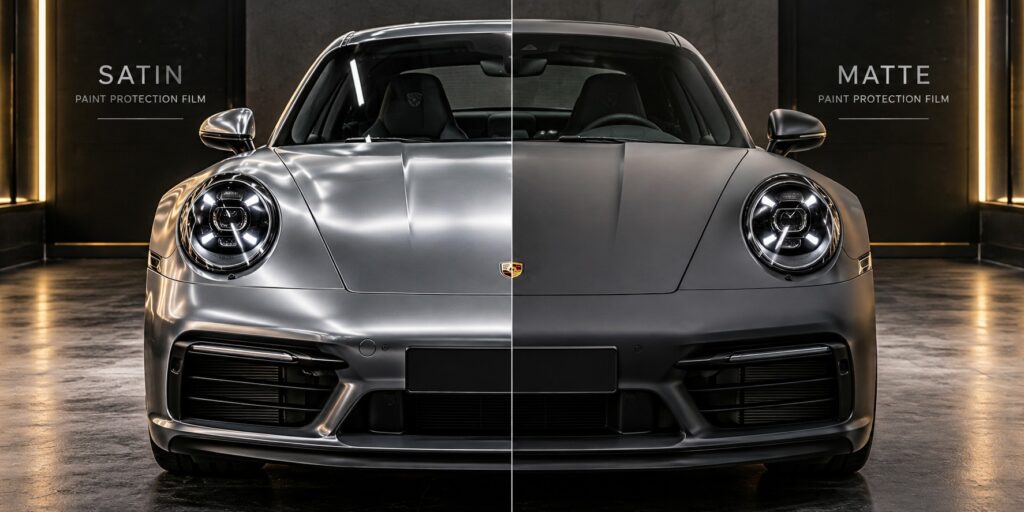
Run your hand over a freshly finished matte hood, and you can leave a faint, greasy print behind. Nobody mentions that part when you pick the finish. That print shows that the satin PPF vs. matte PPF choice is about living with the finish.
Both films protect your paint equally well. The real decision comes down to the look, the upkeep, and the car itself.
This guide covers how the two finishes differ and which one suits which luxury car. You will also see what daily washing involves and how PPF compares with a vinyl wrap. By the end, you will know what to ask your installer.
What actually makes satin and matte PPF look different
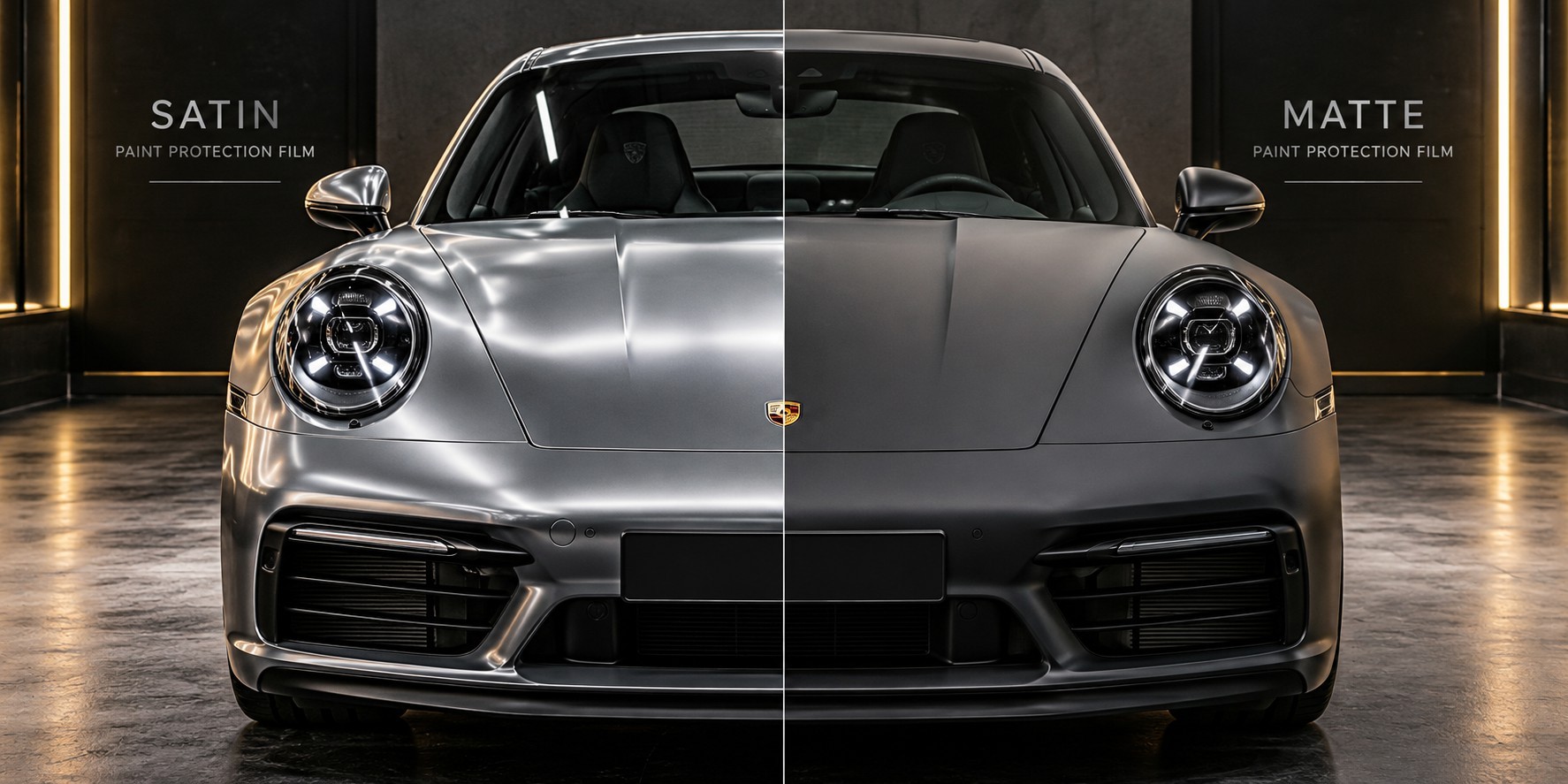
Gloss, satin, and matte films are built on the same clear TPU body. On satin and matte films, the top coat is micro-textured so it scatters light instead of bouncing it straight back. Think of clear glass next to frosted glass.
Matte scatters nearly all the light that hits it, so the surface reads as flat, with no visible shine. Satin scatters a little less of it. That leaves a soft glow that traces the curves of a fender or a door line.
Light also changes the story through the day. In soft morning light, satin can look almost matte. Under hard midday sun, its sheen wakes up and the body lines start to show.
The texture also decides how the surface handles fingerprints, skin oils, and light marks. A flatter finish gives those traces nowhere to hide, while a softer sheen blends them in.
None of this changes how well the film protects the paint underneath. That job belongs to the TPU body, and the finish only changes how the surface looks and feels.
Satin PPF vs matte PPF, side by side
This table compares the finishes on the points owners notice most.
| Satin PPF | Matte PPF |
Sheen | Low, soft glow | Flat, no shine |
Look in sunlight | Gentle shine that traces body lines | Even, stealthy, shadow-like |
Metallic and pearl paint | Keeps flake and depth visible | Mutes flake and depth |
Fingerprints and smudges | Hides them well | Shows oily marks |
Washing care | Easy, but no wax | Stricter, matte-safe products |
Install sensitivity | Silvering shows | Surface marks show |
Best suited to | Sports cars, metallic and pearl paint | Large flat-panel SUVs, stealth builds |
Satin forgives and matte demands. Owners who enjoy hand washing tend to love matte. Cars parked all week outdoors look cleaner for longer in satin.
What is the difference between matte and satin matte?
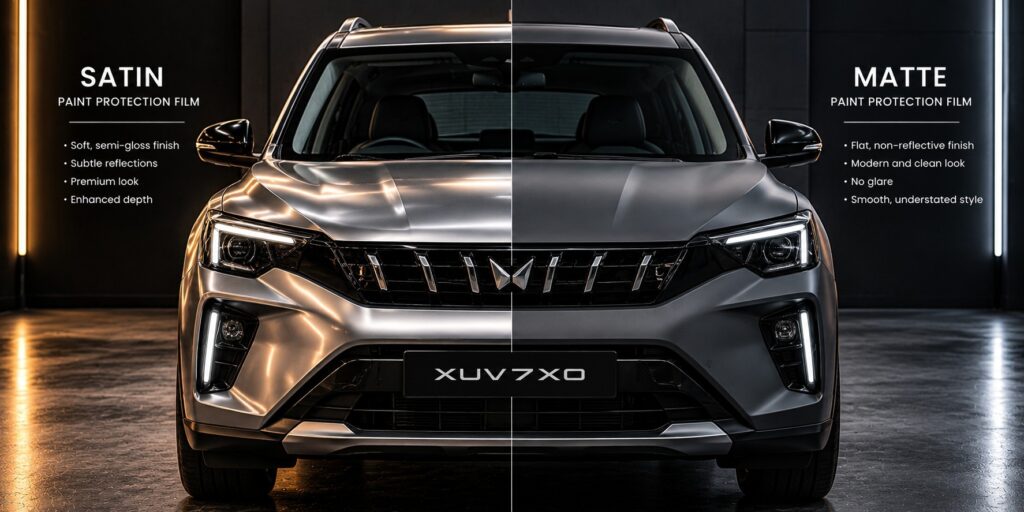
The difference between matte and satin matte is usually a small step in sheen, not a different material. Brand labels make it harder to see, because the trade uses these terms loosely. Some brands sell a satin matte film that sits just above true matte. Others use matte and satin as if they meant the same thing.
A simple rule covers most cases. More sheen gives you more color depth and better mark hiding. Less sheen gives you a stealthier look and more upkeep.
Do not trust the label alone. Ask your installer for a sample panel and the brand’s spec sheet. Then check the sample in direct sun and again in shade. Two minutes outdoors will tell you more than any product name. Sample panels also show how your own paint color reacts, which a photo never can.
Which finish looks better on a luxury car
Satin tends to win on metallic and pearl paint. The flake stays visible, and curved panels catch light along their edges. That is why it suits sports cars and supercars with sculpted lines. Deep greens, blues, and greys look especially rich in satin because the soft sheen keeps their depth.
Matte works best on big, flat-sided SUVs like the G-Class, Defender, or Range Rover. Large flat panels carry a stealth look well. The trade is that the flat finish mutes metallic depth, so a color that sparkled in gloss can look quieter. Owners of these cars often pick matte for the road presence alone, and that is a fair reason.
Factory matte paint needs its own thought. Several luxury makers offer matte paint straight from the factory, such as BMW’s Frozen finishes and Mercedes designo Magno. A gloss film over it
would add shine the owner never wanted. The film has to be a matte or satin type made to keep the original look. Your installer should confirm which one matches your paint. Matte paint also cannot be buffed out the way gloss paint can, so a scratch stays a scratch. Protection counts for more here.
Paint color changes the picture as well. Dark shades show oils and fingerprints most, which makes black matte the hardest case to keep clean.
Judge any finish in daylight before you commit. Workshop lights flatter every film, and the real look only shows up outside.
Which one is easier to live with day to day
Picture an ordinary week with either finish. Hand washing with a pH-neutral soap and a clean microfiber mitt is the baseline. Wax, polish, and quick detailers with gloss agents are out, because they leave shiny streaks on both.
Matte asks more of its owner. Fingerprints and oily marks show up quickly. Bird droppings, bug residue, and tar should come off promptly, before they settle into the texture.
Satin is gentler on your time. Its soft sheen hides dust, water spots, and fingerprints better than matte does. That keeps the car looking clean for longer between washes. Even so, satin never gets wax. If you park outside or drive dusty roads, that difference adds up quickly.
Scrubbing one stubborn spot until the texture polishes smooth is a frequent owner mistake. That patch turns shiny, and more rubbing only makes it worse.
Skip automatic brush washes on either finish, and never let water dry on the surface. Brushes can mark the film, and dried droplets leave spots that show most on matte.
Here is my plain verdict on daily life. Satin suits a car you drive often, and matte suits an owner who enjoys the routine.
Does the finish change how well the film protects your paint
The finish does not change how well the film protects your paint. Chip, stain, and UV resistance come from the TPU body, not from the texture of the top coat.
Matte can still feel less tough, and that is a matter of perception. Scratches, smudges, and stains stand out more on a flat surface, so owners notice every mark. On satin, the same marks tend to blend into the sheen.
Self-healing is where you should ask questions. Performance varies by product and top coat, so request the brand’s spec sheet. If the shop has a demo panel, ask to watch a light mark heal before you decide. Ask what the warranty covers on satin and matte films in particular, not just on clear film.
Protection depends on the brand and the installer far more than on the finish, so choose those first.
Is a satin or matte car wrap the same as PPF?
Many people search for a satin vs matte car wrap when they really need to compare vinyl with PPF. These two products do different jobs. A wrap is vinyl, which changes color or finish but gives little protection against stone chips. PPF is a thicker urethane film made to absorb impacts and protect the paint.
From a few feet away, the two can look almost identical. The difference shows up once real driving starts, as chips and scuffs reach the surface.
Colored satin and matte PPF sit in the middle. It gives you a new color and real protection in one film, which suits owners who want both.
Well-installed PPF can also come off later and reveal untouched paint underneath. That matters when you plan to sell the car.
For a budget color change you may reverse, a wrap makes sense. PPF is the better fit when you want to protect paint you care about.
What to expect from installation and cost
Textured films show installer mistakes more than gloss does. Silvering stands out on satin, and surface marks stand out on matte.
Over-stretching a textured film on tight curves can change how it looks. When you collect the car, inspect bumpers, mirror caps, and door edges in daylight.
Film price rarely moves much with the finish. The extra cost usually comes from labor, because textured films leave less room for error.
A written care sheet for your exact film is worth asking for. Products differ in which cleaners they tolerate.
Put three questions to every installer you speak with:
- Which brand and finish will you use on my car?
- How do you handle tight curves and edges?
- What does the warranty say about satin and matte films?
How to pick the right finish for your car
Satin fits metallic or pearl paint, a car that sees regular use, and an owner who wants low fuss. Matte fits big flat panels, a true stealth look, and an owner who accepts the extra care.
If your car wears factory matte paint, choose a film made to keep that look. Before you pay, ask for a sample panel and check it in daylight. That one step settles most of the doubt.
Final thoughts
Satin gives you a soft glow, more forgiving upkeep, and a rich look on metallic paint. Matte gives you a flat stealth finish in return for stricter care. Factory matte paint needs a film made to keep its look.
Your next step is a simple one. Book a visit with an installer and ask for a sample panel of each finish. Then look at both outside in daylight.