Is Saint-Gobain PPF good? It’s one of the first questions car owners ask once they realize this French materials science giant makes paint protection film — mostly because Saint-Gobain isn’t a name people immediately associate with car care. It’s a name people associate with glass, industrial materials, and construction. That’s actually the point. Saint-Gobain has been engineering advanced materials since 1665, and its PPF line benefits from that same depth of material science, positioned today as one of the strongest value options in the Bangalore market.
This blog by Fortify Car Care, the expert PPF Coating service provider in bangalore takes an honest look at what Saint-Gobain PPF actually offers, how it stacks up against LLumar and 3M, what it costs, and whether it’s genuinely worth the investment for your car.
Who Is Saint-Gobain and Why Does It Matter for PPF?
Saint-Gobain is a French multinational corporation with over 350 years of history in materials manufacturing, spanning glass, industrial polymers, and specialty films. That’s a longer track record than most companies in any industry, let alone automotive care.
This matters because PPF performance ultimately comes down to polymer science — how the film handles heat, UV exposure, flexibility, and impact absorption over years of real-world use. A company with Saint-Gobain’s depth in materials engineering brings genuine R&D credibility to its film formulation, rather than simply licensing or rebranding someone else’s product. For car owners who care about the science behind what’s going on their vehicle, that pedigree carries real weight.
Is Saint-Gobain PPF Good? A Straight Answer
Yes, and the reasons are fairly specific. Saint-Gobain PPF performs well across the metrics that actually matter for day-to-day protection:
- Optical clarity: The film maintains a clean, nearly invisible finish over the factory paint, without the slight haze that lower-quality films can develop over time.
- Flexibility: It handles curved body panels and complex contours well during installation, reducing the risk of stretching marks or visible seams.
- UV stability: The polymer formulation resists yellowing under sustained sun exposure, which is particularly relevant given Bangalore’s year-round UV intensity.
- Impact absorption: The film has a slightly firmer feel compared to some competitors, which some installers find handles sharp impacts, like small stone chips, marginally better.
Where it earns its “redefining value” reputation is in how these performance metrics compare against the price point — which we’ll get into shortly.
Does Saint-Gobain PPF Have Self-Healing?
Yes. Saint-Gobain’s PPF includes a heat-reactive self-healing top coat, similar in principle to other premium film brands. When the film picks up light scratches or swirl marks from routine washing or minor contact, exposure to heat — direct sunlight or warm water — causes the top coat to soften and reflow, smoothing out those marks.
In real-world testing across Bangalore’s climate, the self-healing response is solid, though some installers note it can take slightly longer to fully activate compared to LLumar under identical heat conditions. This isn’t a dealbreaker for most owners — it just means minor marks might take a bit longer to disappear on a cooler, cloudy day versus full sun. Given Bangalore’s generally warm climate for most of the year, this difference rarely becomes a practical issue.
Saint-Gobain PPF vs LLumar: Which Is Better?
This comparison comes up constantly, and the honest answer is: it depends on what you’re optimizing for.
Self-Healing Speed
LLumar has a slight edge here, with a top coat that tends to respond faster to heat exposure. If you want the fastest possible disappearance of minor marks, LLumar performs marginally better.
Material Science and Long-Term Clarity
Saint-Gobain’s industrial materials background shows up in consistent, long-term optical clarity. Owners planning to keep a car for 5+ years often find Saint-Gobain’s clarity retention very competitive with LLumar over that timeframe.
Feel and Impact Handling
Saint-Gobain’s slightly firmer film composition is preferred by some installers for handling sharper impacts, like small gravel chips on highway drives.
Pricing
This is where Saint-Gobain often pulls ahead. It typically sits at a more accessible price point than LLumar while delivering comparable core protection, making it an appealing choice for owners who want premium-tier performance without paying the absolute top price in the market.
Practical takeaway: If ultra-fast self-healing is your top priority, LLumar has a small advantage. If you want excellent all-around performance — clarity, durability, and impact resistance — at a more accessible price, Saint-Gobain is very hard to beat.
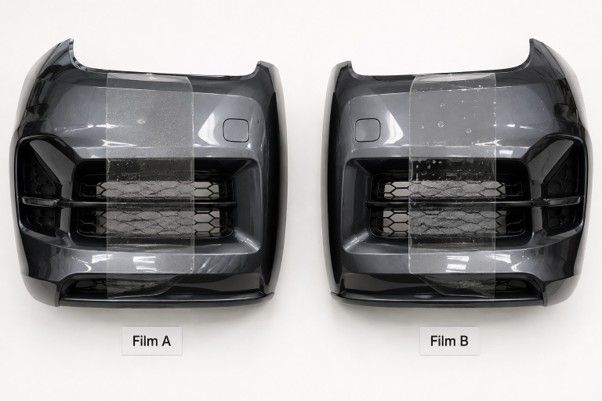
Saint-Gobain PPF vs 3M PPF
3M is often considered the benchmark for premium PPF globally, so it’s a natural comparison point.
Clarity: Both brands deliver excellent, near-invisible finishes. Most car owners cannot visually distinguish between them once professionally installed.
Self-healing: 3M’s self-healing technology is mature and well-proven, and Saint-Gobain performs comparably, particularly under strong sun exposure.
Pricing: Saint-Gobain generally costs less than 3M in the Indian market, without a proportional drop in real-world performance — which is a big part of why it’s gained such a strong following among value-conscious buyers who still want premium quality.
Availability: Both are well-established internationally, though pricing and stock consistency can vary by region and installer partnerships.
For most Bangalore car owners, the Saint-Gobain vs 3M decision often comes down to budget more than a meaningful performance gap — both are excellent films.
How Much Does Saint-Gobain PPF Cost?
Pricing depends on car size, coverage area, and film grade, but Saint-Gobain generally sits in the mid-to-premium range — more affordable than the top-tier international options like LLumar or 3M, while still delivering genuinely premium-level protection.
Coverage Type | What’s Included | Typical Buyer |
Partial front coverage | Bonnet, bumper, fenders, mirrors | Owners wanting cost-effective protection for high-impact zones |
Full front coverage | All front panels plus headlights | Owners doing frequent highway drives |
Full body coverage | Entire car exterior | Premium car owners, long-term ownership plans |
This pricing structure is a major reason Saint-Gobain has built such a strong reputation for value — it delivers a genuinely premium film experience without asking buyers to pay top-tier pricing across the board.
What Is Saint-Gobain PPF Warranty Coverage?
Saint-Gobain typically backs its film with a multi-year warranty covering issues like yellowing, cracking, and peeling under normal usage conditions. Exact warranty terms can vary by film grade and installer, so it’s worth confirming the specifics — including whether the warranty covers labor for any warranty-related repairs, not just the film material itself.
A well-installed Saint-Gobain film, properly maintained, commonly performs well beyond its base warranty period, with many Bangalore installations still looking clean and clear several years past initial application.
Is Saint-Gobain PPF Worth the Money?
For most car owners, yes — and here’s the reasoning. Saint-Gobain sits in a genuinely useful position in the market: it delivers performance close to the very top-tier brands (LLumar, 3M) across clarity, self-healing, and durability, but at a price point that makes full-body coverage more financially realistic for a wider range of buyers.
If you’re cross-shopping purely on brand prestige, LLumar or 3M might edge ahead slightly in specific categories. But if you’re making a practical decision based on protection-per-rupee, Saint-Gobain frequently comes out as the smarter buy — particularly for owners who want strong protection across the entire car rather than settling for partial coverage due to budget constraints.
The exception is if a specific feature matters intensely to you — for instance, if the fastest possible self-healing response is non-negotiable, LLumar’s slight edge there might justify the price gap. For the vast majority of daily drivers and even premium car owners, though, Saint-Gobain represents excellent value without meaningful compromise.
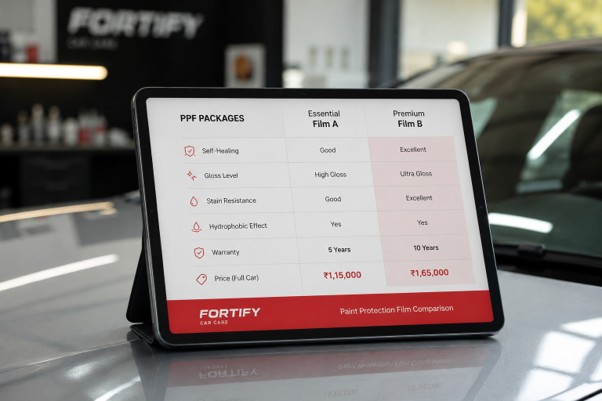
Complementary Protection for Bangalore Conditions
PPF handles physical protection, but a complete car care strategy usually layers a few services together for the best results:
- Ceramic Coating on areas outside PPF coverage, adding gloss enhancement and easier maintenance
- Graphene Coating as a topcoat over PPF for stronger hydrophobic properties and added UV resistance
- Sun Control Film to manage cabin heat, especially valuable given Bangalore’s intensifying summer temperatures
- Car Wrap for owners considering a full color change alongside or instead of protective film
If you’re still weighing Saint-Gobain against other film brands more broadly, our detailed comparison of Paint Protection Film options covers how it stacks up against LLumar, Garware, and matte finishes side by side.
What We've Observed Installing Saint-Gobain PPF in Bangalore
Having installed Saint-Gobain film across a range of vehicles, one thing consistently stands out: customer satisfaction tends to be very high, largely because expectations and actual performance line up closely. Buyers going in with a “premium film at a smarter price” mindset are rarely disappointed, since that’s exactly what the film delivers.
We’ve also noticed the film’s slightly firmer composition handles Bangalore’s mix of city potholes and highway gravel well, particularly on front bumpers and lower body panels that take the brunt of road debris. As with any PPF brand, though, installation quality remains the deciding factor between a flawless result and a visibly patched one precise cutting around curves, mirrors, and door handles is what separates a professional job from an average one.
As an experienced Paint Protection Film service provider in Bangalore, Fortify works with Saint-Gobain film regularly, and we help customers weigh it honestly against other brands based on their specific car, budget, and priorities not just whichever film has the best margin.
FAQs
Is Saint-Gobain PPF good? Yes. It offers strong optical clarity, solid self-healing performance, good flexibility for installation, and reliable UV resistance — performing close to top-tier brands at a more accessible price.
Saint-Gobain PPF vs LLumar, which is better? LLumar has a slight edge in self-healing speed, while Saint-Gobain offers comparable long-term clarity and durability at a generally lower price point. The better choice depends on your budget and priorities.
How much does Saint-Gobain PPF cost? Pricing depends on coverage area and film grade, but it generally sits in the mid-to-premium range — more affordable than LLumar or 3M while still offering strong protection.
What is the Saint-Gobain PPF warranty? Saint-Gobain typically offers a multi-year warranty covering yellowing, cracking, and peeling under normal use, though exact terms vary by film grade and installer.
Saint-Gobain PPF vs 3M PPF, how do they compare? Both offer excellent clarity and self-healing performance. Saint-Gobain is generally more affordable than 3M without a significant drop in real-world protection quality.
Does Saint-Gobain PPF have self-healing properties? Yes, it includes a heat-reactive self-healing top coat that smooths out light scratches and swirl marks when exposed to sunlight or warm water.
Is Saint-Gobain PPF worth the money? For most car owners, yes. It delivers protection close to top-tier brands at a more accessible price, making full-body coverage more financially practical.
Final Thoughts
Saint-Gobain has quietly built one of the strongest value propositions in the Bangalore PPF market backed by centuries of materials science rather than flashy marketing. For car owners who want genuinely premium protection without stretching their budget to the absolute top-tier pricing, it’s one of the smartest choices available today.
If you’re weighing Saint-Gobain against other film options for your specific car, it helps to get a hands-on assessment rather than relying purely on spec sheets. Reach out to the Fortify team for a no-obligation consultation. We’ll help you figure out exactly which film makes sense for your budget and driving needs.