Self-healing PPF real or hype is one of the most searched questions in the paint protection space right now, and for good reason. It’s a genuinely bold claim: a film that repairs its own scratches and bold claims in car care marketing deserve healthy skepticism before anyone spends real money on them. Between glossy product videos showing scratches vanishing in seconds and skeptical forum threads calling the whole thing overhyped, most car owners are left without a clear, honest answer.
This guide cuts through both extremes. Self-healing PPF isn’t science fiction, but it isn’t magic either; it’s a specific, well-understood polymer technology with real capabilities and real limits. Understanding exactly where that line sits is what separates a genuinely informed purchase decision from an expensive disappointment, particularly for business owners protecting a fleet or a personal vehicle representing a serious investment.
Does Self-Healing PPF Actually Work? The Honest Answer
Yes, but with an important clarification most marketing conveniently leaves out. Self-healing refers to the film’s top coat, not your car’s actual paint underneath it. This distinction matters enormously, and it’s the single most important thing to understand before evaluating any self-healing PPF product.
Modern self-healing PPF is made primarily from thermoplastic polyurethane (TPU) a flexible, durable polymer material engineered with an elastomeric top layer. When this top layer sustains minor damage a light swirl mark, a fine scratch, a small surface abrasion heat causes the polymer structure to soften and gradually return to its original smooth shape. This isn’t a chemical reaction creating new material; it’s closer to the film’s molecular structure relaxing back into place once given enough thermal energy.
This is genuine, well-documented polymer science, not a marketing invention. Materials researchers have spent years studying exactly this kind of thermoplastic elastomer behavior how certain polymer structures can recover their shape after minor deformation when heat is applied, using mechanisms like reversible hydrogen bonding within the material’s molecular chains. The technology in premium automotive PPF is a commercial application of principles that have been genuinely validated in materials science research, not an unsubstantiated claim invented purely for sales copy.
So the honest, un-hyped answer to “does self-healing PPF actually work” is: yes, for what it’s actually designed to do which is narrower than most marketing implies, and that’s exactly where the confusion comes from.
What Self-Healing PPF Can Actually Fix
To be useful rather than just reassuring, it helps to be specific about what genuinely responds to heat activation:
- Swirl marks from improper washing or automated car washes — these are extremely common and respond well to self-healing technology.
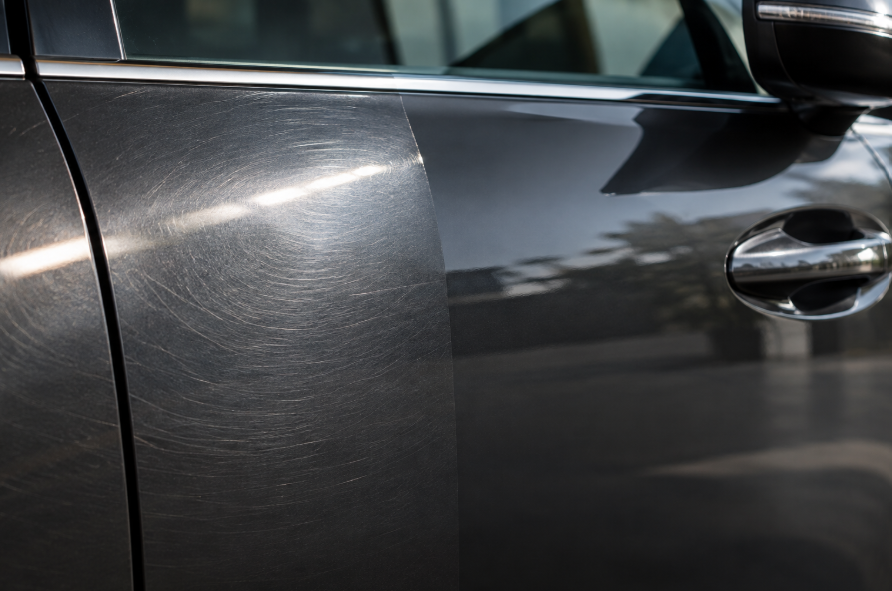
- Fine surface scratches from light contact keys brushing against a panel, a fingernail scrape, minor contact from car park barriers.
- Light abrasions from everyday contact, like a jacket zipper grazing a door panel while getting in or out.
Activation typically happens through direct sunlight, warm water, or a heat gun used during professional detailing with healing time varying based on ambient temperature, scratch depth, and the specific film’s formulation quality. On a warm day, many light marks visibly soften and disappear within minutes; in cooler conditions or with deeper marks, it can take longer or require assisted heat application.
PPF Self-Healing Scratches Limitations: Where the Hype Actually Breaks Down
This is the section most PPF marketing skips entirely, and it’s exactly where an informed buyer needs clarity.
Deep gouges and cuts do not heal. If a scratch is deep enough to cut through the film’s structure rather than just deform its surface, no amount of heat will repair it. The elastomeric recovery mechanism works on surface-level deformation, not structural damage.
Punctures are permanent. A puncture through the film from a sharp stone, a deep key scratch, or any penetrating damage is physical film failure, not something heat-based healing addresses.
Damage reaching the underlying paint is never covered by self-healing at all. This is the most important limitation to understand: self-healing technology operates entirely within the film’s own top layer. If damage is severe enough to reach the paint beneath the PPF, the film has already failed at its core job of protecting that paint self-healing becomes irrelevant at that point, because the damage is no longer in the film’s domain.
Not all “self-healing” film performs equally. This is where buyers genuinely get misled. Lower-quality or older-generation PVC-based films sometimes marketed loosely as “self-healing” don’t use genuine TPU elastomeric technology and show noticeably weaker recovery performance some barely heal at all compared to properly engineered TPU films. The material composition and manufacturing quality behind the claim matters just as much as the claim itself.
Healing isn’t instant or unlimited. Repeated, cumulative light damage in the same spot over years can eventually reduce a film’s ability to fully recover, and healing time genuinely does vary with temperature a claim of scratches “disappearing in seconds” is often true only under fairly ideal heat conditions, not universally.

Saint-Gobain PPF Self-Healing Review: What the Technology Actually Offers
Saint-Gobain’s automotive PPF range, including its Sapphire Plus variant, is built specifically around this self-healing capability alongside a few other genuinely relevant features for Indian conditions:
- Self-healing elastomeric top coat, using the same fundamental TPU-based mechanism described above activated through heat exposure, including natural sunlight.
- Chemical resistance, which matters considerably in Indian conditions given exposure to bird droppings, tree sap, and inconsistent fuel-station spillage all of which can otherwise degrade lower-quality films over time.
- Anti-yellowing formulation, addressing one of the most common long-term complaints with older or lower-grade PPF products, which often discolor and lose clarity within a few years under intense UV exposure.
- A structured, multi-year warranty Saint-Gobain’s premium range is backed by warranty coverage designed specifically around Indian weather and road conditions, reflecting real investment in localized product testing rather than a generic global film simply relabeled for the Indian market.
What genuinely distinguishes Saint-Gobain’s approach from lower-tier “self-healing” claims elsewhere in the market is this combination self-healing performance paired with chemical resistance and anti-yellowing stability, tested specifically for the kind of heat, UV, and pollution exposure Indian cars actually face, rather than optimized purely for cooler, less intense climates.
Saint-Gobain PPF in Bangalore: Why Local Climate Actually Matters Here
Bangalore’s climate creates a genuinely useful, favorable environment for self-healing PPF to perform close to its full potential, which is worth understanding if you’re deciding whether the investment makes sense for your specific situation.
Consistent sun exposure through most of the year means self-healing activation via natural sunlight happens more reliably than in regions with longer cloudy or cold periods, where owners might need to rely more heavily on assisted heat methods like warm water or a heat gun.
Bangalore’s mix of tight urban parking, frequent stone chips on outer ring roads, and heavy two-wheeler traffic creates exactly the kind of everyday, low-severity contact damage light scratches, minor swirl marks that self-healing technology is specifically designed to handle well.
Tree-lined avenues across the city mean regular sap and bird dropping exposure, making the chemical resistance built into premium films like Saint-Gobain’s Sapphire Plus genuinely relevant here, not just a marketing checkbox.
For anyone specifically searching for PPF coating in Bangalore, this local climate compatibility is worth factoring into the decision alongside film quality and installer expertise; a premium self-healing film performs meaningfully better in Bangalore’s conditions than it might in a climate less suited to consistent thermal activation.
Is Self-Healing PPF Worth the Investment?
Given everything above, the honest recommendation depends on what you’re actually trying to solve:
Worth it if: You want to preserve a factory-fresh finish against everyday minor wear, swirl marks, light scratches, minor contact damage over several years, and you’re willing to pay a premium for a film genuinely engineered for Indian conditions with real chemical and UV resistance built in.
Less critical if: Your primary concern is protection against deep gouges, major stone chip impacts, or serious collision-related damage. Standard high-quality PPF (without self-healing) still offers strong physical protection against these; self-healing is a quality-of-life enhancement for everyday wear, not a fundamentally different level of impact protection.
For many owners, the real value of self-healing technology isn’t any single dramatic scratch disappearing — it’s the cumulative effect over years of avoiding the slow, gradual dulling that untreated films or bare paint experience from constant minor contact.
Beyond PPF: A Complete Protection Approach
Self-healing PPF handles physical, everyday surface wear extremely well, but it’s rarely the only protection worth considering for a vehicle you plan to keep looking sharp for years.
Pairing PPF with a ceramic coating on top adds a hydrophobic, easy-clean layer that reduces water spotting and contaminant bonding genuinely useful in a city like Bangalore where hard water and monsoon exposure both take a toll on exterior finish. For owners who also want stronger thermal resistance alongside the hydrophobic benefit, a graphene coating offers a similarly protective topcoat with added heat resistance.
If your protection needs extend to window heat and UV management, a properly installed sun control film complements PPF’s body protection with genuine interior heat reduction a combination increasingly common among owners looking for comprehensive, not just partial, vehicle protection. And for those considering a full aesthetic change alongside protection, a professionally installed car wrap can be combined with PPF underneath for both visual customization and physical protection working together.
Final Thoughts
Self-healing PPF isn’t hype, but it also isn’t the miracle cure some marketing suggests. It’s a genuinely effective, scientifically grounded solution for everyday surface wear, swirl marks, light scratches, and minor abrasions, with clear, honest limitations around more serious damage that any reputable installer should explain upfront rather than gloss over.
If you’re weighing whether Saint-Gobain’s self-healing PPF makes sense for your vehicle in Bangalore’s specific climate and road conditions, Fortify’s team can walk you through an honest assessment of your car’s actual protection needs including whether a combination with ceramic or graphene coating makes more sense for your driving pattern before you commit to any single product.