Superbike PPF installation priority is a question that comes up almost immediately after a big purchase, usually somewhere between picking up the bike and the first ride home: full coverage from day one, or start with the areas that matter most and expand later? For a Ducati Panigale, a BMW S1000RR, or a Suzuki Hayabusa, bikes that routinely cross ₹15-30 lakh on the road, this isn’t a small decision. It’s a budget conversation as much as a protection one.
This guide breaks down exactly where PPF matters most on a superbike, why the answer differs slightly depending on the bike’s design, and how to sequence protection sensibly if you’re not doing full coverage immediately. Written specifically for owners who think about this purchase the way they’d think about any serious asset: protecting the highest-risk exposure first, then building out from there.
Why Motorcycles Need a Completely Different PPF Strategy Than Cars
Before getting into priority zones, it’s worth understanding why this question is genuinely more complex for a superbike than for a car.
There’s no windshield absorbing the first hit. A car’s windshield and hood geometry deflect a meaningful amount of road debris before it reaches vulnerable panels. A superbike’s front fairing takes that impact directly, at speed, with nothing in between.
Every surface is exposed, not just the front. Cars primarily face frontal exposure. Motorcycles face something closer to 360-degree vulnerability, debris, rider contact, and environmental exposure hit the tank, fairings, fenders, and even the swingarm, not just the leading edges.
Factory clear coat is significantly thinner than automotive paint. Motorcycle clear coat typically runs about 1-2 mils thick, compared to 2-4 mils on a car. PPF itself runs around 6-8 mils, meaning a properly applied film doesn’t just add a protective layer; it more than doubles the total protective thickness sitting between the paint and the road. This is a big part of why unprotected superbike paint shows visible wear so much faster than car paint under comparable use.
Rider contact causes damage cars simply don’t experience. Boot heels against the tank, zipper and belt buckle scratches from leaning forward, knee-grip wear during spirited riding, none of this has a car equivalent, and it’s often the first visible damage owners notice, usually within the first few thousand kilometers.
Where to Apply PPF on a Motorcycle: The Priority Zones, Ranked
If budget or time means you can’t do full coverage immediately, here’s the order that actually reflects real-world damage patterns.
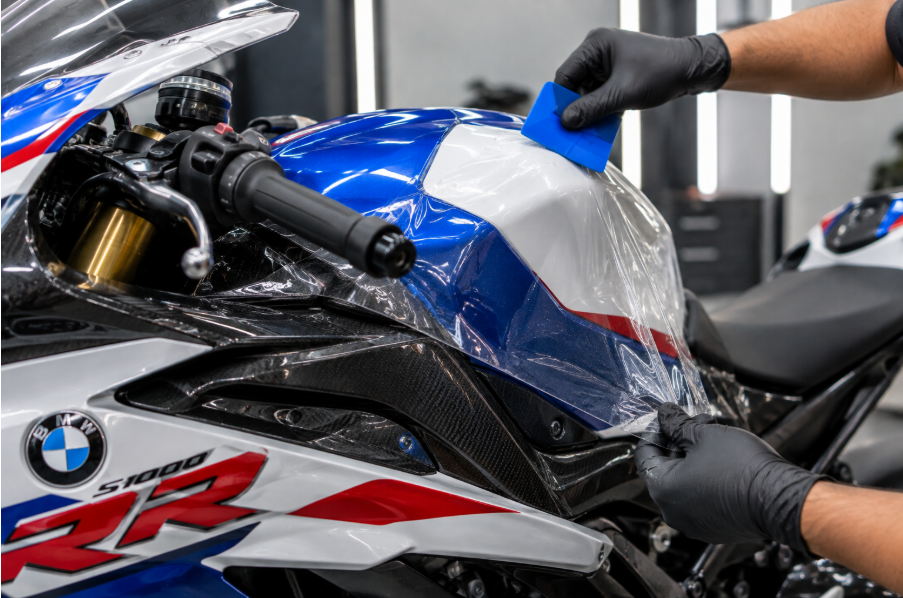
Priority 1: Fuel Tank
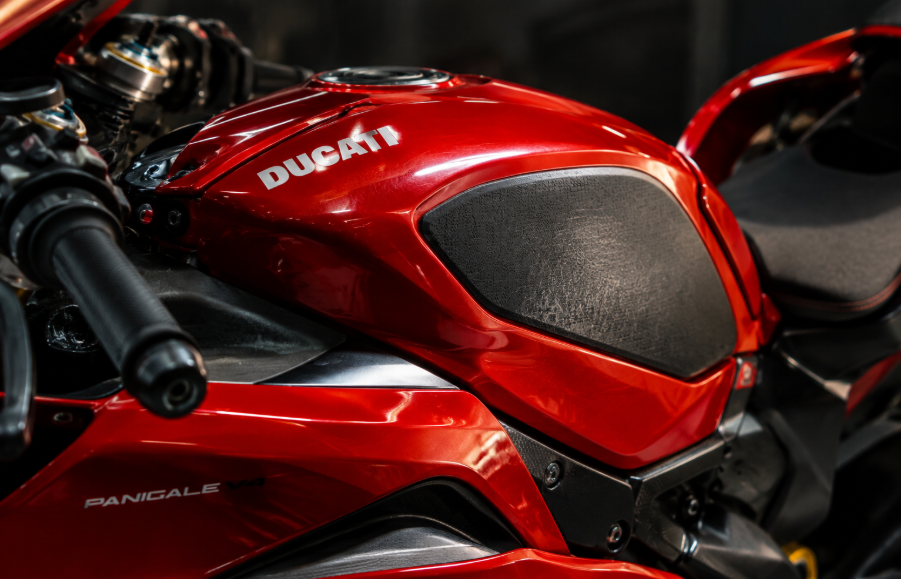
The tank is almost universally the first area riders protect, and for good reason it takes damage from multiple directions simultaneously. Boot heel rubs during mounting and dismounting, zipper and belt buckle scratches from riding position, and knee-grip wear during aggressive cornering all concentrate on this single panel. It’s also usually the largest, most visually prominent painted surface on the bike, meaning damage here is the most noticeable to anyone looking at the bike.
Priority 2: Front Fairing and Nose
This is the bike’s primary impact zone; bugs, stone chips, and road debris hit the front fairing directly and constantly at speed, with nothing ahead of it to absorb the first contact. On a superbike, this is also usually the most expensive single panel to repaint given complex paint schemes and multiple color sections, making it a high-value area to protect early.
Priority 3: Front Fender
Sitting closest to the road surface and directly in the path of debris kicked up by the front wheel, the fender takes constant abrasion even during ordinary riding, not just aggressive use. It’s a smaller panel, so protecting it is relatively inexpensive relative to the damage it prevents.
Priority 4: Headlight and Lower Fairings
Headlight lenses are vulnerable to stone chip pitting, which affects both appearance and, over time, light output clarity. Lower fairings catch rock chips and debris kicked up from the road, especially during spirited riding or track use, and are often overlooked until visible pitting accumulates.
Priority 5: Side Fairings, Tail Section, and Swingarm
These areas see less direct impact than the front-facing zones but aren’t damage-free. Side fairings pick up parking lot contact and minor scuffs; the tail section faces UV exposure and occasional contact damage; the swingarm, if painted, deals with chain lube spray and road grime that can dull the finish over time. These are typically the areas covered in a full-coverage package rather than a partial one.
Motorcycle PPF Coverage Areas by Bike Type: Why Ducati, BMW, and Hayabusa Aren't Identical Decisions
While the general priority order above holds across most superbikes, the specific bike genuinely changes how you should think about sequencing.
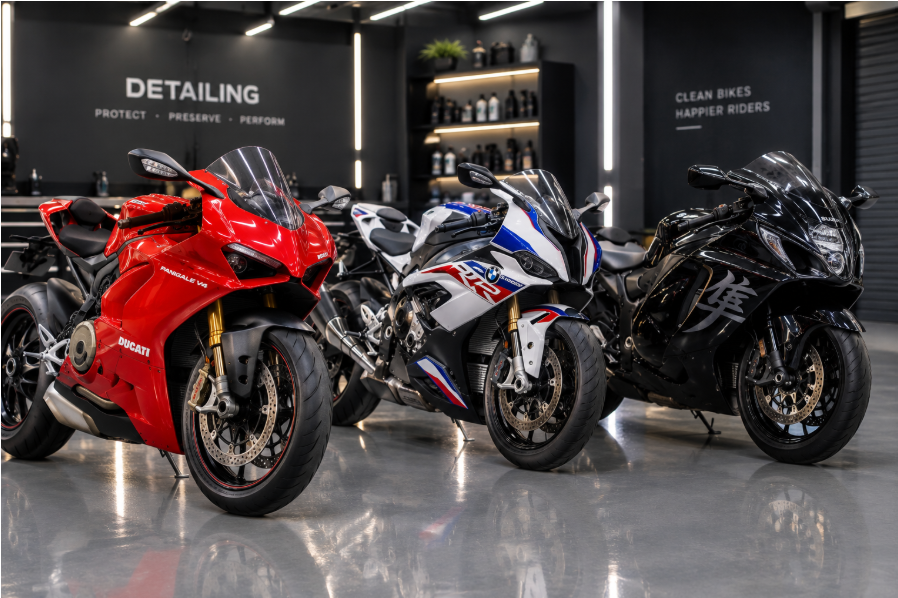
Ducati (Panigale, Streetfighter, Multistrada)
Ducati’s complex, multi-color paint schemes, particularly the Panigale’s Rosso Corsa finishes with intricate graphics, make panel-specific repainting both expensive and difficult to color-match perfectly if damage occurs. This pushes many Ducati owners toward fuller coverage sooner rather than later, since the cost of protecting proactively is often lower than the cost and risk of a poorly color-matched repair down the line. The tank remains priority one given Ducati’s aggressive, forward-leaning riding position, which puts sustained pressure and contact on tank surfaces during spirited riding.
BMW (S1000RR, M1000RR)
BMW’s superbikes tend to see more track-day use among Indian owners than some competitors, which shifts the priority calculation slightly toward the lower fairings and front fender areas that take disproportionately more debris impact during track sessions than street riding alone. The M-series color schemes, with their distinctive motorsport-inspired graphics, carry a similar repaint complexity concern to Ducati’s multi-tone finishes.
Suzuki Hayabusa
The Hayabusa’s more relaxed, upright riding position changes the wear pattern somewhat compared to a full-fairing sport bike. Tank scratches from boot contact remain a concern, but the bike’s larger, more aerodynamic fairing surfaces mean front-fairing and fender protection carries slightly more relative weight given the sheer surface area exposed to sustained high-speed wind and debris contact on highway runs, which is where many Hayabusa owners actually put in their kilometers.
Best PPF for Superbikes: What Actually Matters in Product Selection
Not all PPF performs equally on a superbike, and a few specific factors matter more here than they might for a standard car application.
Flexibility and conformability to complex curves. Superbike bodywork involves tighter curves and more complex panel geometry than most car panels. A film that struggles to conform smoothly around these curves without visible stretching or lifting at edges will compromise both appearance and long-term durability.
Self-healing capability. Given how frequently superbike surfaces pick up minor swirl marks and light scratches from riding gear contact, a self-healing top coat, one that recovers from light surface marks through heat exposure, offers genuine, ongoing value on a bike in a way it might on a car used more casually.
Installer experience specifically with motorcycles, not just cars. This matters more than most buyers realize. Motorcycle PPF installation requires different templates, cutting techniques, and heat-forming approaches than automotive application, given the tighter curves and smaller panel sizes involved. An installer with strong car PPF experience but limited motorcycle-specific work is a genuine risk for a premium superbike.
For owners specifically researching the best PPF for superbikes in Bangalore, it’s worth asking any prospective installer directly how many superbikes, not just cars, they’ve worked on, and requesting to see completed motorcycle-specific work rather than assuming automotive experience translates directly.
Beyond PPF: A Complete Protection Approach for Superbikes
PPF handles physical impact and abrasion extremely well, but it’s rarely the only protection worth considering for a bike you’re planning to keep in showroom condition.
A ceramic coating applied over PPF or on unprotected painted areas adds a hydrophobic, easy-clean layer genuinely useful given how much more frequently superbikes tend to get washed compared to daily-use cars, and how much faster water spotting and contaminant buildup shows on smaller, more detailed surfaces. For owners wanting additional UV and thermal resistance, a real concern given how many superbikes see extended outdoor parking without covered storage, a graphene coating offers similar benefits with improved heat resistance.
For riders considering a visual refresh alongside protection, a common combination for track-focused Ducati and BMW owners wanting a custom livery, a professionally installed car wrap service (adapted for motorcycle application) can deliver both a distinctive look and an added protective layer over the factory paint underneath.
How to Sequence Protection If You Can't Do Everything at Once
If budget means a phased approach rather than full coverage immediately, a sensible sequence looks like this:
- Tank and front fairing first: These two areas alone address the majority of early, highly visible damage most riders experience within the first few thousand kilometers.
- Front fender and headlight next: Relatively inexpensive additions that close off the remaining high-impact frontal exposure.
- Lower fairings: Particularly important if the bike sees any track time or spirited riding on debris-prone roads.
- Remaining side and tail panels: Power urgency, but worth completing eventually for full coverage and consistent resale value protection.
This sequencing isn’t arbitrary, it mirrors exactly where real-world damage actually shows up first, based on riding position, exposure angle, and contact patterns across most superbike models.
Final Thoughts
Whether it’s a Ducati, a BMW, or a Hayabusa, the underlying logic for superbike PPF installation priority stays consistent: protect where the damage actually happens first the tank and front fairing, before expanding to lower-priority zones. The specific bike shifts the details slightly, but the core sequencing rarely changes, because it’s based on how these bikes are actually ridden and exposed, not just brand preference.
If you’re planning PPF for a new superbike and want a coverage plan tailored to your specific model and riding pattern, whether that’s full coverage from day one or a sensibly phased approach, Fortify’s team can walk you through exactly what makes sense for your bike, your budget, and how you actually ride.