Signs of car paint damage rarely announce themselves loudly. There’s no warning light on your dashboard for a failing clear coat, no beep when oxidation starts creeping across your hood. Instead, the damage builds quietly a slightly duller finish here, a faint cloudy patch there, until one day you step back, look at your car in direct sunlight, and realize it doesn’t look the way it used to. By that point, some of what you’re seeing may already be permanent.
This guide walks through exactly what to look for, what each sign actually means underneath the surface, and critically, which problems can still be fixed versus which ones are already past the point of correction. For business owners managing a fleet or anyone who treats their car as a genuine asset rather than a disposable expense, catching these signs early is the difference between a straightforward detailing fix and a full repaint bill.
Why Paint Damage Is Easy to Miss Until It's Serious
Car paint is a layered system, typically a base color coat sealed under a transparent clear coat that provides gloss, depth, and UV protection. Because the clear coat sits on top, most early damage happens invisibly within this outer layer, long before it becomes obvious to the eye. By the time damage is visually unmistakable, the clear coat has often already been chemically or structurally compromised for months.
This is precisely why paint problems are so commonly misdiagnosed by car owners and why understanding the actual symptoms, not just “my car looks less shiny,” matters considerably more than people assume.
Common Car Paint Damage Symptoms: What to Actually Look For
A few specific, observable signs consistently show up before paint problems become severe. Catching these early gives you real options; missing them narrows your choices considerably.
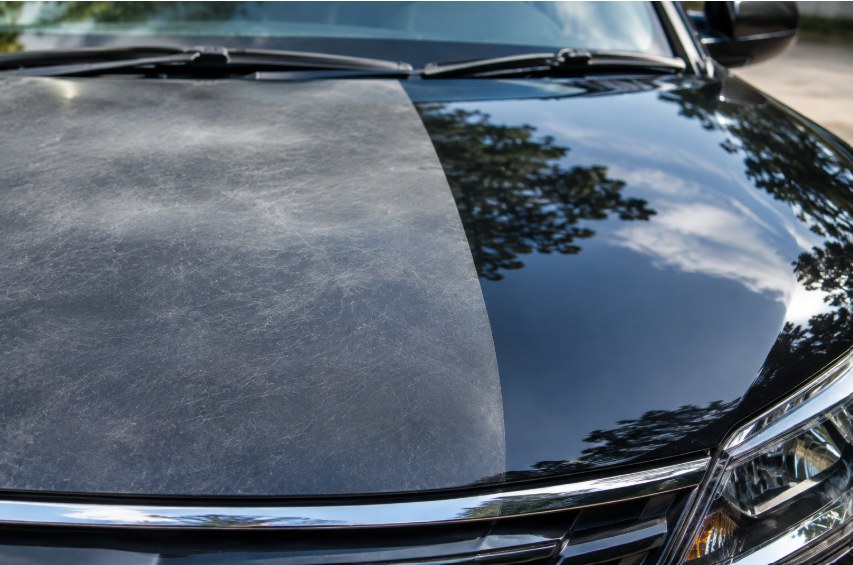
Fading, especially on red and black vehicles. This is often the earliest visible symptom. The paint loses its original depth and richness, starting to look washed out, particularly noticeable in direct sunlight. Darker and more saturated colors tend to show this before lighter, more neutral tones do.
A dull, flat finish that no longer reflects light sharply. Healthy paint has a mirror-like reflective quality. As damage progresses, that reflectivity breaks down, giving the surface a matte or lifeless appearance even after a proper wash.
A chalky or powdery residue when you run a finger across the surface. This is one of the more diagnostic signs: if wiping a panel leaves a faint white or gray residue on your finger, that’s degraded pigment breaking away from a compromised clear coat, not just surface dirt.
Cloudy or hazy patches that don’t wash away. Unlike dirt or water spots, these patches remain after washing and often look like a light fog sitting just under the surface, most commonly on horizontal panels like the hood, roof, and trunk that receive the most direct sun exposure.
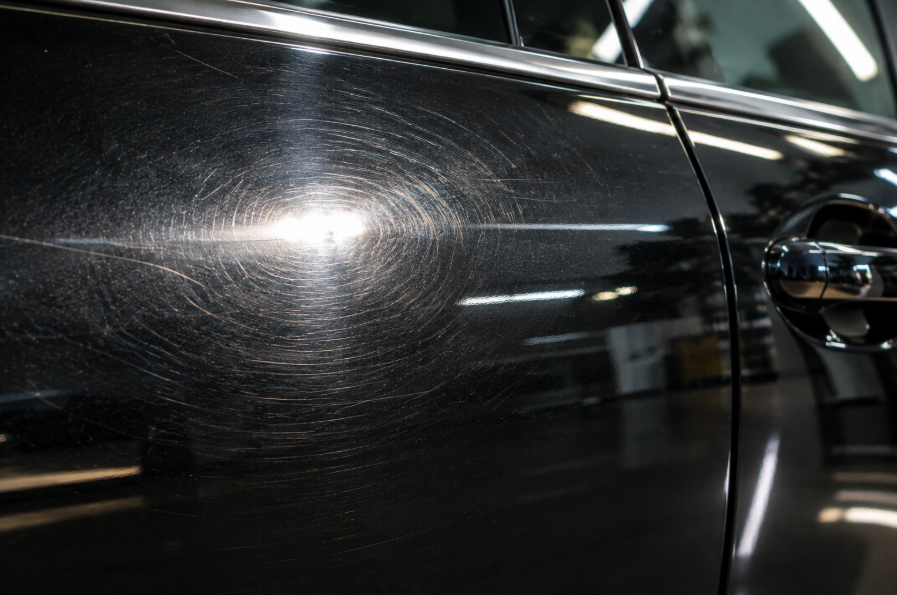
Fine web-like scratches, or swirl marks, visible under bright light or sunlight. These are extremely common, especially on cars washed frequently at automated car washes, and while they’re less severe than other symptoms, they compound visible dullness over time.
Rough or gritty texture when running a hand across the paint, even after washing. This typically indicates surface contamination, embedded particles, tree sap residue, or industrial fallout bonded to the surface, distinct from chemical degradation happening within the clear coat itself.
Car Paint Oxidation vs. Clear Coat Damage: Understanding the Real Difference
This is genuinely one of the most confused topics in car care, and getting it right matters enormously for choosing the correct fix. Oxidation and clear coat failure are related but distinctly different problems, and treating one as if it were the other often makes things worse.
What Oxidation Actually Is
Oxidation is a chemical breakdown process where UV radiation and environmental exposure gradually weaken the resins that bind pigment and clear coat together. As this happens, microscopic pores in the paint’s surface become exposed, and a larger surface area becomes affected over time. The result is that characteristic chalky, gray, lifeless appearance the paint’s structural integrity at the surface level has been compromised, but the deeper layers are often still intact.
The genuinely useful news about oxidation: in its earlier stages, it’s often correctable. A proper machine polish or paint correction process can remove the top layer of oxidized material, revealing healthier paint underneath and restoring gloss. This is a surface-level fix for what is, at this stage, still primarily a surface-level problem.
What Clear Coat Failure Actually Is
Clear coat failure is a more serious, structural problem the adhesion between the transparent clear coat and the pigmented base coat beneath it has broken down. Unlike oxidation, this typically cannot be polished away, because the damage isn’t just sitting on the surface it runs through the depth of the clear layer itself.
Clear coat failure tends to progress through recognizable stages: it starts as cloudy or hazy patches that don’t respond to polishing, then advances to visible lifting, cracking, and eventually flaking or peeling often looking like a bad rash across affected panels. Once the clear coat has fully separated and begun peeling, the exposed base coat beneath it is left directly exposed to UV light and environmental damage, accelerating fading and deterioration in that area significantly.
The hard truth about clear coat failure: once it reaches the cracking or peeling stage, there is no product, polish, or coating that reverses it. The only real fix at that point is repainting the affected panel or panels trying to polish over genuine clear coat failure often makes the problem visibly worse by thinning an already-compromised layer further.
The Practical Diagnostic Test
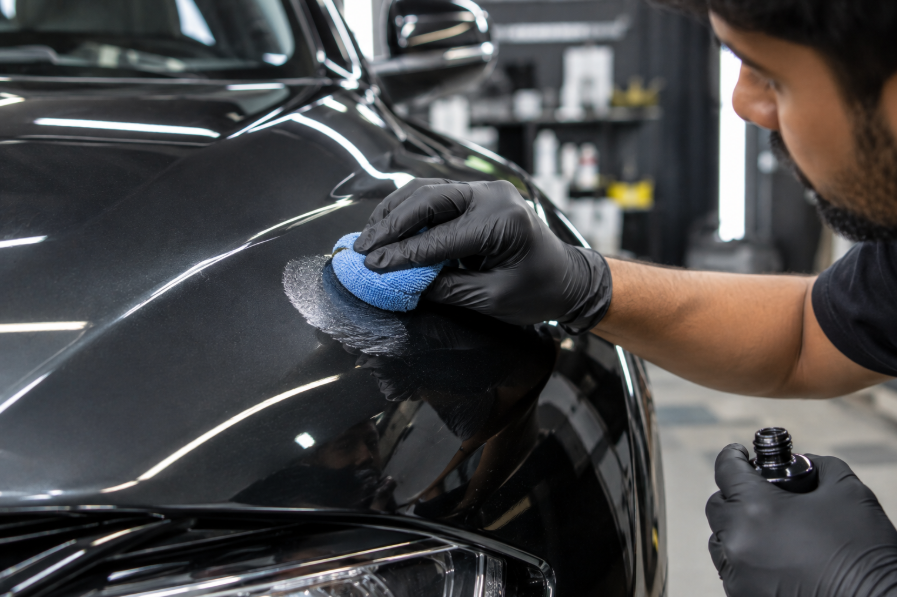
If you’re trying to figure out which problem you’re actually looking at, a simple test helps: apply a small amount of cleaner wax or a mild polish to an affected, inconspicuous area. If the gloss visibly returns and the haze lifts, you’re most likely dealing with oxidation, a surface-correctable problem. If the cloudy or hazy appearance doesn’t respond at all to this treatment, particularly if you also notice any early cracking at panel edges, you’re likely looking at clear coat failure, a structural problem that polishing cannot fix, and one worth getting professionally assessed before attempting any DIY correction.
Clear Coat Failure Signs by Stage: Catching It Early
Understanding the progression matters because your options narrow considerably as the failure advances:
Stage 1: Early haziness: The paint develops a cloudy, slightly foggy appearance, most visible under direct light or sunlight. No flaking or cracking is present yet. This is the critical window where professional intervention, often paint correction combined with a protective ceramic or graphene coating, can still meaningfully slow or halt progression.
Stage 2: Visible cracking: Fine cracks begin appearing, typically starting at panel edges or high-exposure areas like the roof and hood. At this stage, the structural damage is confirmed and no longer reversible through polishing; the conversation shifts from “can this be corrected” to “how do we prevent it from spreading further.”
Stage 3: Flaking and peeling: The clear coat visibly lifts and separates from the base coat, exposing raw pigment directly to the elements. This stage requires repainting the affected panel; there’s no protective product that restores a clear coat once it’s reached this point.
Catching clear coat failure at Stage 1 rather than Stage 3 is often the difference between a protective treatment costing a fraction of a full respray which is exactly why paying attention to early symptoms matters far more than most owners realize.
What Causes Car Paint Damage in the First Place
Understanding root causes helps prevent the next round of damage, not just fix the current one:
- Prolonged UV exposure is the single biggest driver of both oxidation and clear coat failure over time, particularly for vehicles parked outdoors without shade for extended periods.
- Bird droppings and tree sap are genuinely acidic and can chemically etch into the clear coat if left on the surface too long, a common, underestimated cause of localized damage.
- Acid rain and airborne pollutants contribute to slow chemical erosion of the paint surface, particularly relevant in urban environments with heavier air pollution.
- Improper washing techniques, including automated car washes with worn brushes, are a major contributor to the swirl marks and fine scratches that compound overall dullness.
- Water spots left to dry without wiping, especially from mineral-heavy water sources, can chemically burn into the clear coat if left untreated repeatedly over time.
How to Actually Protect Paint Once You've Addressed Existing Damage
Once oxidation has been corrected or a clear coat issue has been properly assessed and addressed, prevention becomes the priority, and this is where a genuine, layered protection strategy matters considerably more than periodic waxing alone.
A ceramic coating creates a durable, semi-permanent protective layer that significantly reduces UV degradation and chemical bonding from contaminants like bird droppings and tree sap, directly addressing two of the most common root causes of oxidation. For owners wanting additional thermal resistance alongside UV protection, a graphene coating offers similar benefits with improved heat resistance, particularly relevant for vehicles regularly parked in direct sun.
For genuine physical protection against stone chips, minor abrasions, and everyday contact damage that create the fine scratches and swirl marks compounding overall dullness, PPF coating in Bangalore adds a physical barrier layer that neither wax nor ceramic coating alone can provide, since it protects against impact and abrasion rather than just chemical exposure.
If your vehicle also experiences significant interior heat buildup from sun exposure, a sun control film reduces cabin heat while indirectly easing some of the thermal stress contributing to exterior paint degradation over time. And for owners considering a broader refresh alongside protection, a professionally installed car wrap can address existing cosmetic wear while adding a protective layer over the original paint underneath.
Final Thoughts
Car paint damage is rarely sudden; it’s a slow accumulation of UV exposure, chemical contact, and physical wear that eventually crosses from correctable to permanent. The single most useful thing you can do is learn to recognize the early signs dullness, chalkiness, faint haze while there’s still a real choice between polishing and repainting, rather than discovering the difference only after that choice has already been made for you.
If you’re noticing any of these signs on your own vehicle and aren’t sure whether you’re looking at oxidation or something more serious, Fortify’s team can properly assess the damage and walk you through the right combination of correction and long-term protection before it progresses any further.