Your EV skips oil changes, but its paint still takes a beating
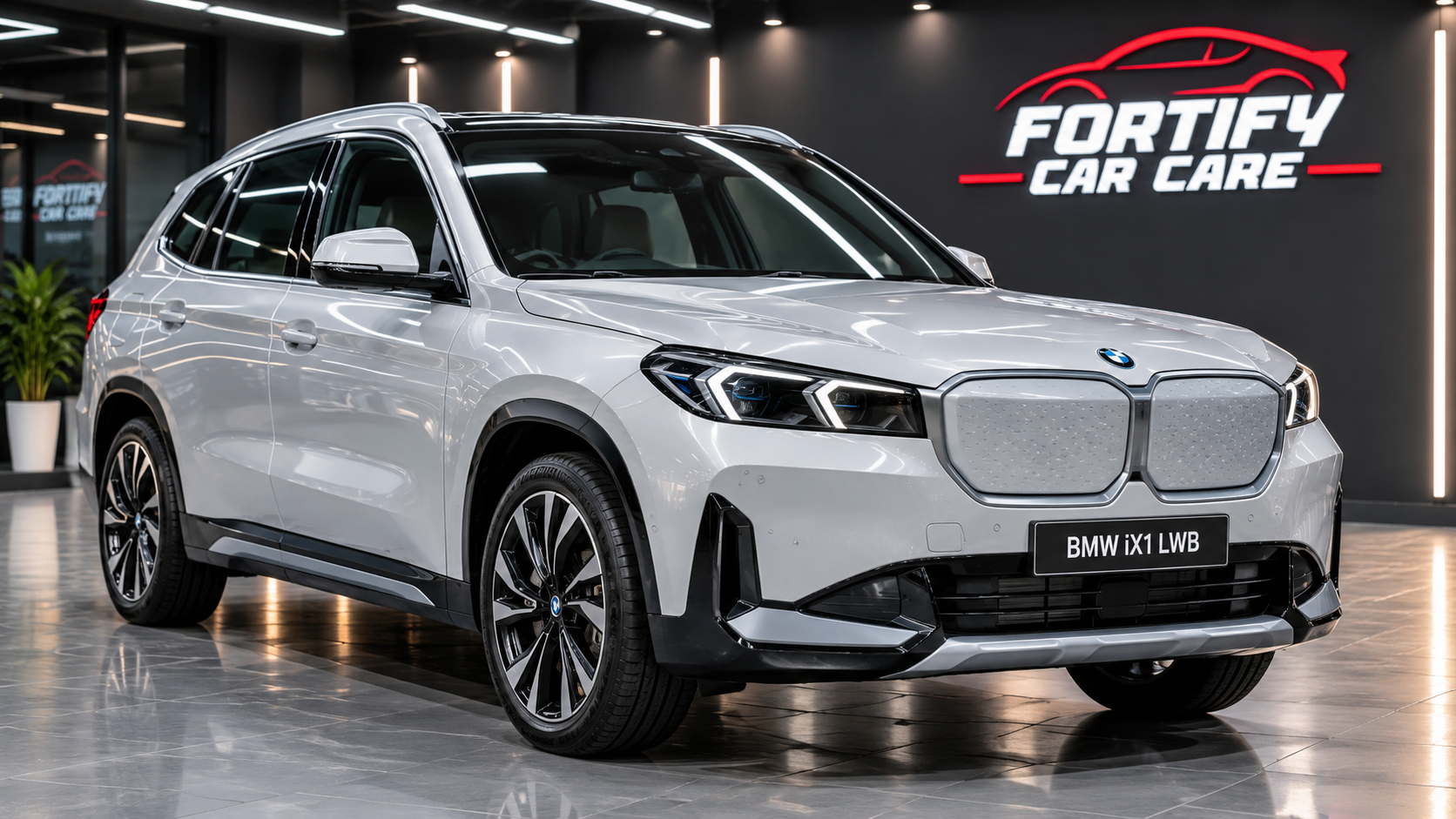
The kidney grille on a BMW iX1 LWB doesn’t let any air through. There’s no radiator behind it, so BMW closed it off and filled it with a pattern of small triangles. It looks sharp, and it also turns the nose of the car into a wide, flat target for every stone on the road.
That’s the part of EV ownership nobody mentions at the showroom. Electric cars really are easier to run, with no engine oil, no clutch and far fewer moving parts. The paint, though, gets no break at all.
This guide explains why EV paint needs protecting, which beliefs leave it exposed and what actually works on Bangalore roads. We’ll use the BMW iX1 LWB as our example throughout, because it shows the problem so clearly.
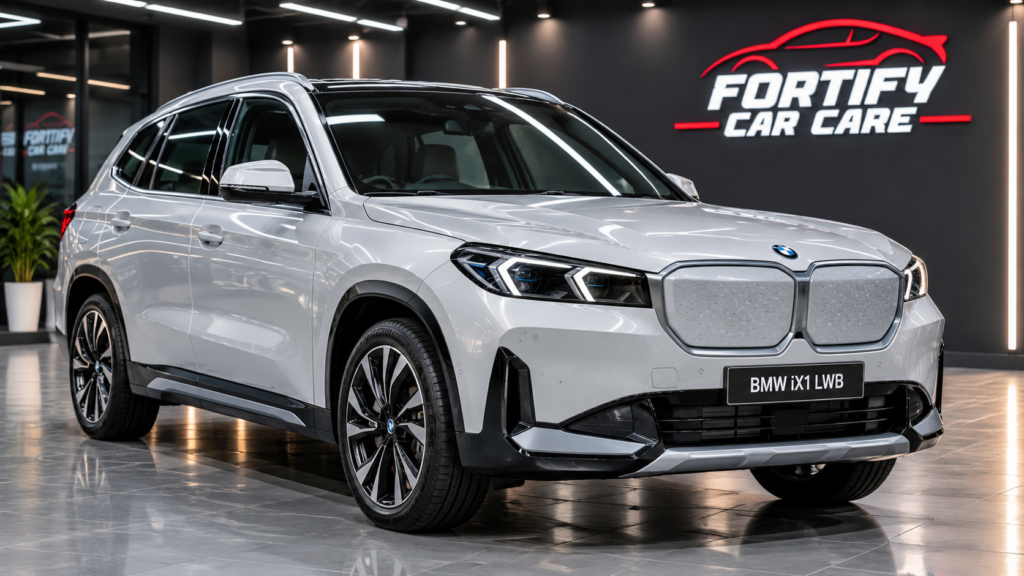
Why EV paint wears differently from petrol car paint
Paint doesn’t care what powers the car. Still, a few things about electric cars change where damage shows up and how much it matters.
Closed fronts take more direct hits. Most EVs don’t need big air intakes, so their noses are smooth and flat. A flat panel facing the road catches stones head-on, and chips on it are easy to spot.
EV owners keep their cars longer. The battery is the most expensive part, so many buyers plan to drive their EV for years. Paint that has to look good for eight or ten years needs help from the first week.
Charging adds a daily routine. You open the charge port flap every day, often with a heavy cable brushing past nearby paint. Over months, that small habit leaves fine marks.
There’s one upside. Regenerative braking means the brakes work less, so EV wheels gather less brake dust than a petrol SUV’s. Your alloys will thank you.
Three beliefs that leave EV paint unprotected
We hear these often from new EV owners in Bangalore. Each one sounds reasonable, and each one costs paint.
“No engine means less care.” It’s true under the bonnet, but not on it. Stones from Outer Ring Road gravel and construction dust in Hennur hit an EV exactly as hard as a diesel SUV.
“Ceramic coating is enough.” A ceramic coating is only 2 to 5 microns thick. It adds gloss and makes washing easier, but it can’t absorb a stone chip. Our guide on whether ceramic coating is good for cars explains what it can and can’t do.
“The dealer already fitted film.” Some dealers do, but the film grade, the coverage and the edge work can vary a lot. Our comparison of dealer-fitted PPF vs studio-installed PPF shows what to check.
Why the BMW iX1 LWB shows this so clearly
The iX1 LWB was the first BMW electric car assembled in India, and it’s one of the most searched luxury EVs here. It’s also a big car for its class. At 4,616 mm long with a 2,800 mm wheelbase, it’s built around rear-seat comfort.
That shapes how it’s used. Many iX1 LWB owners in Bangalore have a driver and spend their time in the back seat. The car gets wiped down every morning and parked outside offices and hotels all day.
Put that together with a closed grille, an M Sport bumper with low air intakes and a large panoramic sunroof, and you get a car whose finish takes a lot of daily wear.
Where an iX1’s paint wears first
When an iX1 LWB comes into a detailing studio, these are the places worth checking first.
- The closed kidney grille, where the triangle pattern traps dirt and chips are hard to touch up.
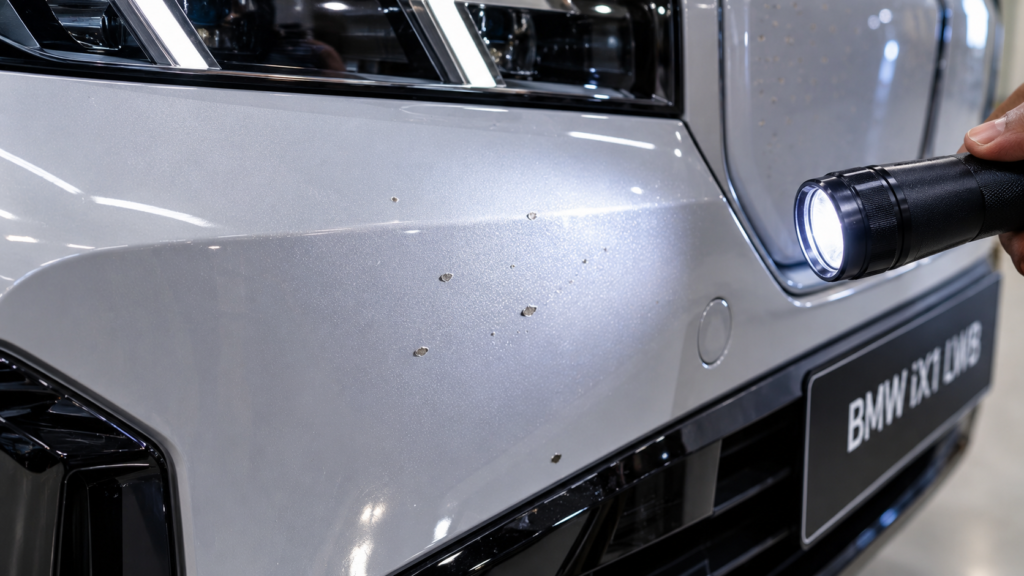
- The front bumper and M Sport intakes, which sit low and collect most stone chips.
- The bonnet’s front edge, which catches debris on NICE Road and Airport Road runs.
- The rear door edges and handles, opened many times a day in a chauffeured car.
- The rear bumper top, scuffed whenever luggage slides into the 490-litre boot.
- The area around the charge port flap, brushed by the cable every day.
Most of these spots sit at the front of the car or at hand height. That’s why front coverage plus the door edges is the sensible minimum on this car.
Does your iX1’s color change what you’ll notice?
It does. BMW sells the iX1 LWB in five metallic colours, and each one shows wear differently.
M Carbon Black shows every swirl mark under mall lights and afternoon sun. M Puma Blue looks rich and deep, but chips on its edges stand out. Skyscape Grey sits in the middle, though water spots show after monsoon rain.
Mineral White hides fine scratches well, but tar spots and any yellow tint show clearly. Sparkling Copper Grey has a metallic sparkle that loses its depth once the paint gets swirled.
The short version is simple. Darker colours gain the most from PPF. Lighter colours need a film that resists yellowing.
What we’ve learned from protecting EVs at our studio
We’ve protected more than 2,000 cars at our studio in HRBR Layout, Banaswadi, including the BMW iX1. Here’s a short clip from one of our iX1 jobs.
PPF being fitted on a BMW iX1 at Fortify Car Care, Banaswadi. The long-wheelbase iX1 LWB shares the same front end, so the same areas need protection.
Working on electric cars like the iX1 and the Mahindra XEV 9e has taught us a few things. We take extra care around the charge port flap because it opens every day and a raised edge there could catch the cable. We also work carefully around front sensors and the closed grille, since these shapes are more detailed than a plain bumper.
Before any work starts, we show owners their paint under an inspection light. That way, they see exactly what the film will protect and what needs correcting first.
EVs need a few changes to the usual process. We take extra care around the charge port flap because it opens every day and a raised edge there could catch the cable. We also work carefully around front sensors and closed grille sections, since these shapes are more detailed than a plain bumper.
Before any work starts, we show owners their paint under an inspection light. That way, they see exactly what the film will protect and what needs correcting first.
PPF, ceramic or graphene: what does an EV actually need?
Each option does a different job, so it helps to understand all three before you choose.
Paint protection film (PPF) is a clear layer of thermoplastic polyurethane that sits over your paint. The films we install measure 170 to 216 microns, nearly twice as thick as factory paint. When a stone hits, the film takes the impact and light swirls fade with heat. You can compare every film we fit on our TPU PPF page.
We’re an authorised installer for BASF Rodim, LLumar and Saint-Gobain. Each film carries a manufacturer warranty of 5 to 12 years against yellowing, cracking and peeling.
Ceramic coating adds a glossy, slick layer that makes dust and rain slide off. It’s the easiest way to cut down washing effort, but it won’t stop chips.
Graphene coating handles heat better than ceramic and resists water spots. It suits EVs that live in open parking.
For most EV owners, the best mix is PPF on the front and a coating on the rest. A coating made for PPF can also go over the film for extra gloss.
How much of the car should you cover?
Coverage | What it covers | Best for |
Partial PPF | Front bumper, grille surround, bonnet, headlamps, mirrors, door edges | Mostly city driving |
Full front | Full bumper, bonnet, front fenders, headlamps, mirrors | Regular highway and airport runs |
Full body | Every exterior painted panel | New deliveries, open parking, long ownership |
PPF covers exterior painted surfaces only, so door shuts and jambs stay uncovered. Still deciding? Our guide to full-body vs partial PPF walks through the choice.
Want a different look as well?
Can sun control film help an EV’s range?
Here’s the honest answer. Sun control film won’t add kilometres you’ll notice on your range screen. What it does is keep the cabin cooler, so the air conditioning works less hard on hot afternoons.
On the iX1 LWB, that big panoramic sunroof lets in a lot of light and heat. Sun control film cuts that heat and glare and blocks UV rays that fade leather. Rear-seat passengers feel the difference most.
Film darkness is regulated, so always choose a legal film. Our post on sun control film and Karnataka RTO rules explains what’s allowed.
How to care for an EV’s finish (and brief your driver)
Good protection lasts longer with the right habits. If someone else washes your car, share these with them.
- Wait 7 days after PPF installation before the first wash.
- Close the charge port flap fully before every wash.
- Hand wash with pH-neutral shampoo and a clean microfiber mitt.
- Never dry-wipe dust off the paint, because that’s how most swirls start.
- Keep pressure washer nozzles away from film edges and the charge port.
- Dry the car with a soft towel to avoid hard water spots.
During the rains, our monsoon car care guide has more tips for keeping paint and film clean.
Mistakes we see EV owners make
Waiting for the first chip. Most new cars pick up their first chips within a few months. Protection fitted after that seals the damage in.
Choosing film on price alone. Cheap unbranded film can yellow, crack or bubble within a couple of years. Our guide to PPF yellowing, peeling and bubbling shows the warning signs.
Skipping paint correction. Film keeps whatever is underneath it. Any swirls left on the paint stay visible for years.
Forgetting the charge port. It’s the one panel you touch every single day. Ask your installer how they’ll handle it before work starts.
So, does your electric car really need PPF?
If you plan to keep your EV for more than a couple of years, the answer is yes. Electric cars save you time and money under the bonnet, but the paint takes the same daily beating as any other car’s.
For a BMW iX1 LWB in Bangalore, start with PPF on the front and a coating on the rest. Go for full-body PPF if the car parks outdoors, is a dark colour or will stay in the family for years. Add sun control film if your passengers sit under that panoramic roof.
FAQs
Is PPF for an EV different from PPF for a petrol car?
The film is the same. The installation needs extra care around the charge port, sensors and closed grille sections.
Can ceramic coating replace PPF on an electric car?
No, it can’t. Ceramic coating adds gloss and makes cleaning easier, but it’s too thin to stop stone chips.
Which BMW iX1 colour needs PPF the most?
M Carbon Black and M Puma Blue show swirls and chips the most. Mineral White benefits from a film that resists yellowing.
Does sun control film improve EV range?
Not by much on paper. It keeps the cabin cooler, so the AC works less hard, and passengers stay comfortable.
How long does PPF installation take?
Partial PPF takes 1 to 2 days. Full front and full body jobs take 2 to 3 days, including paint correction and curing.
Does PPF cover door shuts and door jambs?
No, it doesn’t. PPF covers only the exterior painted surfaces.