Bike PPF cost in Bangalore is usually the first thing a new superbike owner searches for, and it tends to happen a few days after the first stone chip lands on a brand-new fairing. That timing says a lot. Most riders don’t think about paint protection until the paint is already marked, and by then the “flawless” feeling is gone for good.
This guide is for riders who want to think it through before that first chip. We’ll look at why bike paint takes more punishment than car paint, what Paint Protection Film (PPF) actually does for a tank and fairings, how heat fits into the picture, what drives the price, and whether the whole thing is worth your money.
Why Superbike Paint Is More Exposed Than Car Paint
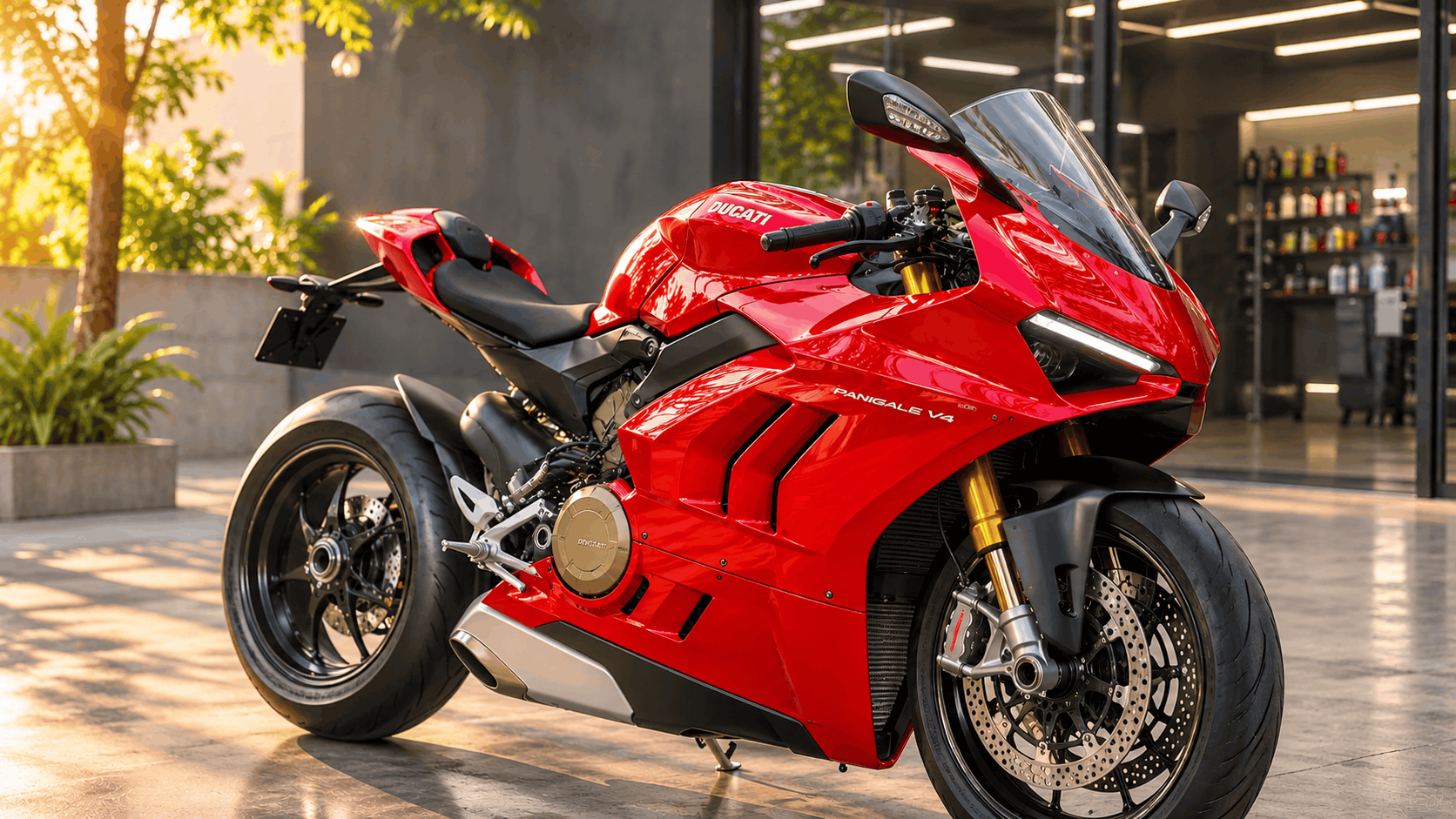
A car’s paint sits behind a bumper, a grille and a bonnet. A superbike has none of that cushioning. The fairing, the fuel tank and the front mudguard sit right behind the front wheel, and everything the tyre throws up goes straight into them.
Three things make the problem worse:
- Speed. At highway speeds, a small stone hits with far more force than it would at city speeds. Rides to Nandi Hills, Mysuru or the coast are full of loose gravel and trucks kicking up debris.
- Thin, complex panels. Fairings are curved and often covered in graphics. A repaint is rarely a simple job, and matching factory finish on special-edition colours is hard.
- Rider contact. Jacket zippers, jeans rivets, knee sliders and glove buckles rub against the tank and side panels every single ride.
Add Bangalore’s sun, monsoon grit and construction dust, and you get paint that ages faster than most owners expect.
Tank PPF for Motorcycles: Why the Tank Comes First
If you protect only one part of your bike, make it the tank. Tank PPF for motorcycles is the most requested coverage we see, and for good reasons.
The tank takes daily abuse. Every time you mount, dismount or shift your weight in a corner, your gear touches it. Over a few months, that contact leaves fine scratch patterns, especially around the knee grip areas and the filler cap.
It is the most visible panel. The tank is what people look at first, in the showroom and in the used-bike market.
Fuel spills happen. A little petrol splashing during a refuel can dull or stain unprotected paint if it sits there. Quality film resists occasional splashes better, though you should still wipe spills off quickly.
Tank graphics are expensive to redo. On many superbikes, tank graphics are part of the paint job. Redoing them properly costs a lot more than people assume.
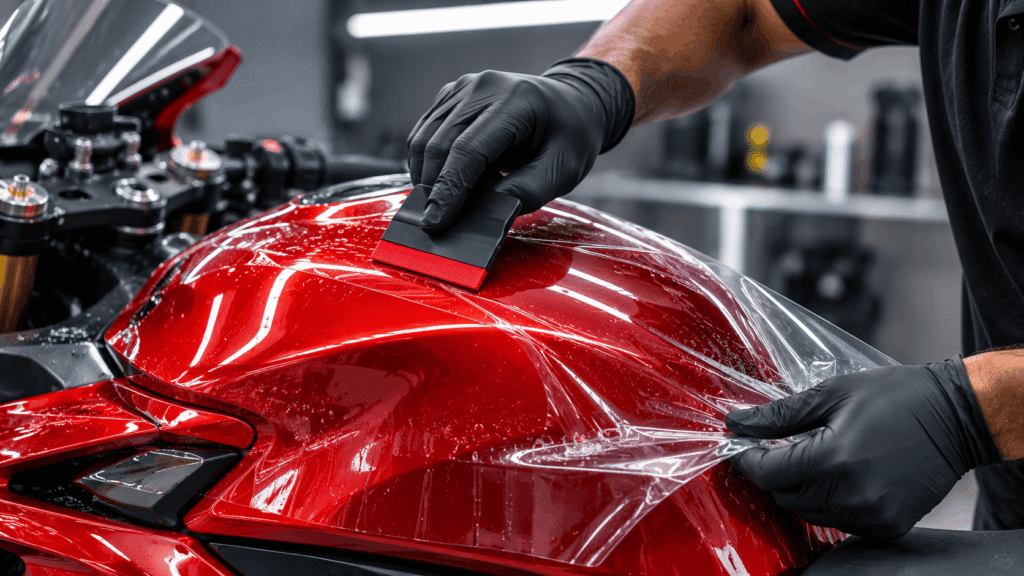
Good tank PPF for motorcycles follows the tank’s curves without visible seams, wraps its edges where possible, and avoids lifting around the filler cap and the seat joint. This is where installer skill really shows.
How to Protect Bike Paint From Stone Chips
Stone chips are the number one complaint from superbike owners, so here is a practical look at how to protect bike paint from stone chips, from most effective to least.
1. Fit PPF on the impact zones
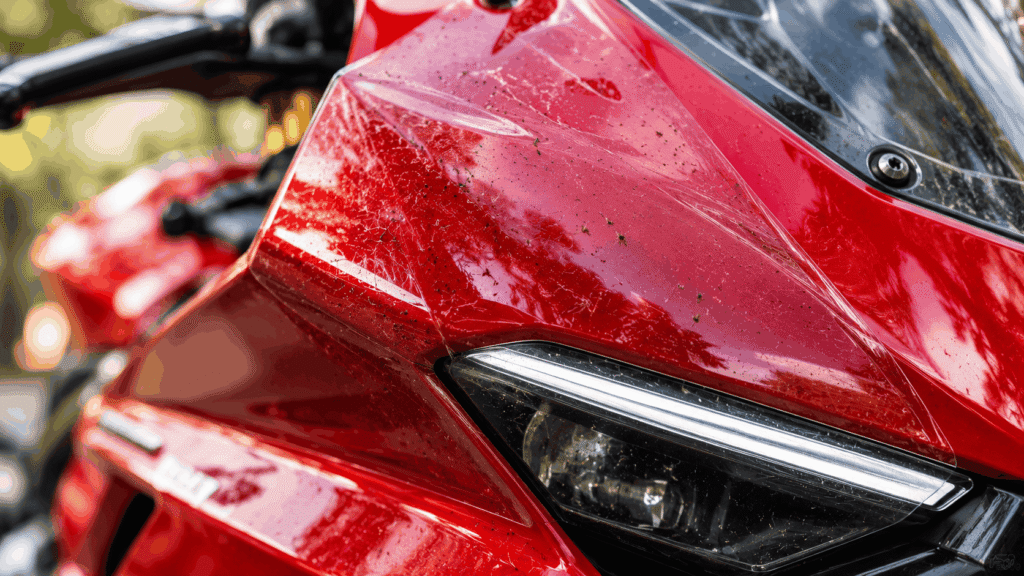
This is the only option that physically absorbs the hit. Film is a flexible polyurethane layer, thicker than any coating, designed to take the impact instead of your paint. On highway runs out of the city, PPF for superbikes Bangalore riders book most often starts with the front end. The main zones are the front fairing, the front mudguard, the headlight surround, the leading edge of the tank and the lower side panels behind the front wheel.
2. Add a fender extender or mudguard where possible
A small extender on the front mudguard cuts down how much debris reaches the lower fairing. It is cheap, simple and works well alongside film.
3. Leave more distance behind trucks and tippers
Following a gravel truck at close range is the quickest way to pick up chips. Give them room, especially on highways.
4. Don’t count on a coating alone
Ceramic and graphene coatings add gloss and chemical resistance, but they are thin. They help with water, dirt and UV, and they do not stop a stone. If someone tells you a coating alone will keep chips away, that is a red flag.
5. Touch up small chips early
If a chip does reach the paint, clean it and seal it with touch-up paint quickly. Left alone, bare metal can start to corrode, especially during the monsoon.
The short version: film is the real answer, and the rest are supporting habits.
What Heat Does to Your Bike's Paint (and to Film)
The topic of heat gets less attention than stone chips, but it matters on a superbike.
Sun. Bangalore’s UV is strong most of the year. Over time, UV can dull clear coat, fade graphics and make black panels look chalky. A bike parked outdoors takes more of this than one kept under cover.
Engine and exhaust heat. Panels close to the engine, radiator and exhaust go through repeated heating and cooling. This can stress paint and clear coat on lower fairings and tank sides near hot components.
Heat and PPF. Good film is built to handle normal riding temperatures and sun exposure, and its self-healing top coat actually uses warmth to smooth out light swirl marks. But no film should be applied directly on surfaces that get extremely hot, such as areas right next to exhaust headers. A careful installer will decide where film goes and where it should stop, and will tell you why.
A coating on top helps. Many riders add a Ceramic Coating or Graphene Coating over the film. It adds UV resistance, makes washing easier and helps the surface shed dirt and water, which is useful when a bike sees monsoon grit and summer dust back to back.
Is PPF Worth It for Bikes? Run the Numbers
Whether it makes sense depends on three things: what the film costs, what a repaint would cost, and how much cosmetic condition affects your resale price.
Is PPF worth it for bikes that are ridden hard and often? Almost always, yes. Repainting one fairing panel with a proper colour match, clear coat and graphics often costs more than protecting the whole front end with film in the first place. And a repainted panel can make a buyer wonder about accident history.
Here is a simple way to decide.
PPF is usually worth it if:
- You ride on highways or take regular weekend trips
- Your bike has a special-edition colour, a pearl finish or detailed graphics
- You plan to keep the bike for several years, or you care about resale
- You hate the idea of babying your bike
It may not be worth full coverage if:
- You are selling within a few months
- The paint already has deep scratches or chips (film does not hide them, so paint correction comes first)
- Your budget is tight, in which case tank and front-end coverage is a smart compromise
Is PPF worth it for bikes you only ride around the city? Often yes for the tank and mudguard, because city riding means gear contact, parking scrapes and the odd bump from a neighbour’s handlebar. Full-body film can be overkill in that case.
There is also a non-financial side. Riders with film tell us they ride more freely. They stop flinching at gravel and stop worrying about where they lean the bike. For a machine built to be ridden, that has real value.
Bike PPF Cost in India: What Sets the Price
Prices vary a lot from one studio to another, and a low quote is not always a good deal. Here is what actually moves the price:
- Film grade and brand. Premium films with strong self-healing and longer warranties cost more than basic ones.
- Coverage area. Tank only is the lowest. The front end and tank sits in the middle. Full body is the highest.
- Bike design. Fully-faired sportbikes with many small, curved panels take more time than a naked bike with fewer panels.
- Preparation. If your paint needs correction before the film goes on, that adds to the cost and the time.
- Installer skill. Experienced installers charge for good reason. Cheap installs often show trimmed edges, trapped dust and early lifting.
Rather than chasing a generic price per bike, ask for a quote based on your bike’s model, the panels you want covered and the film brand. The right number comes after an inspection.
Here is how coverage usually breaks down for PPF that superbikes Bangalore riders choose:
Coverage | What It Includes | Best For |
Tank essentials | Tank, knee-grip zones, filler cap area | Daily riders, tight budgets |
Front protection | Front fairing, mudguard, headlight area, tank | Highway riders |
Full fairing set | All fairings, tank, tail section, mudguards | Owners who want a uniform finish |
Full body plus coating | Full film with ceramic or graphene on top | Long-term owners, special editions |
PPF for Superbikes Bangalore Riders Trust: What to Look For
Choosing PPF for superbikes Bangalore riders can rely on comes down to the installer more than the film brand. Bike panels are smaller, more curved and more detailed than car panels, so mistakes are harder to hide. Here is what to look for:
- Bike-specific experience. Ask to see completed bikes, not only cars.
- Precision-cut patterns. Pre-cut kits for popular models improve fit and reduce cutting on the paint.
- Edge work. Edges should be wrapped or tucked cleanly, with no lifting at corners.
- A clean installation bay. Dust trapped under film shows up as small bubbles forever.
- Clear warranty terms. Know what is covered: yellowing, cracking, lifting, peeling.
- Honest advice. A good installer will tell you where film should and should not go.
For a fuller look at film brands, our overview of Paint Protection Film options explains how the main brands compare.
Film, Coating or Wrap: Which One Is for You?
These services get mixed up all the time, so here is the quick version:
- PPF protects against chips, scratches, and gear rub.
- Ceramic or graphene coating protects against UV, dirt, and water, and adds gloss.
- Car Wrap changes colour or finish. It looks good, but it is not built to absorb impact the way PPF is.
If you also own a car, the same studio can take care of both vehicles, including Sun Control Film for the car’s windows, though you should check the current legal position on aftermarket window film in Karnataka first.
Care Tips After PPF Installation
- Let the film cure for the period your installer recommends before washing.
- Use a pH-neutral shampoo and a soft microfiber mitt.
- Keep pressure washer jets away from film edges and panel gaps.
- Wipe fuel spills quickly, even though the film resists them.
- Do not use abrasive polishes on the film.
- Book a yearly check so any lifting edge is fixed early.
Common Mistakes Riders Make
Choosing on price alone. The cheapest film often yellows or peels within a year or two.
Waiting too long. The first chip is permanent, and learning how to protect bike paint from stone chips after it lands is too late. Film works best when it is fitted before the damage.
Skipping paint correction. Film over swirl marks seals them in.
Expecting coating to do film’s job. Match the product to the problem.
How We Approach Superbikes at Fortify
At Fortify, we treat a superbike’s paint as the investment it is. As a Paint Protection Film, ceramic coating, and graphene coating provider in Bangalore, we start by looking at the bike’s model, its paint, and how you ride. When a rider asks about PPF for superbikes, Bangalore roads demand, we explain that tank and front-end coverage often delivers most of the value, and we are honest when full-body film isn’t needed. If you’re asking whether PPF is worth it for bikes in your case, we would rather tell you straight than sell you more than you need.
Final Thoughts
A superbike is built to be ridden, and its paint is going to see the road. Film is the one product that physically absorbs stone chips and gear rub, a coating adds UV and dirt resistance on top, and good habits do the rest. For most riders, bike PPF cost in Bangaloreis easier to accept once they compare it with a repaint, and is PPF worth it for bikes you plan to keep long-term is a question the resale value often answers on its own.
If you’re thinking about protecting your tank, fairings or full bike, talk to the Fortify team for a no-obligation inspection. We’ll tell you what your bike actually needs, and what it doesn’t.
FAQs
Is PPF worth it for bikes?
For most superbike owners, yes. PPF protects against stone chips, gear rub and light scratches, and a repaint of even one fairing panel often costs more than protecting the front end with film.
What is the bike PPF cost in India?
It depends on film grade, coverage area, bike design and installer skill. Tank-only coverage costs less, and full-body film costs more. A quote after inspection is more reliable than any generic number.
Is tank PPF for motorcycles necessary?
It is the most useful single area to cover. The tank takes constant contact from riding gear and is the most visible panel, so protecting it preserves both looks and resale value.
How to protect bike paint from stone chips?
Fit PPF on impact zones like the front fairing, mudguard and tank edge. Add a fender extender, keep distance behind trucks and touch up any chip quickly. Coatings alone will not stop chips.
Is PPF for superbikes in Bangalore different from car PPF that riders can trust?
The film is similar, but installation is harder on bikes because panels are smaller and more curved. Bike-specific experience and precise cutting matter a lot.
Does heat damage PPF on a bike?
Good film handles normal riding and sun exposure well. It should not be applied directly on extremely hot surfaces near exhaust headers, and a careful installer will plan around that.
Can I put ceramic or graphene coating over PPF on my bike? Yes. A coating over film adds UV resistance, easier cleaning, and extra gloss.