Your car’s paint is the first thing people notice — and the first thing the road tries to destroy. Between stone chips on the highway, bird droppings in the parking lot, scratches from grocery carts, and the relentless Bangalore sun, your vehicle’s finish faces a daily war. That’s where Paint Protection Film (PPF) enters the picture. But is paint protection film worth it, or is it just another upsell at the detailing counter?
At Fortify Car Care, we’ve applied PPF on hundreds of vehicles and documented the real-world results. This blog breaks down what PPF actually does, what the before and after looks like, and helps you decide whether it’s the right investment for your car.
What Is Paint Protection Film?
Paint Protection Film is a thermoplastic urethane (TPU) film applied directly to your car’s painted surfaces. Originally developed for military use to protect helicopter rotor blades, it found its way into the automotive world in the 1990s. Today’s PPF is a far cry from that early material — it’s optically clear, self-healing, and engineered to absorb impact without transferring damage to the paint underneath.
Modern PPF typically features:
- Self-healing top coat – Minor scratches disappear with heat (sunlight or warm water)
- Hydrophobic surface – Water and contaminants bead off easily
- UV protection – Prevents paint oxidation and colour fading
- Impact resistance – Absorbs stone chips, road debris, and minor abrasions
- Gloss or matte finish options – Enhance or transform your car’s look
Before PPF: What Happens to Unprotected Paint
To understand whether paint protection film is worth it, you first need to see what unprotected paint endures. Here’s what most car owners deal with within the first 1–3 years:
Stone chips on the bonnet and front bumper – The leading edges of a car take the brunt of highway debris. On unprotected vehicles, these chips expose bare metal, which begins to rust almost immediately in humid climates like Bangalore.
Swirl marks from washing – Even well-intentioned hand washes can introduce fine scratches into the clear coat. Over time, these swirl marks make the paint look dull and aged under direct light.
Bird dropping etching – Bird droppings are highly acidic. Left for even a few hours, they can permanently etch into your clear coat, leaving cloudy patches that no polish can fully remove.
Fading from UV exposure – Bangalore’s year-round sun is harsh. Without UV protection, clear coats oxidize, and colours fade, particularly on red, black, and dark-coloured vehicles.
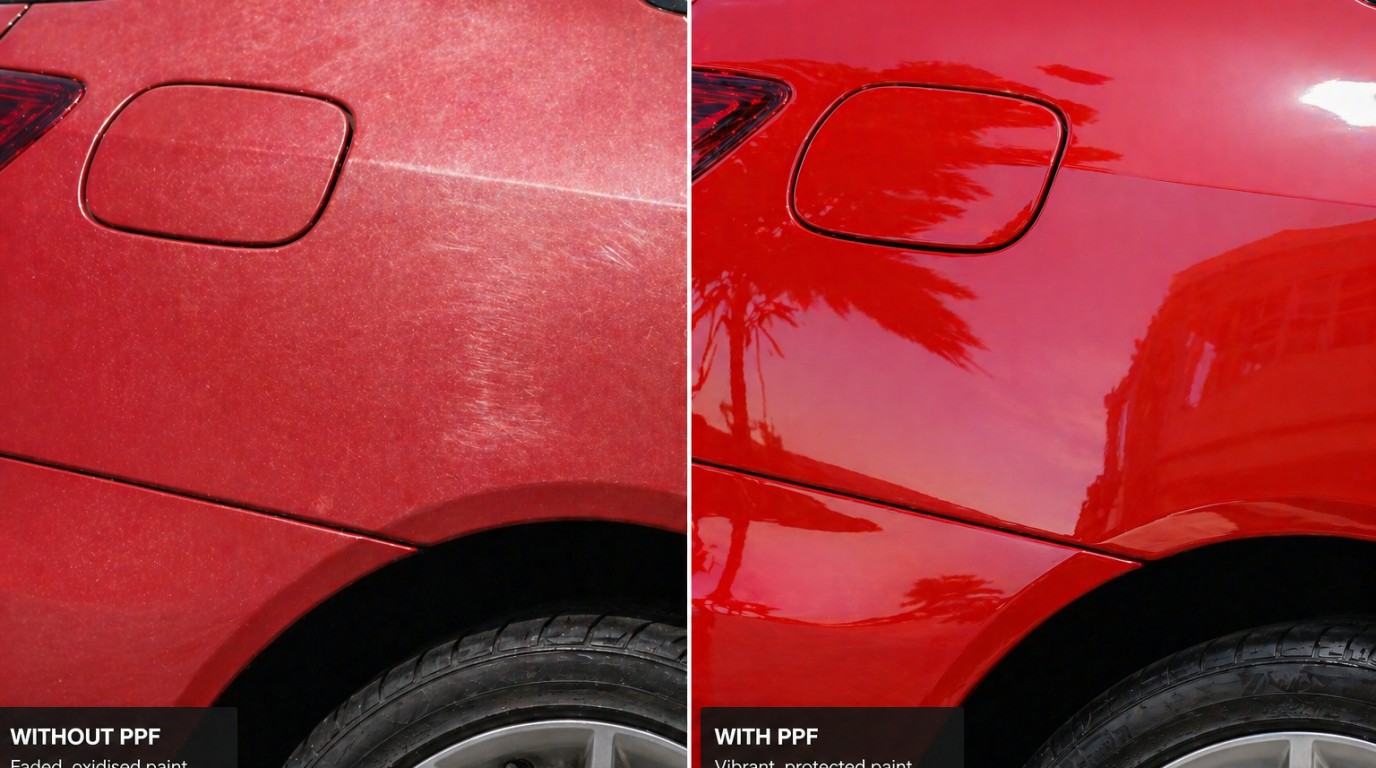
The before pictures we capture at our car detailing studio consistently show the same story — paint that looked perfect at delivery begins showing wear within months of regular use.
After PPF: What Real Results Look Like
Now here’s where the transformation becomes clear. When we document vehicles after PPF application, the difference — even after 12 to 24 months of use — is dramatic.
Stone chips: Zero penetration to the paint. The film absorbs the impact. You may see a small dent or scuff on the film itself, but the paint beneath is untouched. In severe cases, the film can be replaced section by section without a full respray.
Swirl marks: Self-healing in action. Vehicles with PPF that have light swirling from washing typically recover their gloss after being parked in the sun for a few hours. The self-healing layer activates with mild heat, flowing back into a smooth surface.
Contamination: Effortless to clean. The hydrophobic surface means bird droppings, tree sap, and dust slide off with minimal effort. Owners report that their weekend wash takes half the time compared to unprotected paint.
Long-term gloss retention. One of the most striking before-and-after comparisons is gloss level after two or more years. PPF-protected panels look showroom-fresh. Unprotected panels on the same car show visible fading and micro-scratching.
Is Paint Protection Film Worth It? Let’s Do the Maths
This is the question every car owner asks before committing. Is paint protection film worth it from a purely financial standpoint?
Consider the costs without PPF:
- A single bonnet respray in Bangalore: ₹8,000–₹20,000
- Full front-end paint correction and protection after 3 years: ₹15,000–₹35,000
- Resale value loss due to paint damage: Often 5–15% of car value
Now consider a quality PPF installation on the high-impact zones (bonnet, bumpers, fenders, mirrors, door edges): typically ₹25,000–₹80,000 depending on the car and coverage, with a film lifespan of 7–10 years.
When you factor in the paint repairs avoided, the reduced detailing effort, and the stronger resale value, is paint protection film worth it becomes much easier to answer — yes, for most car owners, it pays for itself.
Who Should Definitely Get PPF?
While is paint protection film worth it depends on individual use cases, certain drivers should consider it non-negotiable:
Highway and long-distance commuters — If you regularly drive on expressways or poorly maintained roads, stone chip damage is a near-certainty. PPF is your best defence.
New car owners — The best time to apply PPF is within the first few weeks of purchase, before any damage occurs. Factory paint is at its best, and the film preserves it in that condition.
Luxury and high-end vehicle owners — On a premium car, a single panel respray can cost more than a full PPF installation. The case for protection is even stronger.
Resale-focused owners — If you plan to sell your car in 3–5 years, well-maintained paint under PPF will command a meaningfully higher price.
Choosing the Right PPF for Your Car
Not all films are equal. When asking is paint protection film worth it, the quality of the product and installation matter enormously. There are three tiers to be aware of:
Entry-level films — Thinner, less durable, may yellow over time. Suitable for budget applications but won’t last a decade.
Mid-range films — Better clarity, self-healing, 5–7 year warranties. A solid choice for most cars.
Premium films (e.g., XPEL, 3M, Kavaca, Suntek) — Best optical clarity, strongest self-healing, stain resistance, and 10-year warranties. Recommended for new or high-value vehicles.
At Fortify Car Care, we work exclusively with films that meet our standards for clarity and durability. Our paint protection film in Bangalore installations are carried out by trained technicians using precision-cut templates for each vehicle model, ensuring seamless edges and full coverage without lifting or bubbling.
The Installation Process: What to Expect
Understanding the process helps set realistic expectations. Is paint protection film worth it partly depends on having it installed correctly.
A quality PPF installation typically involves:
- Paint decontamination and correction — Any existing swirl marks, chips, or contamination are addressed before the film goes on.
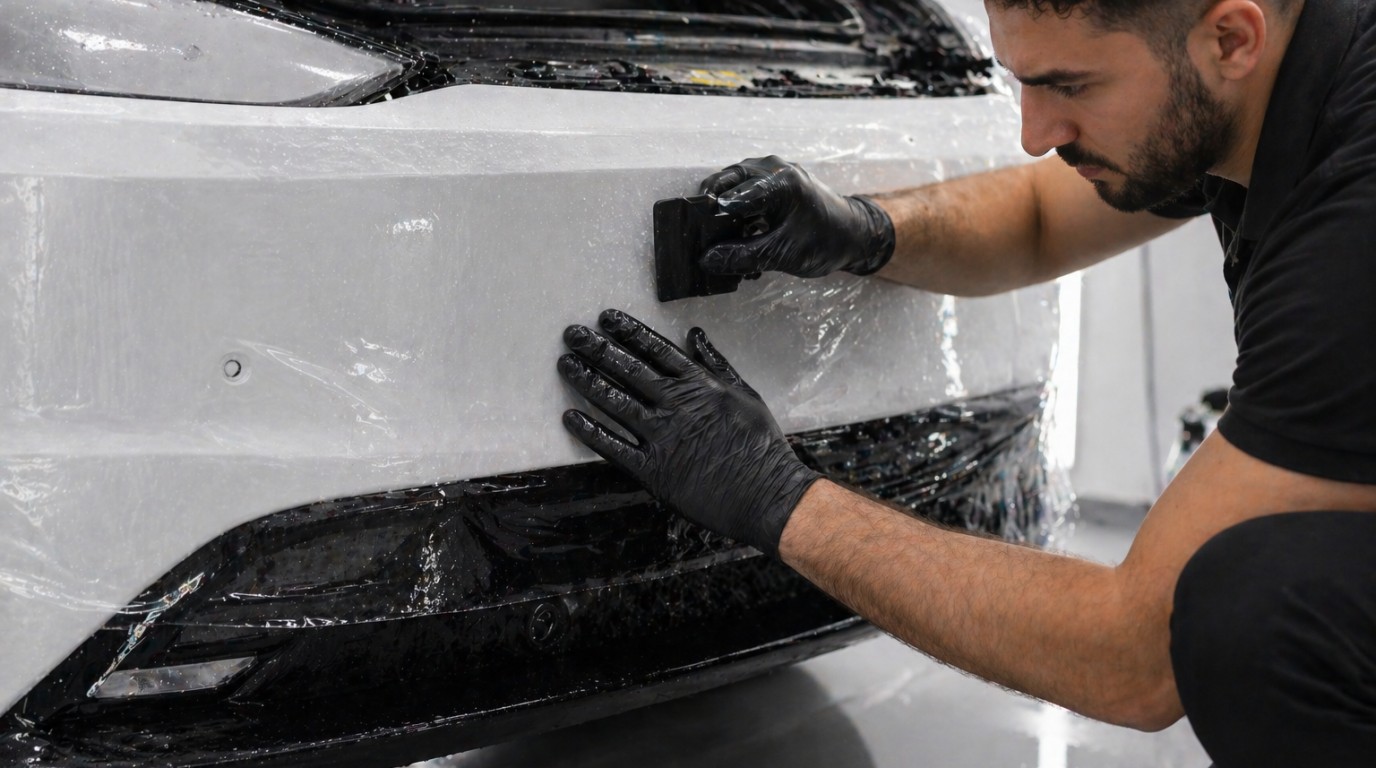
- Template cutting — Film is cut to exact vehicle specifications using plotter software. No hand-cutting on the car.
- Wet application — Film is applied using a slip solution, positioned precisely, and squeegeed to remove moisture and bubbles.
- Edge wrapping — Edges are tucked or wrapped around panel seams for an invisible finish.
- Curing time — Typically 24–48 hours before the vehicle is ready for normal use.
The entire process for a partial-front installation takes roughly one day. Full-body wraps take 3–5 days.

Maintenance After PPF: Easier Than You Think
One of the reasons is paint protection film worth it gets a strong yes from existing customers is how easy maintenance becomes. PPF-protected cars:
- Can be washed normally after the initial 7-day curing period
- Don’t require wax (though ceramic coating on top of PPF enhances hydrophobicity further)
- Can be safely machine polished if needed, with care
- Should avoid harsh chemicals like strong degreasers near the film edges
Periodic inspection every 6–12 months at a professional detailing studio is recommended to catch any lifting edges early.
Final Verdict: Is Paint Protection Film Worth It?
After seeing hundreds of real before and after results, our answer is unambiguous — is paint protection film worth it for anyone who values their car’s appearance and long-term condition: absolutely yes.
PPF is not a luxury reserved for supercars. It’s a practical investment that pays dividends in reduced maintenance costs, preserved resale value, and the simple satisfaction of a car that still looks the way it did when you drove it off the lot.
If you’re ready to protect your vehicle with premium paint protection film in Bangalore, the team at Fortify Car Care is here to guide you through the right solution for your car, budget, and usage.
Visit us at fortifycarcare.in or call to book a free consultation with our specialists today.