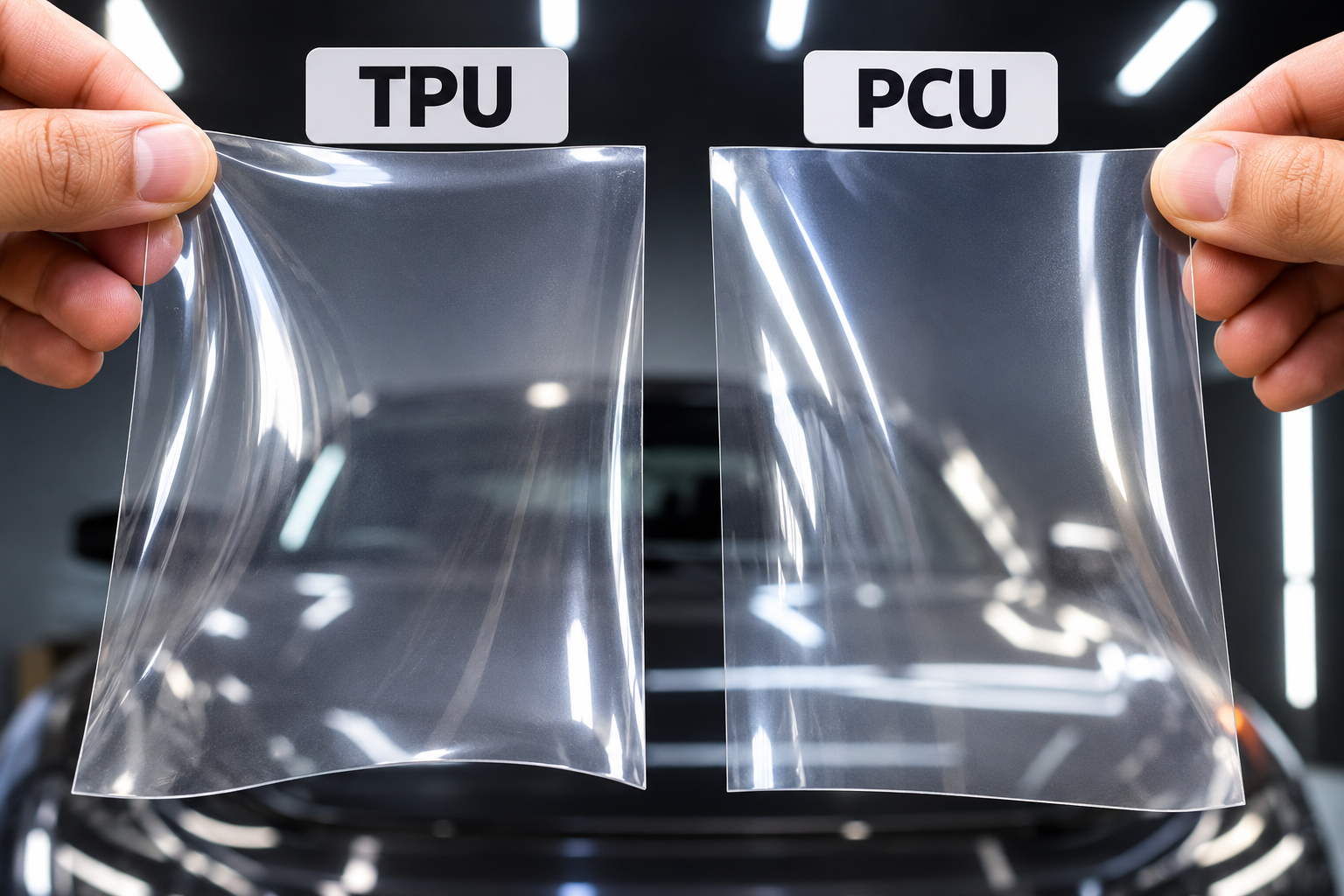
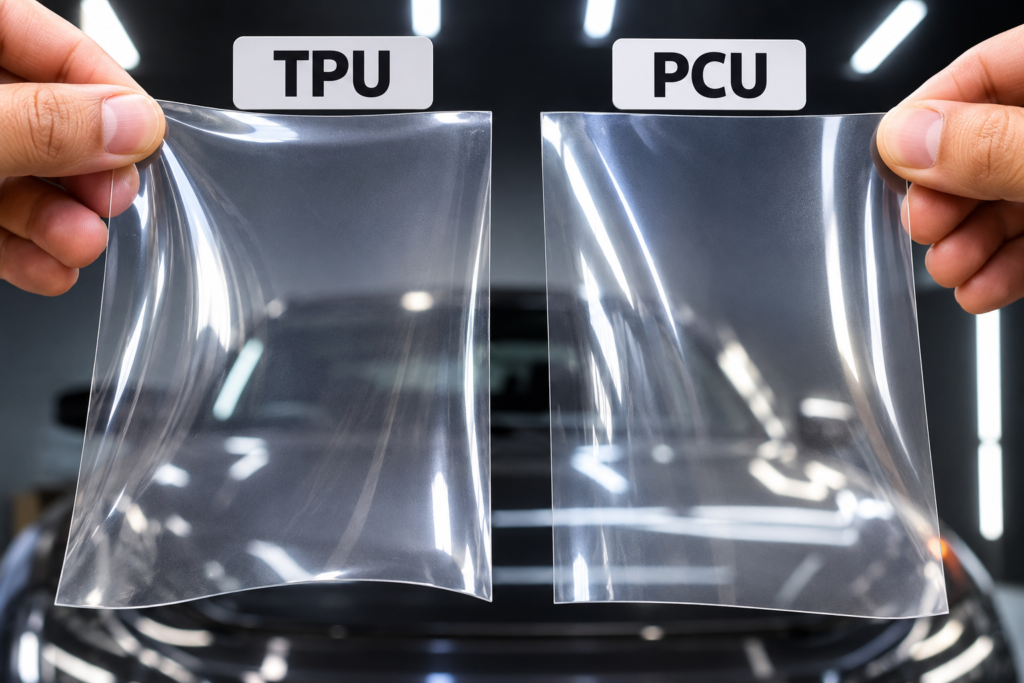
Short videos comparing PCU and TPU film started appearing in Indian searches in mid-2026. Most show someone pulling two strips of film by hand, with the PCU strip leaving fewer stretch marks. It makes a good clip, but a stretch test can’t show how a film will look after five Bangalore monsoons.
That’s the question that really matters when you protect your car’s paint. Here we compare TPU vs PCU PPF. We cover what each film is, where each one excels and which claims deserve a second look.
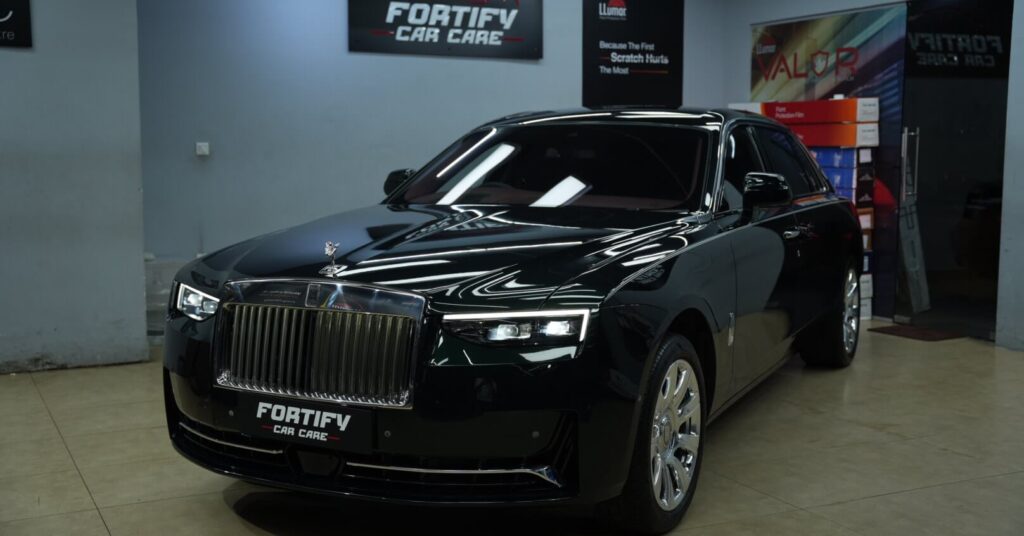
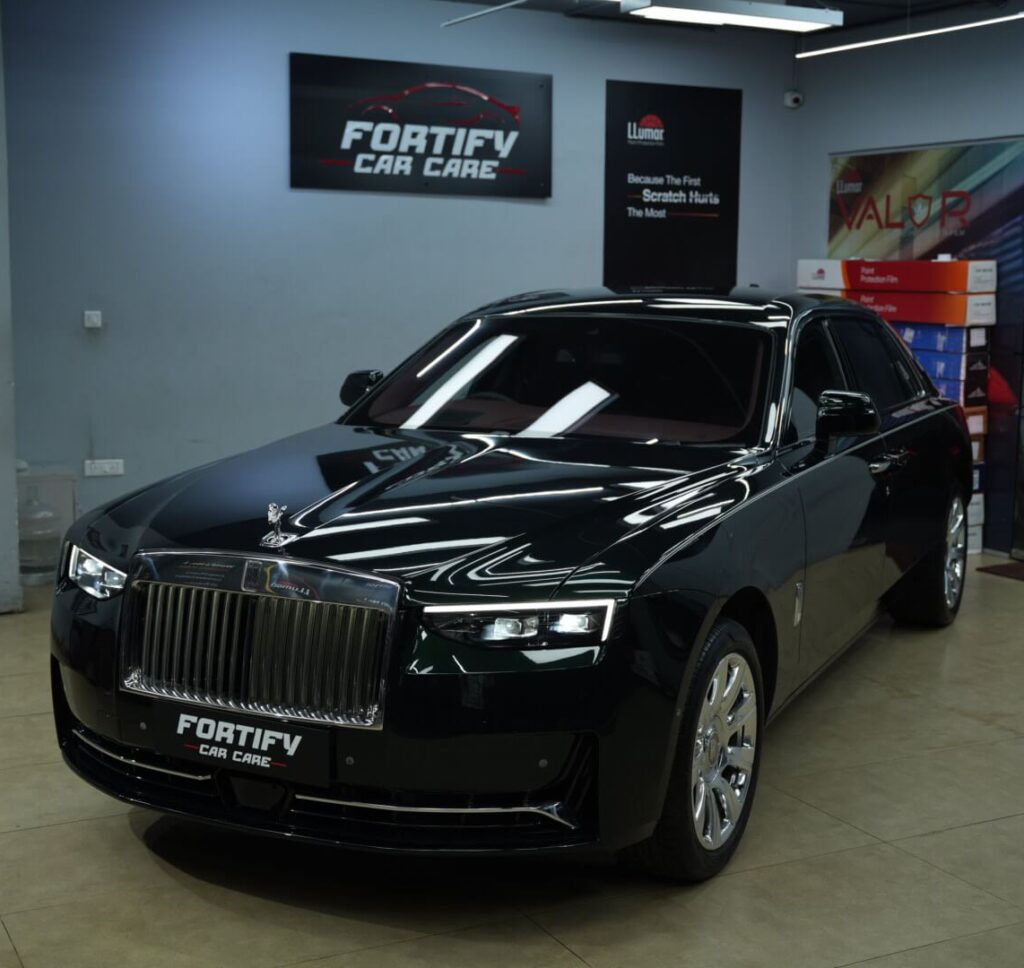
At Fortify Car Care, we install both TPU and PCU film at our studio in HRBR Layout, Banaswadi. Bring your car in, and we’ll help you pick the right one.
Both films are polyurethane, so what actually differs?
TPU stands for thermoplastic polyurethane. It’s the material behind almost every quality clear PPF sold in India today. PCU stands for polycarbonate polyurethane, which is also a thermoplastic polyurethane. So PCU isn’t a rival to TPU. It’s a different recipe within the same family.
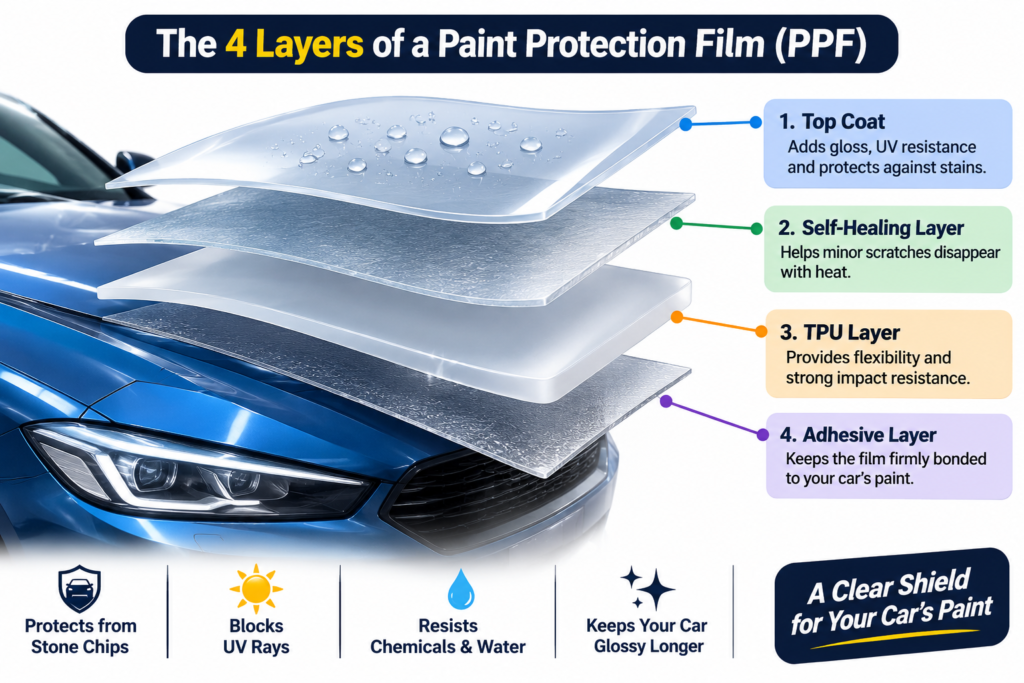
The difference comes down to one ingredient: the polyol. This is the soft part of the film that lets it stretch and spring back. Standard TPU films use a polyester or polyether polyol. PCU films use a polycarbonate polyol instead.
Polycarbonate bonds hold up better against water, heat and oxidation. That’s why PCU films age better outdoors.
Why this choice matters more on Bangalore roads
Bangalore gets rain from two monsoons, the southwest monsoon in summer and the northeast monsoon later in the year. Between them, cars stay damp for much of the year. Add morning dew in the cooler months, and your car rarely gets a long dry spell.
The sun is the other half of the story. Bangalore sits fairly close to the equator, so UV levels stay high through most of the year. Many apartment complexes also have limited covered parking, so many cars sit outside all day.
Then there’s the road itself. Gravel on Outer Ring Road, construction dust in growing areas like Hennur and Whitefield, and fast runs on NICE Road all throw debris at your bumper. Any good PPF will stop those chips. The real difference between films shows in how well they survive rain and sun.
How TPU, PCU and TPH films compare
Feature | TPH | Standard TPU | PCU |
What it is | Hybrid film, often PVC-based | Polyester or polyether polyurethane | Polycarbonate polyurethane |
Stone chip protection | Basic | Strong | Strong |
Self-healing | Weak or none | Yes | Yes |
Resistance to yellowing | Low | Good on quality films | Better over many years |
Resistance to moisture damage | Low | Good | Better |
Resistance to heat ageing | Low | Good | Better |
Feel during installation | Stiff | Soft and stretchy | Often slightly firmer |
Typical warranty | Short or none | 5 to 12 years on branded films | Depends on brand |
These are general differences between material types. The real result depends on the brand, the grade, the top coat and the installer’s skill.
Where TPU film still makes the most sense
Good TPU film has protected cars for years, and it still does the job very well. It’s soft and stretchy, so it wraps deep curves and sharp edges easily. That makes clean edges and tucked corners simpler to achieve on complex bumpers.
The leading brands also back their TPU films with long, written warranties. At our studio, BASF Rodim, LLumar and Saint-Gobain films carry 5 to 12 years of manufacturer cover. That cover includes yellowing, cracking and peeling.
TPU film is usually the smart pick in these cases:
- Your car lives in a covered basement or garage.
- You plan to sell it within three or four years.
- It’s a dark colour, where slight yellowing is hard to see.
- You only want partial coverage on high-impact panels.
Where PCU film pulls ahead
PCU film earns its place on cars that face years of weather. Bangalore’s monsoons, morning dew and frequent washing keep film damp for months. Over time, water slowly breaks down the bonds in many standard films. Polycarbonate bonds resist this much better.
Heat matters too. A bonnet in open parking can get far hotter than the surrounding air, and heat ages film from the inside. PCU film is built to resist that ageing and the yellow tint that often follows.
PCU film is often the better pick in these cases:
- Your car is parked on the street or in an open lot.
- It’s white, silver or pearl, where yellowing shows clearly.
- You plan to keep the car for seven years or more.
- You want full body coverage that ages evenly on every panel.
How long each type of film lasts in real use
A film’s life depends on three things: what it’s made of, how the car is parked and how it’s washed. Here’s what owners can expect from each type.
TPH film often starts to yellow, crack or lose its shine within one to three years. On a car parked outdoors, the decline can show even sooner.
Branded TPU film comes with manufacturer warranties of 5 to 12 years at our studio. With hand washing and some shade, quality TPU film usually stays clear for the full warranty period.
PCU film is designed to stay clear longer in rain, heat and sun. How long it lasts depends on the brand and grade, so always compare the written warranty, not just the sales pitch.
Your habits matter as much as the film. A car washed by hand and parked in shade will keep any film looking good for longer. Brush car washes, harsh chemicals and years of open parking shorten the life of every film type.
What about TPH and PVC films?
TPH stands for thermoplastic hybrid. Many TPH films are PVC-based, which makes them cheaper to produce and sell. They give some protection, but they often turn yellow, crack and lose their shine within a few years. Self-healing is usually weak or missing.
PVC films are older and simpler still. They can be hard to remove cleanly and may leave glue on the paint. We don’t install TPH or PVC films at Fortify because they rarely last long in Bangalore’s sun and rain.
Is a low-cost “full body PPF” offer tempting you? Check the film type before you agree. Watch for these warning signs:
- No brand name printed on the roll or the backing liner.
- A warranty under two years, or no written warranty at all.
- The seller can’t tell you whether the film is TPU, PCU or TPH.
Claims worth a second look before you buy
PCU is new in India, so marketing often moves faster than proof. Keep these points in mind when you compare offers.
A stretch test is not a durability test. Pulling a strip by hand shows how a film behaves during fitting. It says nothing about how the film looks after several years outdoors.
“Polycarbonate” doesn’t mean bulletproof glass. PCU film is a flexible polyurethane, not a sheet of hard plastic. Any ad that suggests otherwise is selling a story.
Thicker film isn’t always better film. Our films range from 170 to 216 microns, and film type matters as much as thickness. A thick TPH film can still fail sooner than a thinner TPU film.
Read the warranty, not the brochure. Check that yellowing is covered and see who issues the warranty. A brand-issued e-warranty is stronger than a shop-only promise.
Which PPF is best for your car?
The best PPF for your car depends on how you park, drive and plan to own it. Use this table as a quick guide.
Your situation | Our suggestion |
Covered parking and a plan to sell within 4 years | Quality TPU film |
Open parking and long ownership | PCU film |
White, silver or pearl paint | PCU film or a top-grade TPU film |
Dark paint in covered parking | Quality TPU film |
Partial coverage on bumper and bonnet only | Quality TPU film |
Full body coverage on a luxury car or EV | PCU film or a top-grade TPU film |
Lowest possible price above everything else | Speak to us first, since TPH rarely lasts |
Many owners also add ceramic coating over either film for extra gloss and easier washing.
Caring for TPU and PCU film after installation
Both films need the same simple care, and good habits add years to either one.
- Wait 7 days before the first wash so the adhesive can cure fully.
- After that, hand wash with pH-neutral shampoo and a clean microfiber mitt.
- Keep pressure washer nozzles away from the film edges.
- Avoid automatic brush washes, rough polishes and waxes.
- Wipe off bird droppings and tree sap within a day or two.
- Park in the shade when you can, especially during the hot months.
Every installation at our studio includes an aftercare kit with the right shampoo and microfiber cloths.
What happens when you visit our studio to compare
Choosing between TPU and PCU film is easier when you can see both on a real car. Here’s what a visit to our Banaswadi studio looks like.
- We inspect your car’s paint under bright lights and note any chips or swirl marks.
- We ask how you drive, where you park and how long you plan to keep the car.
- We show you film samples so you can compare clarity, gloss and feel.
- We recommend a film type, a brand and a coverage level that suit your car.
- Once you agree, we’ll provide a clear quote and book a slot that works for you.
Partial PPF takes 1 to 2 days at our studio. Full front and full body jobs take 2 to 3 days, including paint correction and curing.
How Fortify helps you choose the right film
We’re an authorised installer for BASF Rodim, LLumar and Saint-Gobain in Bangalore. We’ll tell you plainly when a standard TPU film is all your car needs. When PCU makes more sense, we’ll show you why on your own car’s paint.
Want to see both films for yourself? Read about our PCU PPF in Bangalore, or browse our full range of paint protection film in Bangalore.
Final Thoughts
Both films stop stone chips, heal light scratches and protect your paint far better than TPH. The real difference shows over time. PCU film is built to handle rain, heat and sun for longer. Quality TPU film offers proven protection, backed by long manufacturer warranties.
For most cars in covered parking, a branded TPU film is more than enough. If your car lives outdoors, has a light colour or will stay with you for many years, PCU film is worth a closer look. In both cases, the brand, the warranty and the installer’s skill matter as much as the material.
Still not sure? Our team will help you decide on your own car, with no pressure to pick the costlier option.
FAQs
Is PCU PPF better than TPU PPF?
PCU film usually ages better under moisture, heat and sunlight. Both give strong protection against stone chips. For a car in covered parking that you’ll sell soon, quality TPU film is often enough.
Is PCU a type of TPU?
Yes, it is. PCU is a thermoplastic polyurethane made with a polycarbonate polyol. Standard TPU uses a polyester or polyether polyol instead.
Which PPF is best for a car in India?
For most cars, a branded TPU or PCU film from a trusted installer works best. PCU suits cars parked outdoors for many years. Avoid TPH and PVC films if you want long-lasting protection.
Can I get matte PPF in TPU or PCU?
Yes, matte options are available. Our matte TPU films include BASF Rodim R2 Matt, LLumar Platinum Matte and Saint-Gobain Hydro Matte. Ask us which matte PCU films are currently in stock.
Can I switch from TPU to PCU film later?
Yes, you can. A trained installer can remove your old film with gentle heat and fit PCU film in its place. Professional removal won’t harm factory paint.
Does PPF cover door shuts and door jambs?
No, it doesn’t. PPF covers only the exterior painted surfaces of your car. You can’t cover door shuts and jambs with film.
Where can I compare TPU and PCU PPF in Bangalore?
Visit our studio in HRBR Layout 2nd Block, Banaswadi. We’ll check your car’s paint and walk you through both films before you decide.
Not sure which film suits your car?
Visit our studio in HRBR Layout 2nd Block, Banaswadi, and we’ll show you both films side by side. You can also call +91 94451 89042 or WhatsApp +91 99455 62288. We’ll review your paint and ask how you use the car, then suggest the right film.