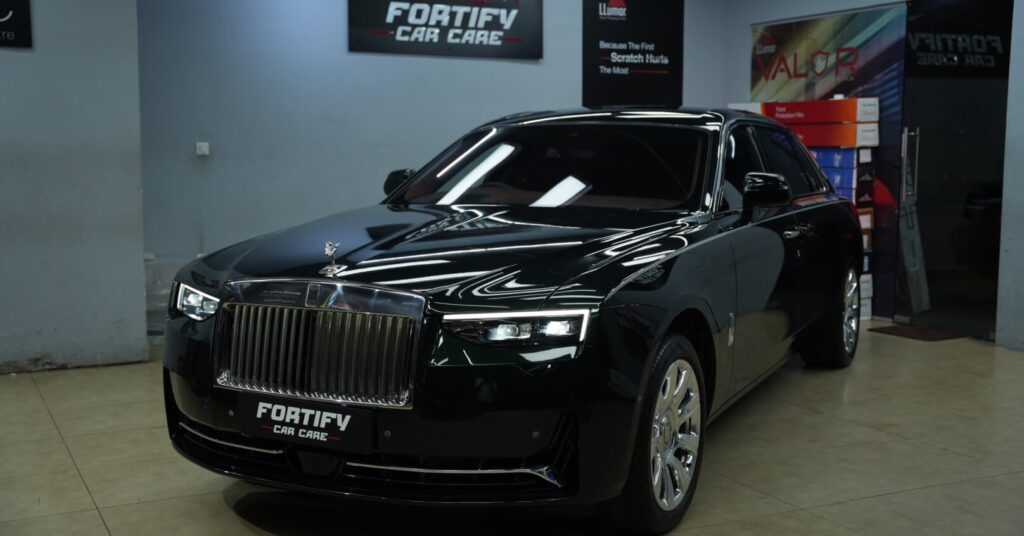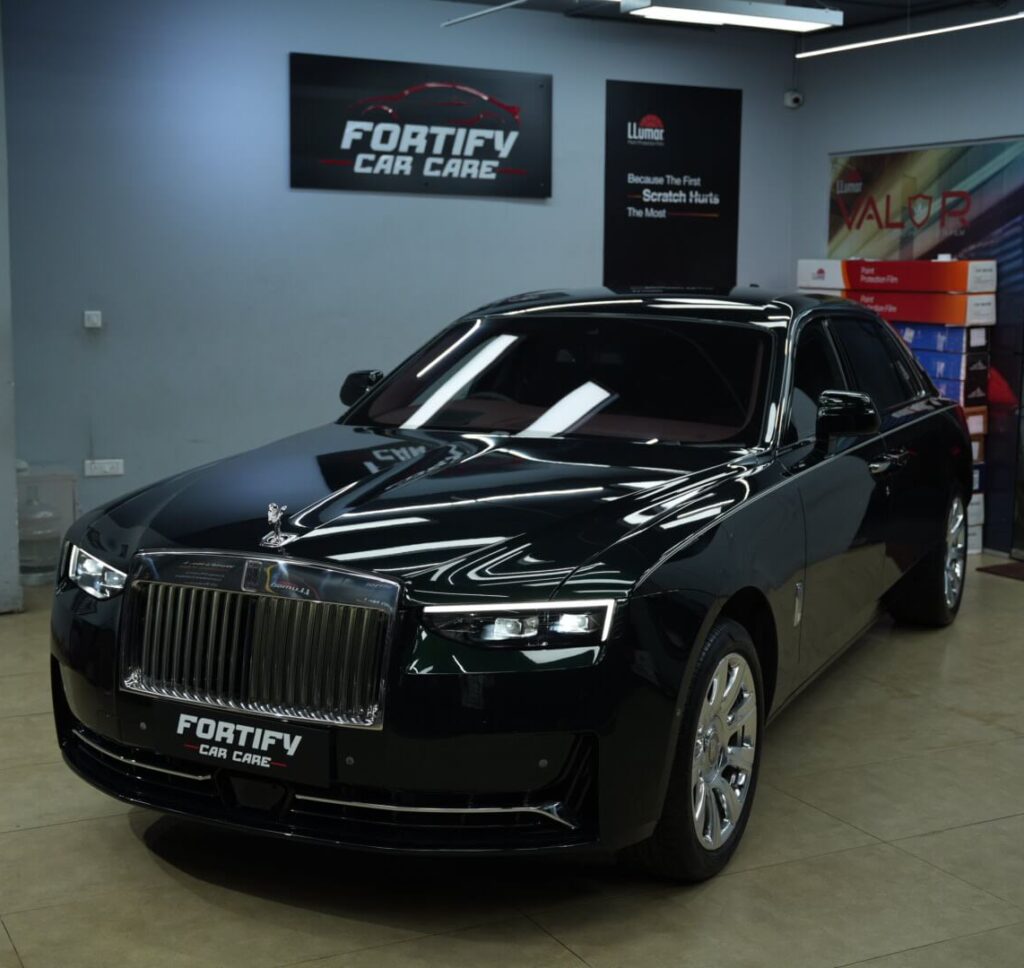
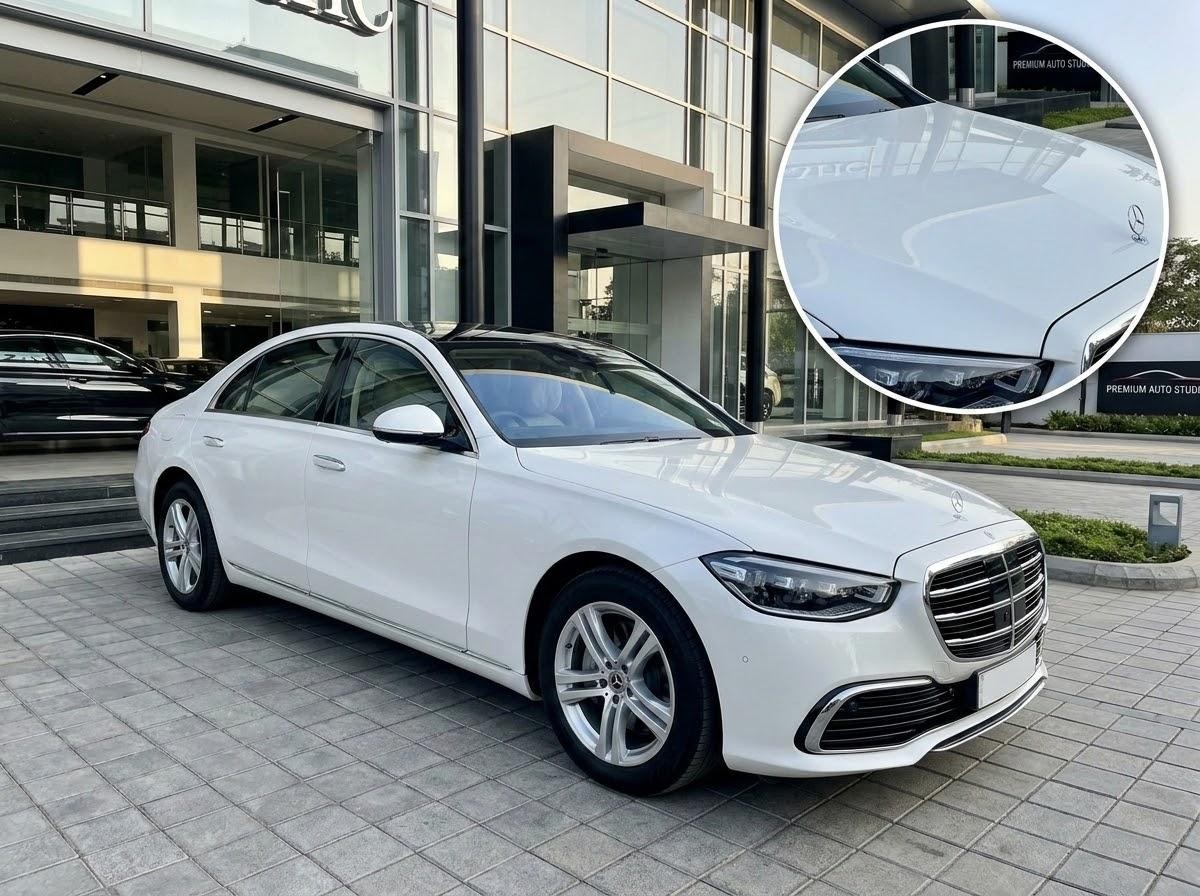
A new car’s paint looks perfect for exactly as long as it takes to drive it off the showroom floor. After that, every kilometre adds to a slow, invisible process of damage — stone chips from the highway, construction dust settling on the bonnet through the week, hard water spots from the first wash, a door ding in the parking lot. None of it is dramatic. All of it is permanent.
PPF for new cars addresses this directly, and applying it when the car is new is the optimal window. The paint is untouched, unscratched, and doesn’t need correction work before the film goes on. What you’re protecting at that point is factory paint in factory condition and once that condition is lost, no coating or film can restore it, only preserve what remains.
Saint-Gobain PPF, installed at Fortify Car Care in Banaswadi, is the subject of this article. It covers what paint protection for new cars actually does and doesn’t do, why the timing of installation matters, what the Saint-Gobain range offers, what the process at a certified studio looks like, and how to think about coverage decisions for different vehicle segments.
The short version: PPF doesn’t keep your car new. It keeps your car’s paint in the condition it was in when the film went on. Do it early enough and that condition is showroom condition. Wait, and you’re protecting paint that’s already accumulated damage.
Why a New Car's Paint Needs Protection Immediately
The assumption most new car owners make is that their vehicle is protected for some initial period that the factory clear coat is somehow more resistant while it’s new. It isn’t. The 2H to 4H pencil hardness rating of a standard factory clear coat is the same on day one as it is two years later. What changes is the accumulation of damage.
Bangalore’s driving environment attacks new paint from the first day. The route from any dealership in the city to most residential areas passes through construction zones, signal stops with two-wheelers squeezing past door panels, and at least one stretch of road where road debris is airborne at speed. None of this is avoidable. It is just what driving in Bangalore is.
Stone chips are the most structurally damaging early threat. At highway speed on the Outer Ring Road or Hosur Road, a 3mm piece of road debris hitting an unprotected bonnet creates a chip that goes through the clear coat and into the base coat or primer. That chip is now a rust initiation point. Repainting a full bonnet on a car that’s four months old is not a scenario anyone expects, but it happens.
Swirl marks are the slow accumulation problem. Every car wash where the technique isn’t perfect a sponge picking up grit from the surface, a squeegee dragged across the bonnet, a dry wipe with a cloth that isn’t clean deposits fine circular scratches in the clear coat. On a 2H to 4H clear coat, these are visible in direct light within six months of regular washing. They don’t go away. Polish removes them temporarily by abrading the surrounding clear coat to the same level, which means thinning the clear coat every time you polish. There’s a finite number of polishes before the clear coat is too thin to protect the paint beneath it.
PPF for new cars breaks this cycle before it starts. The film takes the chips, the swirl marks, and the abrasive contact instead of the paint. The clear coat underneath stays in the condition it was in on the day the film went on.
What Saint-Gobain PPF Actually Does for New Car Paint
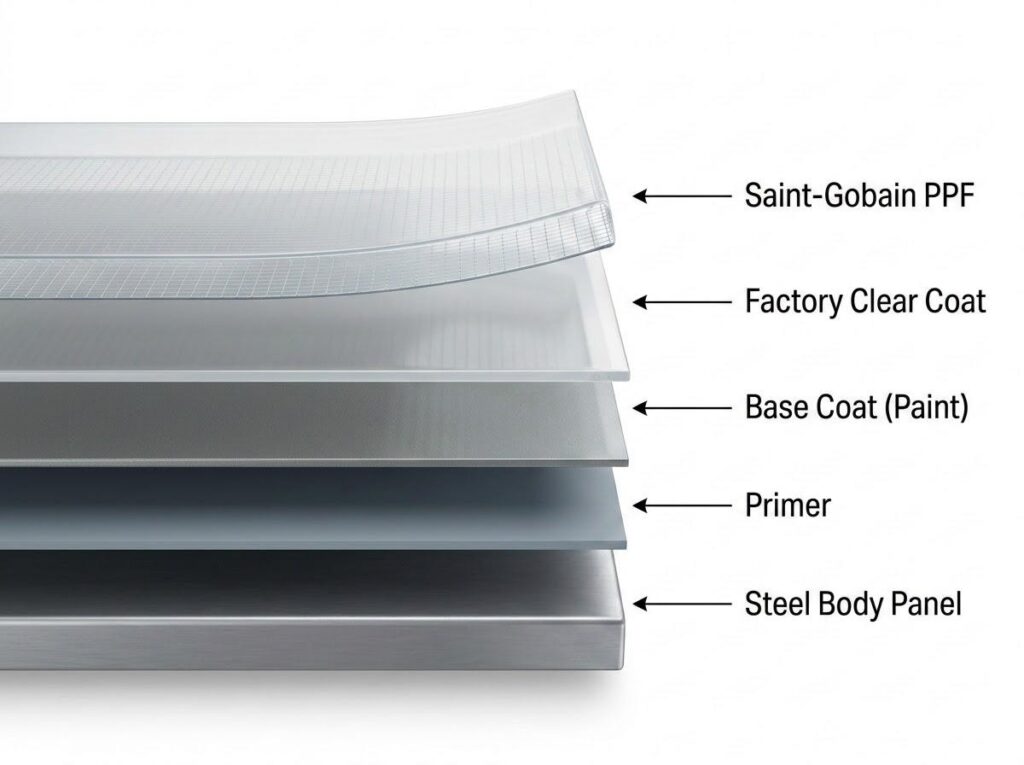
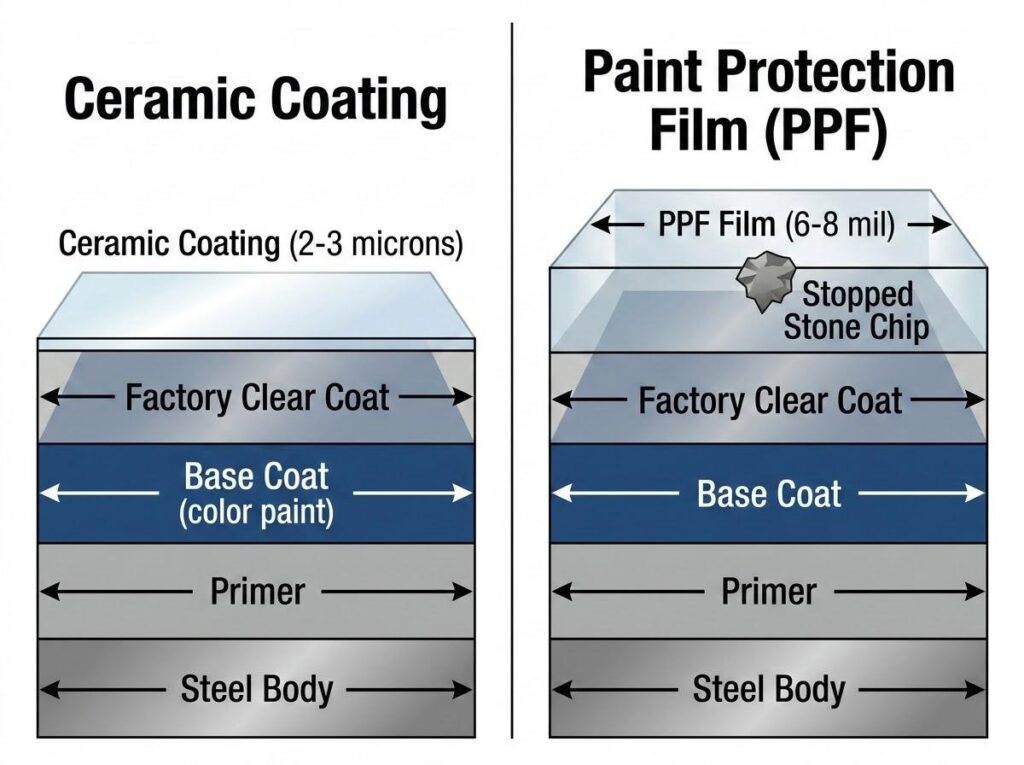
Paint Protection Film is thermoplastic polyurethane a material with enough flexibility to absorb impact and enough thickness to take stone chip hits without transmitting them to the clear coat beneath. The film sits between 6 and 8 mil thick, roughly 150 to 200 microns, which is meaningfully thicker than the clear coat it protects.
Saint-Gobain’s Sapphire Plus adds a proprietary topcoat over the TPU body of the film. That topcoat is where two properties live: 9H hardness and self-healing.
The 9H hardness rating means the topcoat resists scratching from the hardest grade on the standard pencil hardness test. A factory clear coat rates at 2H to 4H. Fine grit, dust abrasion during washing, and light mechanical contact that would visibly scratch a standard clear coat don’t scratch the Sapphire Plus topcoat under the same conditions.
Self-healing means fine swirl marks and light surface deformation in the topcoat recover when heat is applied. The topcoat is formulated from elastomeric polymers with molecular memory displaced polymer chains return to their equilibrium state when warmed to around 60 to 70 degrees Celsius. Bangalore’s direct sunlight reaches that surface temperature on most days of the year. Light swirl marks from a morning wash are typically healed by the time the car has sat in the sun for 20 to 30 minutes.
The film doesn’t make a new car indestructible. It makes the paint beneath it irrelevant to whatever happens on the surface chips land on the film, abrasion lands on the film, UV exposure lands on the film. The clear coat underneath doesn’t know any of it happened.
What this means practically: the paint stays in showroom condition not because the film is impervious to everything, but because the film handles what the clear coat would have handled and handles it better, while also recovering from lighter damage on its own.
The Timing Advantage: Why New Cars Are the Right Moment for PPF
Most car owners think about paint protection for new cars after something happens to the paint. That framing gets the logic backwards.
The cost of applying PPF to a new car is fixed. The cost of not applying it grows with every month the car is used.
A new car going into PPF installation requires: a standard wash, a decontamination step, and an IPA wipe-down. The paint is clean, unscratched, and has no previous correction work or chemical residue from polish or wax. Installation time is at its minimum, the film bonds to a surface in perfect condition, and the clear coat underneath is fully intact to its original depth.
A car that has been driven for 18 months before PPF installation requires all of the above plus paint correction machine polishing to remove the swirl marks and micro-scratches that have accumulated. Applying PPF over existing swirl marks doesn’t make them disappear; it locks them in permanently under an optically clear film that now makes them easier to see against the film’s gloss. The correction work adds time, cost, and removes some clear coat depth that cannot be replaced.
The paint you protect on day one is the best version of that paint that will ever exist. Every subsequent week in Bangalore traffic moves it further from that standard.
Saint-Gobain PPF Range for New Cars at Fortify Car Care
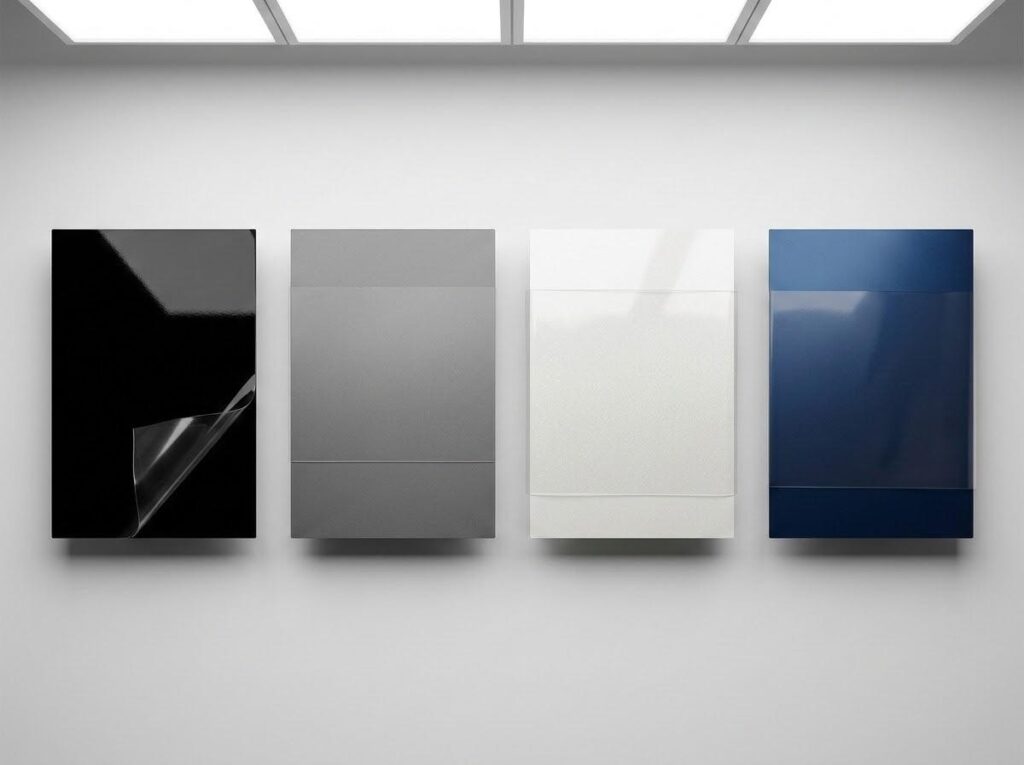
Fortify Car Care carries the complete Saint-Gobain PPF range. For new car applications, the choice between tiers comes down to the vehicle segment, the coverage area, and what the owner’s priorities are.
Film | Hardness | Self-Healing | Warranty | New Car Fit |
Sapphire Plus Gloss | 9H | Yes, heat-activated | 5 years | Full-body on new luxury and premium cars; best clarity with maximum protection |
Sapphire Plus Matte | 9H | Yes, heat-activated | 5 years | Factory matte paint preservation; transforms gloss to matte with full 9H cover |
Standard Gloss | 7H–8H | Yes | 3–5 years | High-impact zones on new mid-segment cars; practical coverage at proportionate cost |
Coloured / Satin | 7H–8H | Yes | 3–5 years | Aesthetic finish change with physical protection; colour or satin transformation |
The Sapphire Plus Gloss is the correct starting point for a new luxury vehicle a Mercedes, BMW, Audi, or high-specification Tata, Kia, or Hyundai variant where the owner intends to keep the car for five years or more and wants original paint condition at the end of that period. The 5-year warranty and 9H hardness at this tier reflect the value of what’s being protected.
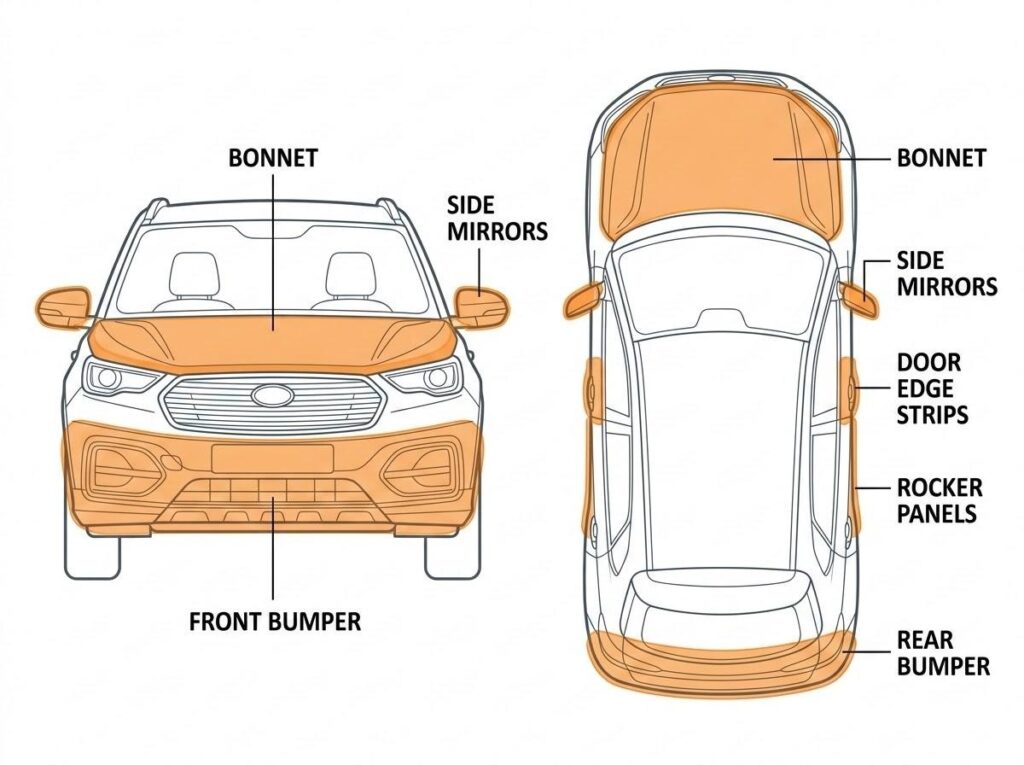
The Standard Gloss range on high-impact zones front bumper, bonnet leading edge, mirrors, door edges, and rear bumper is the right approach for a new mid-segment car. The front zones take around 80% of the stone chip and debris damage a car accumulates in traffic. Covering them with Saint-Gobain standard range PPF immediately after purchase protects the areas that matter most at a cost proportionate to the vehicle’s value.
The Sapphire Plus Matte deserves specific mention for new matte-finish vehicles. Factory matte paint cannot be polished out the way gloss paint can. A scratch on matte paint typically requires the entire panel to be repainted, which then needs to match a matte finish that has already aged. Applying Sapphire Plus Matte immediately after purchase eliminates this problem for the duration of the film.
Paint Protection for New Cars in Bangalore: What the City Does to Paint
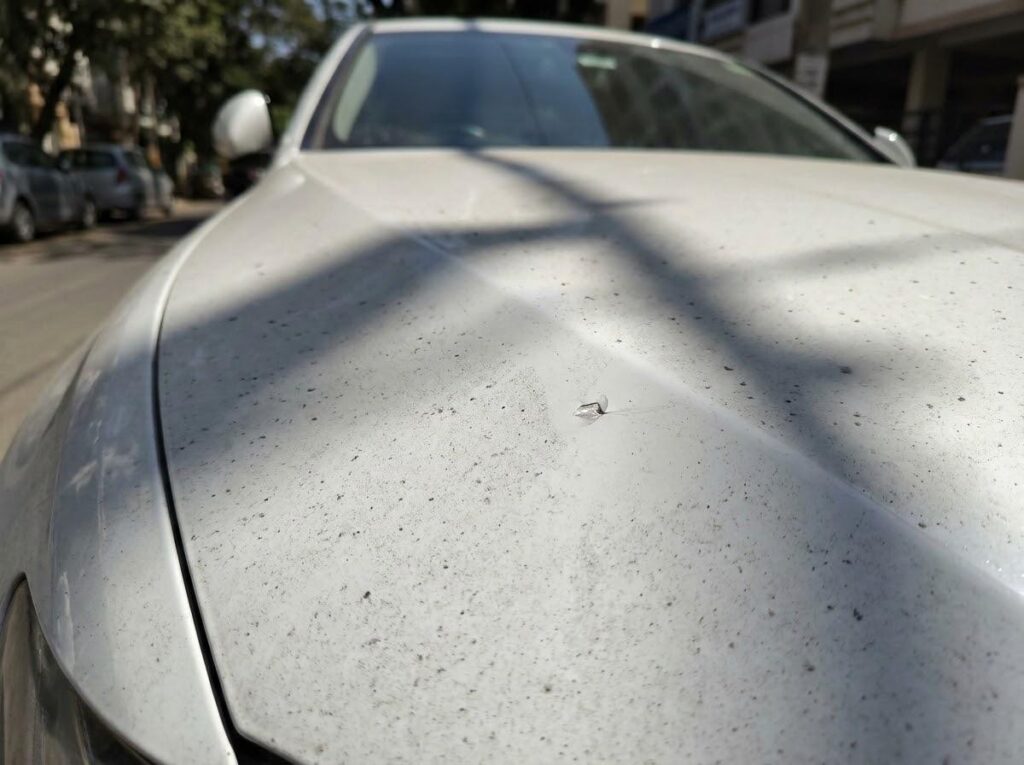
Bangalore’s specific conditions make paint protection for new cars more relevant here than in many other Indian cities.
Construction dust is the ambient condition, not an occasional problem. Metro Phase 3 work, ongoing flyover construction on several corridors, and road-widening projects across Whitefield, Sarjapur, and northern Bangalore mean construction grit is airborne and settling on every parked car in surrounding areas. This dust contains fine silica and concrete particles. In contact with a car surface during dry wiping or during washing if the panel isn’t thoroughly pre-rinsed it creates micro-scratches on a 2H to 4H clear coat. On a 9H PPF topcoat, the same particles require significantly more force to leave a visible mark.
Hard water is a year-round staining risk. Bangalore’s municipal supply has high dissolved mineral content. Water droplets that dry in direct sun leave behind calcium and magnesium salt deposits that etch into a clear coat within a few hours at temperature. The Saint-Gobain Sapphire Plus topcoat’s chemical resistance slows this penetration, giving time to clean the surface before permanent staining occurs. The clear coat alone offers no equivalent window.
Traffic density in Bangalore means more door contact and paint transfer risk than most cities. Extended stop-and-go conditions on Outer Ring Road, Old Madras Road, Bellary Road, and the corridors feeding the tech zones mean prolonged exposure to other vehicles at close range. PPF on door edges and mirrors is realistic coverage for where Bangalore traffic actually causes damage, not an overcaution.
Coverage Decisions: Where to Apply PPF on a New Car
New car owners often face the coverage question without a clear framework. The decision comes down to three variables: vehicle value, how the car is used, and budget.
For a new car valued above 30 lakhs, full-body Saint-Gobain Sapphire Plus Gloss is the standard recommendation. At this value point, a single paint repair a full bonnet respray at a dealer body shop costs between 25,000 and 60,000 rupees depending on the vehicle. Five years of that risk in Bangalore conditions means full-body PPF pays for itself in avoided repair costs for owners who drive regularly. It also means resale at year five or six happens with original paint under the film rather than visibly chipped, corrected, and resprayed panels.
For a new car in the 10 to 30 lakh segment, a high-impact zone package makes more economic sense. Standard coverage: front bumper, bonnet, both mirrors, and door edge guards. These five areas absorb approximately 80% of the debris and chip damage a car accumulates in highway and city driving. A rear bumper addition is worth considering if the car parks in tight bays regularly which describes most apartment parking in Bangalore.
There is no wrong answer to coverage, only coverage decisions made without accurate information about what each zone is actually protecting against.
For a new car below 10 lakhs, the question is more about priorities than economics. A paint correction at 18 months and a respray of one or two panels over five years of Bangalore driving is a realistic cumulative cost. PPF on high-impact zones with standard range film is a practical choice for owners who want to avoid that cycle entirely
The Installation Process for a New Car at Fortify Car Care
Getting PPF on a new car within the first week of delivery is possible and recommended. The process at Fortify’s Banaswadi studio has a defined sequence for new car applications that differs slightly from used car installations.
New cars from the dealership are not always as clean as they appear. Dealer preparation often involves wax or sealant applied to make the car look good at handover products that must be fully removed before PPF adhesion will work correctly. Silicone residue from dealer products prevents the adhesive from bonding at the molecular level. Any contamination left on the surface ends up permanently sealed under the film.
The preparation sequence for a new car at Fortify: a thorough decontamination wash, chemical iron decontamination to remove embedded brake dust or rail dust from transport, clay bar treatment across all panels, and an isopropyl alcohol wipe-down of every panel receiving film. For new cars with dealer sealant applied, an additional chemical decontamination step removes the sealant layer before the IPA wipe.
Computer-cut templates are used for every panel. The template for each specific vehicle model is pre-cut before application, which means no blade contact on the car’s paint during installation. This is non-negotiable for new cars any blade work on new paint risks scratching the clear coat in exactly the area the film is meant to protect.
Application happens in a climate-controlled bay. The Saint-Gobain PPF adhesive bonds most effectively within a specific temperature and humidity range, and Bangalore’s ambient conditions particularly in the warmer months and the humidity of the monsoon can fall outside that range without environmental control. The studio maintains application conditions regardless of outside weather.
The car remains in the studio for 24 to 48 hours after application for the adhesive to cure before the film is stressed by washing or rain exposure
PPF vs Ceramic Coating for a New Car: Not a Comparison, a Sequence
The question of PPF versus ceramic coating for a new car comes up in almost every consultation at Fortify. The framing of it as a comparison gets the relationship wrong.
Ceramic coating bonds chemically with the clear coat to create a hard, hydrophobic, UV-resistant surface layer approximately 2 to 3 microns thick. It doesn’t have meaningful physical thickness to absorb impact. A stone chip at speed goes through a ceramic coating as easily as through unprotected clear coat the coating provides no physical barrier against road debris.
PPF is a 150 to 200 micron physical film that absorbs stone chip energy before it reaches the clear coat. Physical thickness is what stops chips. It also provides UV resistance, chemical resistance, and in the Sapphire Plus 9H scratch hardness and self-healing on top of the impact protection.
They are not alternatives. They address different threat categories.
The optimal approach for a new car that justifies the investment is PPF on high-impact zones or full-body, with a ceramic or graphene coating applied over the entire car including the PPF panels. The ceramic layer provides hydrophobic water-shedding on top of the film, and covers the non-PPF panels with UV protection and chemical resistance. Fortify handles both services in sequence.
For a new car owner on a single-service budget, PPF on the front zones is the higher-priority choice. The damage that PPF prevents chips and structural paint damage is permanent and expensive to repair. The damage that ceramic coating prevents water spots, light contamination bonding is easier to manage in the short term.
Saint-Gobain PPF in Bangalore at Fortify Car Care, Banaswadi
For new car owners looking to get Saint-Gobain PPF in Bangalore installed within the first week of delivery, Fortify Car Care in Banaswadi is a certified Saint-Gobain installer carrying the complete range.
The studio handles the full spectrum from Sapphire Plus full-body installations on luxury vehicles to standard range high-impact zone packages on mid-segment cars. Every installation begins with the full decontamination sequence appropriate for new cars, uses computer-cut templates for no blade contact on paint, and is done in a climate-controlled bay.
For new car owners who want to compare Saint-Gobain against other options before deciding, Fortify also carries LLumar PPF, Garware PPF, and Matte PPF. The team can walk through the differences relevant to the specific vehicle and what the owner’s protection priorities are.
For combination installations PPF on high-impact zones with ceramic or graphene coating over the full car Fortify handles both in a single engagement. Bringing the car in as early as possible after delivery, before it accumulates its first round of Bangalore road damage, is the one thing that keeps all options open.
Frequently Asked Questions
When should I get PPF on a new car?
As soon as possible after delivery ideally within the first week. New car paint is in its best possible condition: unscratched, uncorrected, and free of the accumulated swirl marks and chips that make later installations require correction work first. PPF applied on day one protects factory paint in factory condition. Every week of Bangalore driving before installation moves that paint further from the standard the film can then preserve.
Does PPF affect a new car’s manufacturer warranty?
No. PPF is a removable film applied over the clear coat, not a modification to the car’s paint or mechanical components. It does not void any manufacturer warranty. The film is removable without damaging the paint underneath when installed and removed correctly by a trained installer.
Can PPF be applied on a new car directly from the dealership?
Yes, and this is the recommended sequence. Rather than driving the car home and accumulating the first round of parking lot contact and road debris, it goes directly to the PPF installer. The studio handles dealer preparation removal, decontamination, and installation. The car arrives home with the film already in place.
Is full-body PPF worth it on a new mid-segment car?
For a car in the 10 to 30 lakh range, full-body Sapphire Plus is a judgment call based on how long the owner plans to keep the car. High-impact zone coverage with standard range film front bumper, bonnet, mirrors, door edges is typically the more practical choice at this price point. It addresses the damage categories that matter most in Bangalore driving at a cost proportionate to the vehicle’s value. Full-body coverage is the right answer if the owner is keeping the car for five or more years and wants paint in near-original condition at sale.
Does Saint-Gobain PPF affect how a new car looks?
Saint-Gobain Sapphire Plus Gloss is optically clear and enhances the gloss of the paint underneath rather than altering it. When installed correctly, it isn’t visible as a separate layer. The Sapphire Plus Matte converts a gloss paint surface to a matte finish with the same 9H protection. None of the range changes the car’s colour. The only visible difference with a quality installation is that the paint looks cleaner and deeper than unprotected paint of the same colour.
What happens to paint under PPF when the film is removed?
Paint under correctly installed and removed PPF is in the same condition as the day the film was applied, assuming no physical damage to the panel occurred. The adhesive leaves no residue when removed by a trained installer and does not affect the clear coat. For a car where PPF was applied on delivery, the paint under the film at removal five years later reflects five years of zero exposure to chips, abrasion, UV, and chemical contamination.
How does Saint-Gobain PPF perform during Bangalore’s monsoon?
The Sapphire Plus topcoat is hydrophobic, meaning water sheets off the surface rather than sitting on it. This reduces water spot formation from monsoon rain. The self-healing property during the monsoon is activated by warm water during washing rather than sun exposure a bucket of warm water over the panel during a wash is sufficient to initiate healing for fine swirl marks accumulated since the last wash.
Can I wash my new car normally after PPF?
Yes, after the initial 48-hour cure period. The standard recommendation is to avoid high-pressure washing directly at panel edges, where the edge of the film is most susceptible to lifting if hit with direct pressure at close range. A normal touchless wash or hand wash with proper technique is fine from day three onward. The 9H topcoat on the Sapphire Plus is more resistant to washing-related abrasion than the clear coat it’s protecting but correct washing habits are still worth maintaining.