Park your car on any main road in Bangalore at noon and come back thirty minutes later. Without window film, the cabin temperature can hit 50 degrees Celsius or higher. The steering wheel is too hot to grip without wincing. The seat burns through fabric. The air conditioning has to work flat out for ten minutes before the cabin is bearable. This is a daily reality for most Bangalore drivers for at least five months of the year.
Sun control film solves a real problem. It intercepts solar energy at the glass before it converts to heat inside the cabin. The right film keeps the car noticeably cooler, reduces the strain on air conditioning, protects the interior from UV-driven fading and cracking, and does all of this while staying within the legal visibility limits that Indian regulations require.
The wrong film does some of these things poorly, degrades within two years, or gets you stopped at an RTO checkpoint. Choosing correctly matters. This article covers why Fortify Car Care recommends Garware car film specifically, what the product range actually does, and what Bangalore car owners need to know before making a decision.
Sun control film is not a cosmetic accessory. In Bangalore’s climate, it is one of the most practical investments a car owner can make for daily driving comfort, interior preservation, and long-term vehicle health.
Why Bangalore Makes Sun Control Film a Serious Decision
Most Indian cities deal with heat. Bangalore’s situation is specific in a way that changes the calculation.
The city sits at 921 metres above sea level. At this altitude, UV intensity is measurably higher than at sea level. UV radiation does two kinds of damage. It damages occupants directly, contributing to cumulative skin exposure that dermatologists consistently flag as underestimated in Indian cities. And it damages interiors: dashboard cracking, seat fabric fading, leather drying and discolouring, plastic trim losing its finish. None of this is immediate. It accumulates over months and years and shows up as a car that looks older than it is.
Infrared radiation is what drives cabin temperature. Glass is transparent to visible light but allows a significant portion of infrared energy through, where it heats the dashboard, seats, and everything else inside. That heat then radiates back and circulates in the closed cabin. The result is the fifty-degree interior that greets anyone who parks outdoors in Bangalore between March and October.
Bangalore also has a particular combination of intense dry heat before the monsoon, followed by months of cloud-filtered but still UV-heavy weather during the monsoon, then return of intensity in the winter sun. A film that performs only in peak summer and degrades in humidity doesn’t hold up here.
On top of the climate, there is the legal framework. Indian motor vehicle regulations set Visible Light Transmission (VLT) minimums: 70% for front and rear windshields, 50% for side windows. Films that fall below these thresholds are non-compliant. Many cheap films on the market are darker than they should be. Getting stopped and having film removed at the roadside is a real outcome for non-compliant installations.
What Garware Hi-Tech Films Is and Why It Matters

Garware Hi-Tech Films is an Indian manufacturer with over 90 years of operating history. It is one of the few companies in the world to manufacture its own base polyester film and then process it into the finished product, rather than importing base film from elsewhere and coating it. This vertical integration is the reason Garware’s product consistency is regarded as higher than many competing brands in the Indian market.
The company introduced Safety Glazing automotive films, the Ice Cool Shield SG and Arctic Cool Shield SG lines, specifically compliant with CMV Rule 100 and IS 2553 (Part 2). This compliance is stated on the product packaging. For car owners who need documented proof of legal compliance during RTO or police checks, a Garware-certified installation provides that.
Garware’s sun control films use a combination of metallised and dyed polyester construction in standard lines, with advanced nano-ceramic and ceramic formulations in premium ranges. The core technologies at work: reflective layers that bounce infrared radiation before it passes through the glass, absorptive layers that capture remaining infrared energy and prevent it from converting to cabin heat, and UV-blocking chemistry that intercepts ultraviolet radiation across both UVA and UVB spectrums.
The resulting specification across most Garware automotive lines is greater than 99% UV blockage across the product range, and heat rejection up to 78% Total Solar Energy Rejected (TSER) in the highest-performing lines. For Bangalore’s UV conditions specifically, the 99% UV blockage figure is the most directly relevant protection specification.
Garware Car Film Range: What Each Product Actually Does
Ice Cool Shield SG
The Ice Cool Shield SG is Garware’s high-performance line engineered specifically for hot-climate driving conditions. It offers TSER of 35% on front windshield specifications and delivers strong infrared rejection alongside the standard 99% UV blockage. The SG designation indicates Safety Glazing compliance, which means it holds the glass together on impact rather than shattering, adding a safety function beyond thermal performance.
For Bangalore drivers who park outdoors regularly and deal with the full weight of the summer UV load, the Ice Cool Shield SG is the product positioned for that specific problem. The film maintains 70% VLT on front windshield applications, keeping the installation RTO-compliant.
Arctic Cool Shield SG
The Arctic Cool Shield SG is Garware’s all-season film, offering balanced heat rejection and UV protection across multiple VLT options. Where the Ice Cool Shield is optimised for maximum heat rejection, the Arctic Cool is designed to perform consistently across Bangalore’s full seasonal range: the dry heat of summer, the UV-diffused monsoon months, and the cooler but still UV-heavy winter sun.
For cars that need a single film installation to perform well year-round without trading off visibility, the Arctic Cool Shield SG covers that ground. It’s the more versatile choice for owners who aren’t primarily dealing with extreme parking heat but want consistent UV and heat protection throughout the year.
Fronty
The Fronty is Garware’s front windshield-specific film, designed to deliver 99% UV blockage and 70% VLT in compliance with the windshield visibility standard. It is a practical, widely installed option for owners who want the basics covered on the front glass without moving to a higher-specification product.
For Bangalore’s conditions, the Fronty handles UV protection on the windshield competently. Drivers who want stronger heat rejection at the front, particularly for long highway drives or regular outdoor exposure, may find the Ice Cool Shield SG the better fit.
Platina Series
The Platina Series represents Garware’s premium tier, incorporating nano-ceramic and specialised ceramic coatings rather than standard metallised construction. Nano-ceramic films reject infrared and UV radiation without relying on metallic layers, which means they do not interfere with GPS, mobile signals, or ETC transponders. For cars with built-in navigation, dashcams, or toll payment systems, this distinction is practically relevant.
The Platina Series delivers high heat rejection and UV performance while maintaining optical clarity that metallised films can sometimes compromise. For owners of premium vehicles where optical quality matters as much as protection specification, the Platina range is the appropriate consideration.
Sunroof and Moonroof Film Kits
Garware launched dedicated film kits for sunroof and moonroof panels, capable of reducing heat penetration through the roof glass by approximately 30%. This is a specific product addressing a specific Bangalore problem: panoramic sunroofs, now standard on most mid and premium SUVs in the city, are significant sources of overhead heat and UV exposure that standard side window film doesn’t address.
For Bangalore drivers with a Tata Harrier, Hyundai Creta, Kia Seltos, or any of the SUVs sold here with panoramic roofs, the sunroof film kit is worth considering alongside the main window installation. The roof glass receives direct overhead sun for the full exposure period, and its contribution to cabin heat is disproportionate to its size.
Garware Film Range at a Glance
Here is a clear comparison of the main Garware automotive film options across the specifications that matter for Bangalore conditions:
| Garware Film | UV Blockage | Heat / IR Rejection | VLT | Best Use Case |
|---|---|---|---|---|
| Ice Cool Shield SG | 99%+ | Up to 78% TSER | 35% (side) / 70% (front) | High-heat zones, outdoor parkers, Bangalore summer driving |
| Arctic Cool Shield SG | 99%+ | High, balanced | Multiple VLT options | All-season use, balanced heat + visibility |
| Fronty | 99%+ | Moderate | 70% (windshield spec) | Front windshield, RTO-compliant visibility |
| Platina Series | 99%+ | Very high (nano/ceramic) | Multiple options | Premium vehicles, maximum heat rejection |
| Sunroof / Moonroof Kit | 99%+ | Up to 30% heat reduction | Spec varies | SUVs and sedans with panoramic roofs |
TSER: Total Solar Energy Rejected. VLT: Visible Light Transmission. RTO compliance requires 70% VLT for windshields and 50% for side windows. All figures are reference specifications from Garware product lines. Exact performance figures vary by specific product code and VLT variant. Consult Fortify Car Care for the specification that fits your car and use case.
Garware PPF and Sun Control Film: Two Different Products, One Fortify Service
Garware makes two distinct product categories that often get conflated: Paint Protection Film (PPF) and Sun Control Film. They are different products solving different problems, and understanding the distinction is worth a moment.
Garware PPF
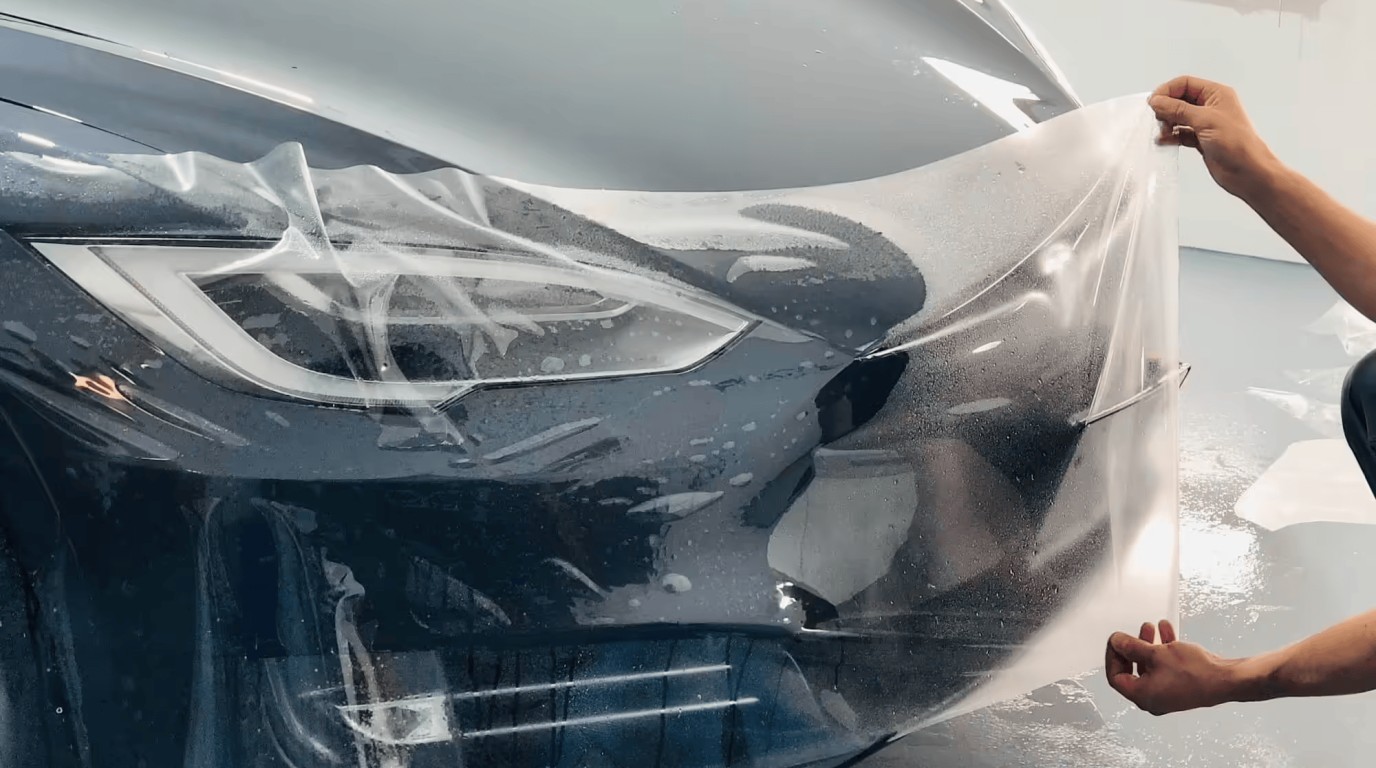
Garware PPF is a thermoplastic polyurethane film applied over the car’s exterior paint surfaces. Its function is paint protection from physical damage: stone chips, scratches, swirl marks, bird dropping etching, and surface abrasion. It is transparent, preserves the original paint colour, and in self-healing grades recovers from minor surface scratches when exposed to heat.
Garware PPF is not a window film. It goes on the paint, not the glass. It doesn’t meaningfully affect cabin temperature or UV exposure to occupants. What it does do is protect the car’s paint from the kind of road damage that Bangalore’s construction-heavy roads and highway driving produce daily.
Fortify Car Care is an authorised Garware PPF installer in Bangalore. For owners of premium vehicles who want genuine Garware PPF coverage with professional installation and warranty documentation, Fortify handles this. The combination of Garware PPF on the exterior paint and Garware sun control film on the windows covers both paint protection and occupant comfort from a single trusted manufacturer.
Garware Sun Control Film
Garware sun control film is the window film product range. Applied to the inside surface of glass, it manages UV and infrared transmission through the windows and windshield. This is the product that reduces cabin temperature, protects occupants from UV exposure, prevents interior fading, and reduces air conditioning load.
When people searching for Garware car film installation in Bangalore are looking for window film for heat and UV management, sun control film is the product. When they are looking for paint chip protection, it’s the PPF. Fortify Car Care provides both, and the team can walk through which product addresses which concern before any work begins.
What Professional Installation Actually Changes
Sun control film is available as a DIY product online at significantly lower cost than professional installation. The performance gap between DIY and professionally installed film is worth addressing directly.
Film application on curved automotive glass is a skill-dependent process. Car windows are not flat. The rear windshield, in particular, has a compound curve that requires the film to be precisely cut and applied without bubbles, lifting edges, or misalignment at the defroster elements. A poorly applied film develops lifting at the edges within months in Bangalore’s humidity, collects dust underneath, and creates visual distortion that affects driving visibility.
Professional installation at a studio like Fortify means the glass is cleaned to a standard that removes all contamination before the film goes on, the film is cut with precision for the specific car rather than being a generic sheet that’s forced to fit, application happens in a controlled environment free of dust and debris, and the edges are sealed correctly so they don’t lift.
For Garware Safety Glazing films specifically, professional installation also produces the documentation needed to demonstrate RTO compliance if the car is stopped. An invoice from a certified installer with the product’s compliance certification is the proof. A DIY installation with no documentation provides no protection at an RTO check.
Installation quality determines how long the film performs, how good it looks, and whether you can prove it’s legal if you are ever asked at a checkpoint. Professional installation covers all three. A DIY kit covers none of them reliably.
Legal Compliance: What Bangalore Car Owners Actually Need to Know
Indian motor vehicle law is specific about window film. The Central Motor Vehicles Rules set VLT minimums: 70% for the front windshield and rear windshield, 50% for side windows. Films darker than these thresholds are non-compliant. Police and RTO checkpoints in Bangalore have been consistent in checking this, particularly on larger vehicles and SUVs.
The practical implication is straightforward. Any film that meets these VLT thresholds is legal for installation and use. Films below these thresholds are not. The problem with cheap, non-compliant films is that they are often sold without clear VLT labelling, making compliance impossible to verify without measurement.
Garware’s Ice Cool Shield SG and Arctic Cool Shield SG lines comply with CMV Rule 100 (2)(3) and (3A) and IS 2553 (Part 2). This compliance is documented on Garware product packaging. At Fortify Car Care, each installation comes with documentation that specifies the product installed. If a customer is ever asked to verify compliance, they have the paper trail that a certified installer with a compliant product provides.
One additional point on transparency: VLT and darkness are not the same thing, and heat rejection is not dependent on darkness. A light-coloured ceramic film can reject more heat than a dark dyed film. The darkness of a tint tells you about light transmission, not heat performance. Garware’s compliance specs prioritise performance within the legal VLT range rather than pushing films as dark as possible.
How Cabin Temperature and AC Load Actually Change with Film
The practical outcome that most Bangalore owners care about is simple: how much cooler does the car actually get?
Sun control film reduces cabin temperature by approximately 5 to 8 degrees Celsius compared to an unfilmed car that’s been parked in direct sun, according to performance data from Garware’s product documentation. This is a meaningful difference for occupant comfort and for the time it takes the air conditioning to bring the cabin to a comfortable temperature.
The secondary benefit is the reduction in air conditioning load. A cooler starting cabin temperature means the AC compressor doesn’t have to work as hard or as long to reach the set temperature. For city driving in stop-and-go Bangalore traffic, where the AC is running almost continuously, the reduction in AC load has a measurable effect on fuel consumption over time.
Interior preservation is the third practical benefit. Dashboard cracking, seat fabric bleaching, leather drying out, plastic trim discolouring: all of these are UV-driven processes. A film blocking over 99% of UV radiation slows these processes significantly. On a car kept for 5 to 7 years, the interior condition difference between a filmed and unfilmed car of the same age is visible and affects resale value.
Getting Garware Car Film Installed at Fortify Car Care in Bangalore
For Bangalore car owners looking for professional installation of Garware car film, and for the best car detailing in Bangalore that covers the full range of protection services, Fortify Car Care in Banaswadi is an authorised installation studio.
Fortify installs Garware sun control films across the range, matching the specific film to the car’s use, parking conditions, and the owner’s performance priorities. The installation process covers proper glass preparation, precision cutting for the specific car, application in a controlled indoor environment, and documentation for compliance verification. For owners also considering Garware PPF for paint protection alongside window film, Fortify handles both in a single engagement.
The full service range at Fortify includes Garware PPF, LLumar PPF, Saint Gobain PPF, Matte PPF, MAXDECAL PPF, ceramic coating, graphene coating, car wraps, and sun control films across brands. For owners who want comprehensive coverage, Fortify can plan and execute the combination of exterior paint protection and interior UV and heat management together.
Fortify Car Care is located at Ward No 88/27, #4DC-544, 6th A Main Rd, 4D Cross, HRBR Layout 2nd Block, Banaswadi, Bengaluru, Karnataka 560043. Contact the team at +91 9945562288 or +91 9445189042, or write to info@fortifycarcare.in to discuss your car’s specific requirements.
Frequently Asked Questions
What is Garware car film and what does it do?
Garware car film refers to two distinct product categories from Garware Hi-Tech Films: sun control window films and paint protection films (PPF). Sun control films are applied to glass surfaces to reject UV radiation and infrared heat, keeping the cabin cooler and protecting occupants and interiors from UV damage. PPF is applied to exterior paint to protect against stone chips, scratches, and surface abrasion. Both are manufactured by Garware Hi-Tech Films, an Indian company with over 90 years of history in specialty films.
Is Garware sun control film legal in India?
Yes. Garware’s Safety Glazing lines, including the Ice Cool Shield SG and Arctic Cool Shield SG, comply with CMV Rule 100 (2)(3) and (3A) and IS 2553 (Part 2), which are the Indian regulatory standards for automotive window films. The compliance is documented on Garware product packaging. Films installed by a certified professional like Fortify Car Care come with documentation that proves compliance if needed at a checkpoint.
How much does Garware film reduce cabin temperature?
A quality sun control film reduces cabin temperature by approximately 5 to 8 degrees Celsius compared to an unfilmed car parked in direct sun. The exact reduction depends on the specific film’s TSER rating, the car’s glass area, and local conditions. For Bangalore’s outdoor parking conditions in summer, this is a meaningful comfort difference, particularly in reducing the time the air conditioning needs to bring the cabin to a comfortable temperature.
What is the difference between Garware PPF and Garware sun control film?
They are two completely different products. Garware PPF is a thermoplastic polyurethane film applied to the exterior paint to protect against stone chips, scratches, and surface damage. It is transparent and preserves the paint underneath. Garware sun control film is a window film applied to the inside surface of glass to block UV and infrared radiation. One protects paint from physical damage, the other manages heat and UV exposure through the glass. Both are available at Fortify Car Care.
Does sun control film interfere with GPS, mobile signals, or toll systems?
Standard metallised films can cause interference with electronic signals because the metallic layer acts as a partial Faraday cage. Garware’s nano-ceramic and ceramic-based films in the Platina Series do not contain metallic layers and do not interfere with GPS, mobile signals, or FASTag and ETC transponders. For cars with built-in navigation or electronic toll payment systems, the Platina Series is the appropriate choice.
How long does Garware sun control film last?
Professionally installed Garware sun control films typically last 5 to 7 years. Longevity depends on the specific film variant, installation quality, and how the car is maintained. Garware’s Safety Glazing films are durable, scratch-resistant, and colour-stable under normal conditions. Films installed correctly in a professional studio, cleaned with mild products, and maintained without abrasive contact perform at the higher end of that range.
Can I get Garware PPF and sun control film installed together at Fortify?
Yes. Fortify Car Care handles both Garware PPF installation and Garware sun control film installation. For owners who want comprehensive coverage, exterior paint protection and interior UV and heat management can be planned and completed as a single engagement. Contact Fortify at +91 9945562288 or info@fortifycarcare.in to discuss what combination makes sense for your car.
Is sun control film worth it for Bangalore specifically?
For Bangalore, yes. The city’s altitude produces UV levels higher than most Indian cities at sea level. The combination of summer heat, outdoor parking conditions across most parts of the city, and hard stop-and-go traffic that keeps the car running with AC for extended periods makes the comfort, UV protection, and AC efficiency benefits of a quality sun control film directly applicable. Garware’s RTO-compliant Safety Glazing films cover all of these without creating legal risk.