You see it more and more on Bangalore roads. A Mercedes GLC in deep matte black. A BMW 5 Series in satin white. A Porsche Cayenne with a full chrome delete. Car wraps have gone from a niche modification to something mainstream enough that most premium detailing studios in the city have a three-to-four week waiting list.
And then someone gets stopped at a checkpoint. The cop glances at the RC, looks at the car, and the RC says the car is white. The car is now satin army green. Suddenly a weekend project turns into a paperwork headache.
This is the part most wrap guides skip. They explain the finishes and the materials. They don’t explain what happens if you haven’t updated your RC, or what gets complicated with your insurance if you need to file a claim. This article is the version that covers both.
The short answer: car wrapping is legal in India. The longer answer is everything below.
What Car Wrapping Actually Is
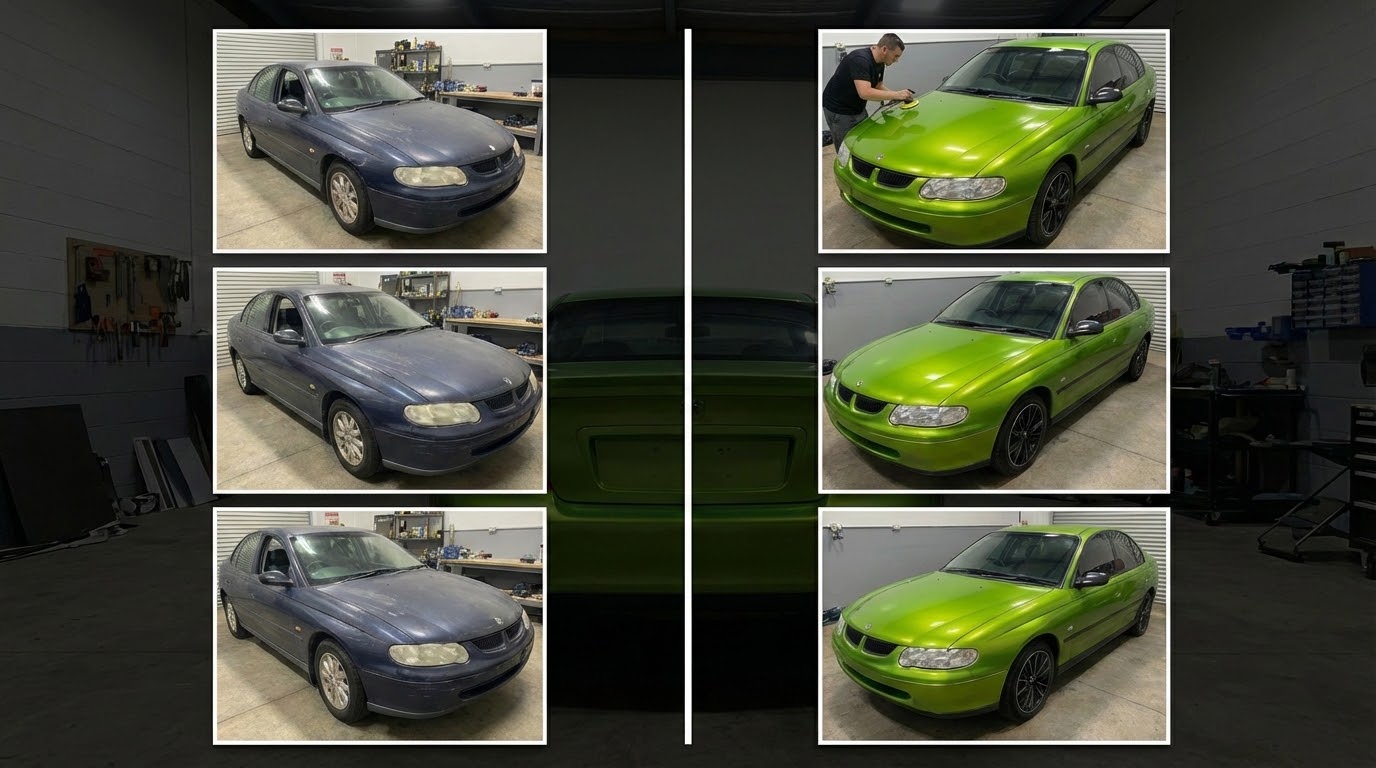
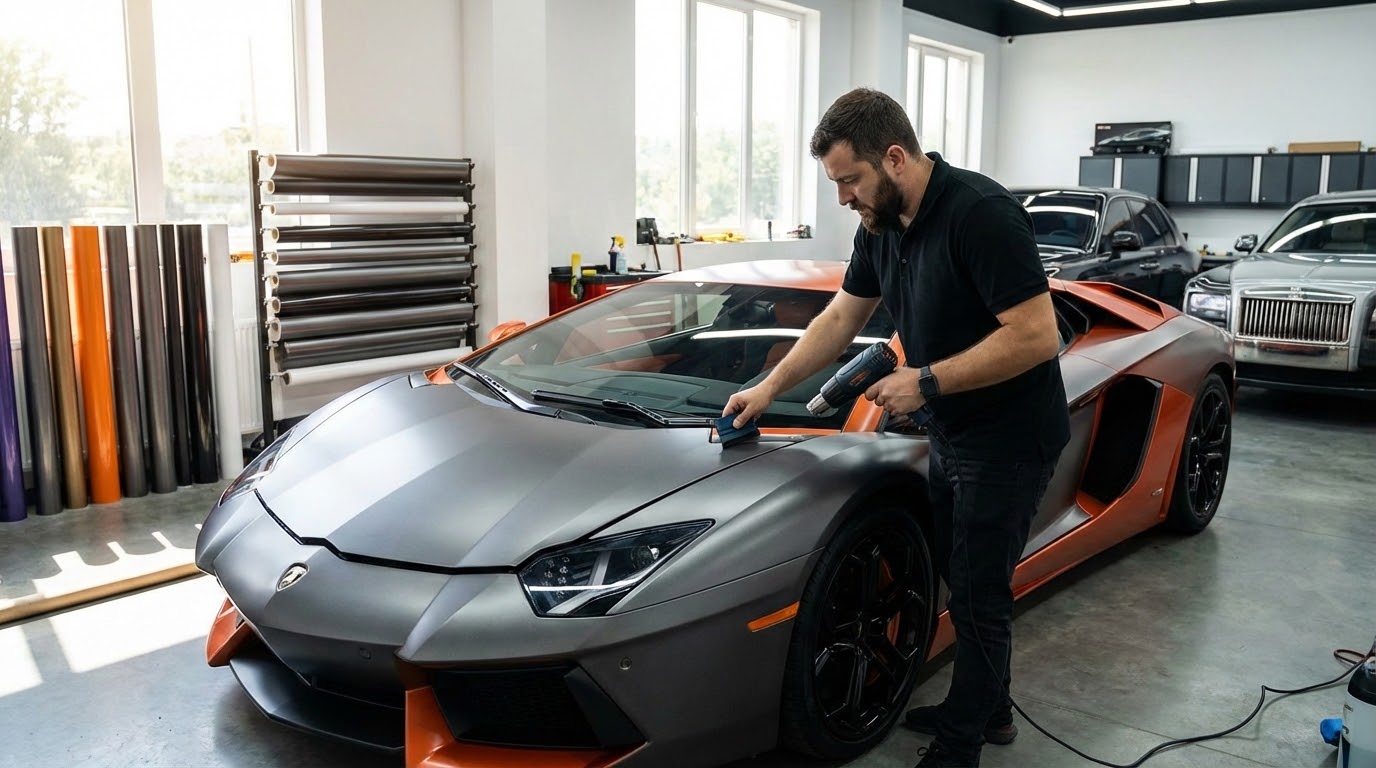
A car wrap is a vinyl film applied directly over your vehicle’s existing paint. It changes the appearance colour, finish, texture without touching the paint underneath. Full wraps cover the entire car. Partial wraps cover specific panels. Colour-change wraps can take a car from its factory shade to something completely different.
What makes wrapping different from repainting is reversibility. Peel the wrap off with a professional, and your original paint comes back exactly as it was before protected, in fact, from UV and minor abrasion damage by the wrap itself. That’s part of why it’s so popular with luxury car owners who want to personalise their car without affecting resale value.
The confusion around legality comes from one fact: changing your car’s colour, even temporarily, has legal implications under the Motor Vehicles Act, 1988. And most car owners don’t find this out until after the wrap is done.
The Legal Framework: What the Law Actually Says
Car wrapping in India sits under Section 52 of the Motor Vehicles Act, 1988, which governs alterations to a registered vehicle. The relevant principle is simple: any change that affects what’s recorded in your Registration Certificate (RC) needs to be reported to the RTO.
Colour is recorded in your RC. If you wrap your car in a shade that’s visually different from what’s listed, that’s a colour change in the eyes of the law. It doesn’t matter that the original paint is still there underneath. What matters is what the vehicle looks like on the road relative to what your RC says.
The Central Motor Vehicles Rules (CMVR) under Rule 47 also specify that modifications including body colour changes must be reported to the relevant RTO and updated in your RC. Unauthorised modifications can result in fines, vehicle detention, and in cases where there’s a significant mismatch, RC suspension.
Section 182A of the Motor Vehicles Act covers penalties for non-compliance with safety and structural norms. For colour-related violations, the standard fine range is Rs. 1,000 to Rs. 5,000, with higher penalties for repeat offences. The more practical risk is what happens during a claim; insurance companies rely on RC details to verify vehicle identity, and a colour mismatch can complicate or even void a claim.
What Happens If You Don’t Update the RC
People skip the RC update for different reasons. Some don’t know it’s required. Some think a wrap is too temporary to bother. Some assume they’ll do it eventually and never get around to it.
Here’s what actually happens.
Routine Checks
Traffic police can and do ask for RC during routine inspections, particularly when a car’s appearance is unusual. If your RC lists a different colour from what’s on the car, the officer can detain the vehicle for verification. It doesn’t happen to everyone, every time. But it happens.
Insurance Claims
This is the one that catches people off guard. If your car is involved in an accident or theft, your insurer verifies the vehicle’s identity against the RC. A significant colour mismatch especially on a claim involving identification of the vehicle can become a dispute. Most insurers will ask for an explanation. Some will accept it. Some won’t.
Resale
A car with RC-to-appearance mismatch is harder to sell. Buyers and dealers flag documentation inconsistencies. For a luxury car where resale value matters, an unresolved colour mismatch can reduce what you’re able to get. None of this is unmanageable. It’s entirely avoidable with the right paperwork done at the right time.
The RTO Process for Colour Change: What It Actually Involves
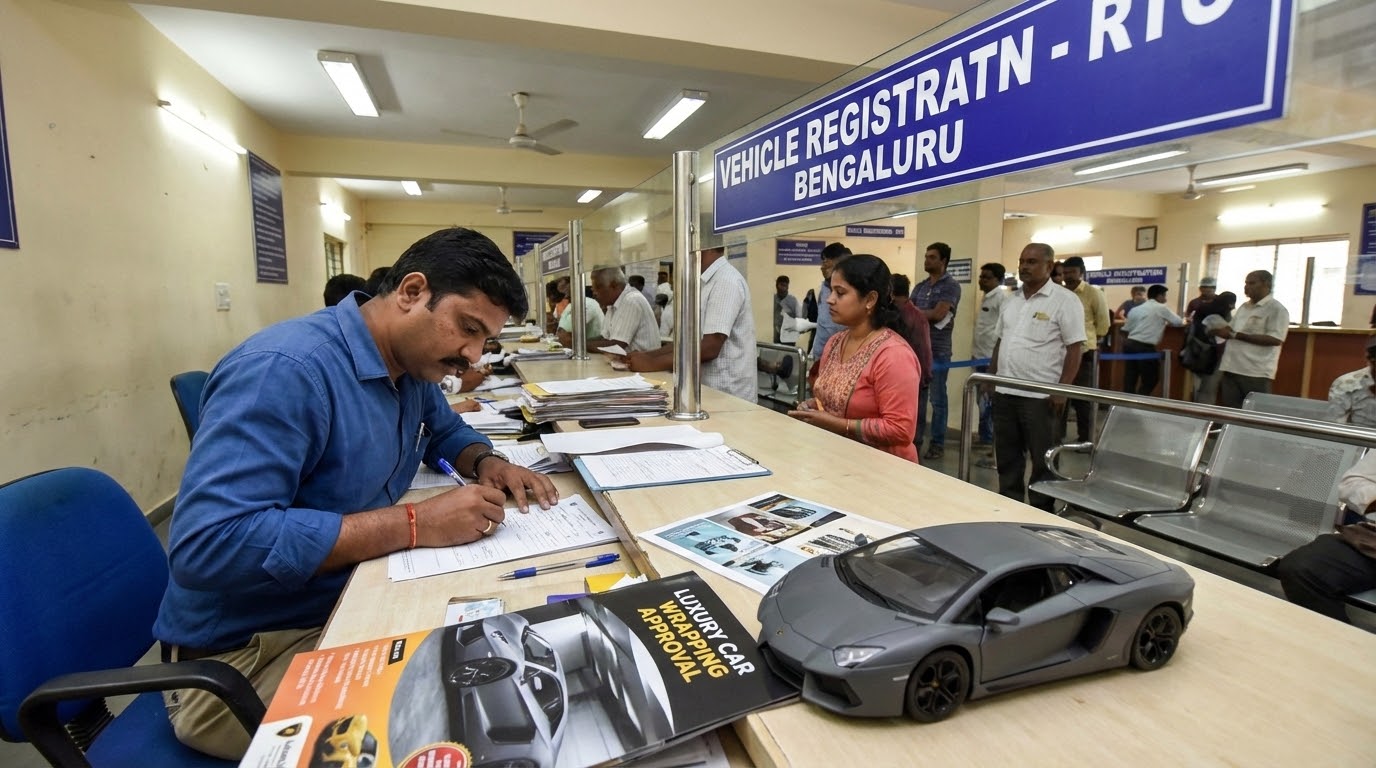
The process is more straightforward than most people expect. You need to get RTO approval before getting the wrap applied, or very shortly after. The form you’re looking for is the NAMV (Notice for Alterations in Motor Vehicles). Some RTOs require a pre-inspection before the wrap, others will approve based on documentation and verify after. The process varies slightly by state, so checking with your local RTO directly is the right first step.
What you’ll typically need: your existing RC, valid insurance certificate, PUC certificate, proof of identity, the completed NAMV form, and a colour sample or reference for the new shade. If your car has an outstanding loan, some RTOs require a NOC from the financier.
The approval timeline is usually 2 to 14 working days depending on RTO workload. Once approved, the wrap is applied. You then bring the car back for inspection, the RTO officer verifies the colour matches what was approved, and your RC is updated.
The fees involved are small RTO endorsement fees typically run between Rs. 300 and Rs. 800 depending on the state. What gets more expensive is the wrap itself, and doing it twice because you skipped the process the first time.
One more step that people miss: inform your insurance company. Get an endorsement on your policy reflecting the updated RC colour. Your insurer needs to record the correct vehicle details to ensure your coverage stays valid. It takes a phone call and a follow-up document. Do it.
Colours and Finishes: What’s Allowed and What Isn’t
Not every colour and finish is available to civilian vehicles in India. A few categories are specifically restricted.
Matte finishes are legal. Satin finishes are legal. Gloss finishes are legal. These are the most common wrap categories and none of them create issues as long as the RTO approval and RC update are in order.
Chrome and highly reflective wraps are where it gets complicated. The concern here is road safety: a chrome or mirror-finish wrap reflects sunlight and creates glare that can affect other drivers. These finishes are generally not permitted for road use, and some RTOs won’t approve them at all. If you’re considering a full chrome wrap, verify specifically with your local RTO before proceeding.
Camouflage patterns, army green, olive drab, and any shade that closely resembles military or emergency vehicle colouring are prohibited for civilian use. This is a hard restriction. There’s no workaround. A near-khaki shade might pass, a shade that reads as military will not.
Colours reserved for ambulances, police vehicles, and other emergency services are also off-limits. Blue beacon colours, red and blue combinations used on law enforcement vehicles don’t get approved for private cars.
Here’s a quick reference for the key wrap decisions:
Wrap Type | Legal Status | Key Condition | Notes |
|---|---|---|---|
Matte / Satin / Gloss Colour Change | Legal with RTO approval | RC update + insurer notification required | Most popular wraps full compliance achievable |
Partial Wrap / Decals (no colour change) | Generally legal | Verify with local RTO if prominent | Low-risk option for subtle personalisation |
Chrome / Mirror Finish | Usually restricted | Creates road glare check RTO first | Most RTOs in Bangalore do not approve these |
Camouflage / Army Green / Olive | Prohibited | Reserved for military use | Hard restriction, no civilian workaround |
Ambulance / Police colour schemes | Prohibited | Reserved for emergency services | Applies to blue/red combos on private vehicles |
Clear / Transparent PPF | Legal, no approval needed | Does not change colour or appearance | No RC update required purely protective |
What’s Different for Luxury Car Owners
Most of the legality discussion online is generic. The practical situation for someone with a BMW 7 Series, a Mercedes GLS, or a Porsche Macan is a bit different in a few specific ways.
Resale Value Is a Bigger Factor
Luxury cars carry significant resale value, and anything that creates documentation ambiguity including an RC that doesn’t match the car’s appearance reduces what you can get when you sell. For a car that might sell for 40 to 80 lakhs used, that’s a real number, not an abstract concern.
Insurance Claims Are More Scrutinised
Comprehensive policies on high-value vehicles get more attention during claims. A straightforward factual mismatch between the RC colour and the car’s appearance is the kind of thing that can cause delays and questions during a claim you don’t want to be dealing with after an accident.
Factory Colours Matter Differently
Many luxury car owners wrap over exclusive factory colours Tanzanite Blue on a BMW, AMG Manufaktur shades on a Mercedes, Carrara White Metallic on a Porsche. The original paint is not just paint; it has real monetary value. A high-quality wrap with proper installation protects that paint. A low-quality wrap or an improperly removed one damages it. For these cars, the quality of the installer matters more than for a standard sedan.
The Difference Between Car Wrapping and PPF
These two get confused enough that it’s worth spelling out clearly.
Paint Protection Film (PPF) is a transparent thermoplastic polyurethane film. It doesn’t change the colour or appearance of your car. It protects the existing paint from stone chips, fine scratches, UV fade, and environmental damage. Because it doesn’t alter appearance, PPF generally doesn’t require RTO approval or RC updates. You apply it, the car looks exactly the same, but the paint is protected.
Car wrapping uses coloured vinyl and changes how the car looks. Full colour-change wraps require RTO approval and RC update. That’s the distinction.
Some car owners combine both: PPF on the original paint, coloured vinyl wrap over the PPF. When the vinyl is eventually removed, the PPF is still there protecting the paint. It’s the highest level of protection available, and it’s particularly common on premium vehicles where the original paint is worth preserving.
Why the Installer Matters
Everything above assumes the wrap is done properly. A wrap applied by someone who knows what they’re doing will go on cleanly, sit correctly on the car’s curves and edges, and come off without damaging the paint when the time comes. A wrap applied by someone who doesn’t can bubble, peel unevenly, lift at the edges, and when removed, take paint with it.
For luxury vehicles, this is not a minor point. The original paint on a high-end car is not something you want to repair. Some factory paints and finishes are difficult or impossible to match perfectly after repainting. If a wrap damages your Tanzanite Blue BMW, you’re not just repainting a panel, you’re dealing with colour-matching a finish that BMW applies in specific conditions with specific materials.
Good installers use premium vinyl from brands with established track records materials designed to last 5 to 7 years without peeling or fading, and to come off cleanly when professionally removed. They use proper cutting and application techniques, work in controlled environments free of dust and temperature swings, and take their time on complex curves and panel edges. The difference between a job that looks right from 10 feet and one that looks right from 10 inches is technique and materials.
Car Wrapping in Bangalore: What to Know Locally
Car wrapping in Bangalore has grown substantially over the last few years, partly because the city’s car culture skews toward premium and performance vehicles, and partly because the number of professional studios has increased enough that quality options are available.
From a legal standpoint, the same national framework applies Section 52 of the Motor Vehicles Act, CMVR Rule 47, Karnataka RTO guidelines. The process for getting RC updates done in Bangalore follows the standard NAMV form route, with the relevant RTO being your vehicle’s registering office.
A few local notes. Bangalore’s traffic enforcement has been more consistent about RC verification than smaller cities. It’s a practical point, not a scare tactic. The city’s premium car density means high-end vehicles do get noticed, and a chrome-wrapped car with a white RC will attract attention during checks. Getting the paperwork done correctly upfront is genuinely worth it here.
Climate is also relevant for Bangalore specifically. The city runs between humid heat, dry heat, and monsoon rain across the year. Quality vinyl handles all of these without issue. Cheap vinyl deteriorates in Bangalore’s weather faster than the marketing suggests. Peeling edges in the monsoon are not a good look on a premium car.
Fortify Car Care: Car Wrapping in Bangalore
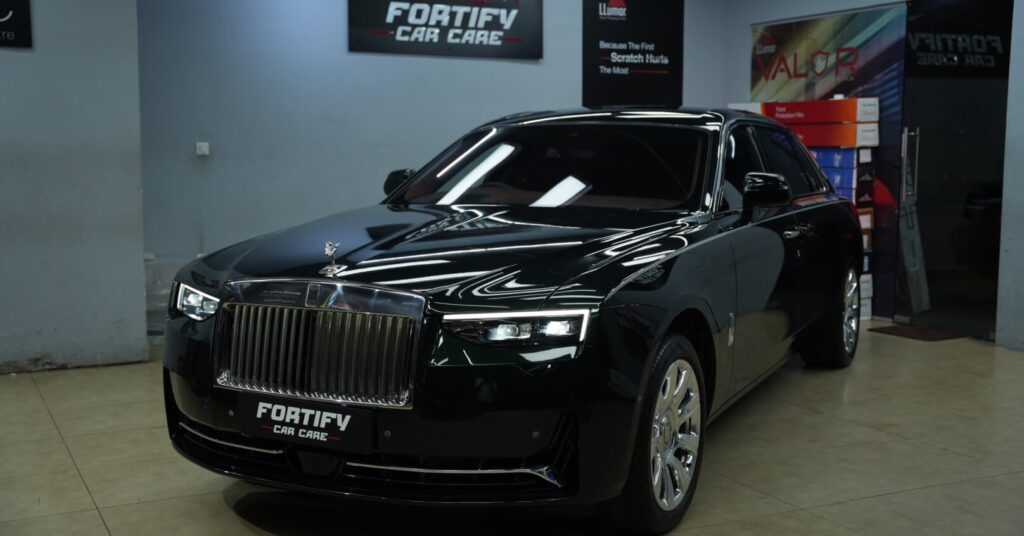
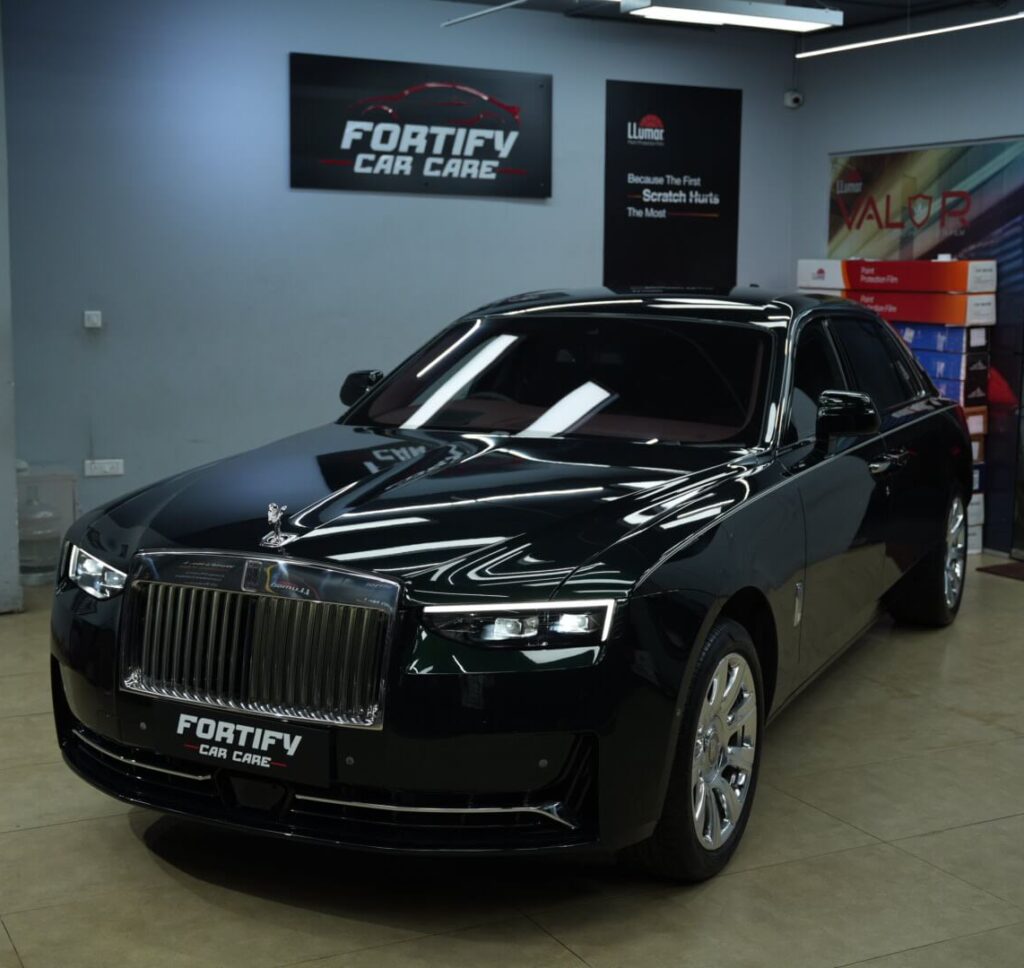
For car owners in Bangalore looking for professional car wrapping done properly, premium materials, clean installation, guidance on the process Fortify Car Care in Banaswadi handles both the service and the process navigation.
Fortify offers full colour-change wraps, partial wraps, and custom designs across a range of premium vinyl options. The studio also provides LLumar PPF, Garware PPF, MAXDECAL PPF, ceramic coating, graphene coating, and sun control film so protection and aesthetics can be handled under one roof. For luxury car owners who want both paint protection and a colour change, the combination approach is available.
Fortify is located at Ward No 88/27, #4DC-544, 6th A Main Rd, 4D Cross, HRBR Layout 2nd Block, Banaswadi, Bengaluru, Karnataka 560043. Reach them at +91 9945562288 or +91 9445189042, or at info@fortifycarcare.in.
A wrap done right protects the original paint, personalises the car, and leaves no legal loose ends. A wrap done without the right paperwork undoes all three.
Frequently Asked Questions
Is car wrapping legal in India?
Yes. Car wrapping is legal under the Motor Vehicles Act, 1988, provided you follow the process RTO approval, RC update reflecting the new colour, and notification to your insurer. Skipping any of these steps creates legal and insurance risk.
Do I need RTO approval before or after the wrap?
Technically before, or at minimum concurrent with the process. Some RTOs allow you to bring the wrapped car for inspection and then update the RC. Others want approval of the colour choice before application. Check with your local RTO directly the process varies between Karnataka and other states.
What happens if my car’s wrap colour doesn’t match the RC?
During routine checks, police can detain the vehicle for verification. During insurance claims, the mismatch can be raised as a discrepancy. For resale, buyers will notice the documentation inconsistency. None of these are catastrophic, but all of them are avoidable.
Are chrome and mirror wraps legal?
Generally no. Chrome and high-reflectivity wraps create road glare and most RTOs won’t approve them for civilian road use. Matte, satin, and standard gloss finishes are allowed.
Does PPF require RTO approval?
No. Clear/transparent PPF doesn’t change the vehicle’s colour or appearance, so it doesn’t trigger the colour-change requirements under the Motor Vehicles Act. Coloured or tinted PPF films that change the car’s appearance may require the same process as a colour wrap.
How long does a car wrap last?
Premium vinyl wraps typically last 5 to 7 years with proper care. Bangalore’s climate heat and monsoon cycles does accelerate degradation on lower-quality materials. Getting the right vinyl from the start, and having it applied correctly, is what makes the difference between a wrap that looks good for three years and one that starts lifting at 18 months.
Will my insurance cover the wrap if the car is damaged?
Wrapping itself typically doesn’t affect your premium, but you must inform your insurer. If the RC colour matches the wrap colour and your policy records are up to date, there’s no structural reason for a claim to be complicated. The problem arises when the RC doesn’t reflect what the car looks like that’s when adjusters start asking questions.
Can I wrap my car back to the original colour later?
Yes. That’s one of the main advantages of vinyl wrapping over repainting. A professionally removed wrap leaves the original paint intact. If you want to revert, you go back to the RTO, follow the same process with the original colour, and get the RC updated again.