Every luxury car owner in Bengaluru has faced some version of this moment. You step into your car after it has been sitting in the sun for two hours at a mall parking lot in Koramangala or Whitefield. The leather steering wheel is too hot to hold without flinching. The cabin temperature feels closer to fifty degrees than thirty-five. The air conditioning takes ten minutes to bring things down to bearable. And your beautiful beige or tan leather seats are slowly, quietly paying the price every single time this happens.
Here is what most people do. They walk into a car accessories shop and ask for tinting. The shop recommends a dark film because it looks sleek. It goes on, the car looks good for a few weeks, and then nothing much changes. The cabin is still hot. The leather still fades. And at the next traffic check, there is a fine and an order to remove the film.
The problem is not tinting as a concept. The problem is that most people do not know the difference between a regular tint and a proper sun control film. And for luxury car owners, that difference is not small. It is the difference between a treatment that changes how your car looks and one that actually changes how your car feels and protects what is inside it.
This is the honest breakdown of both.
Darker does not mean cooler. A black film blocks light. A quality sun control film blocks heat. These are two completely different things, and confusing them is exactly why so many car owners end up disappointed.
What Regular Tint Actually Is
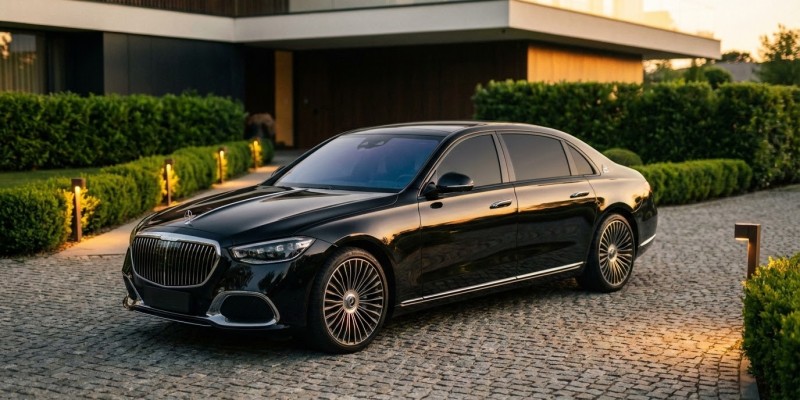
Regular tint, in the way most of the roadside shops in Bengaluru use the term, refers to a dyed polyester film. It works by absorbing visible light. The darker the film, the more light it blocks. It looks private, it looks aggressive, and for the first few weeks, it gives the impression of doing something.
But here is the technical reality. Dyed film works primarily on the visible light spectrum. Solar energy entering your car through glass is not just visible light. A large portion of it is infrared radiation, which is what you feel as heat. And dyed films absorb very little infrared. The heat still gets in. The film just makes the interior darker while the temperature stays nearly the same.
There is a second problem. Because dyed films absorb energy rather than rejecting it, the film itself heats up. That warmth then radiates inward into the cabin. So in some situations, a dark dyed film can actually make the effective interior temperature slightly worse than no film at all.
Dyed films also fade. The dyes break down under prolonged UV exposure. Within two to three years on a Bengaluru car, many dyed films start turning purple or developing a hazy, uneven appearance. And they offer essentially zero UV protection for the car’s interior, because blocking visible light and blocking UV are, again, two different things.
What Sun Control Film Actually Is
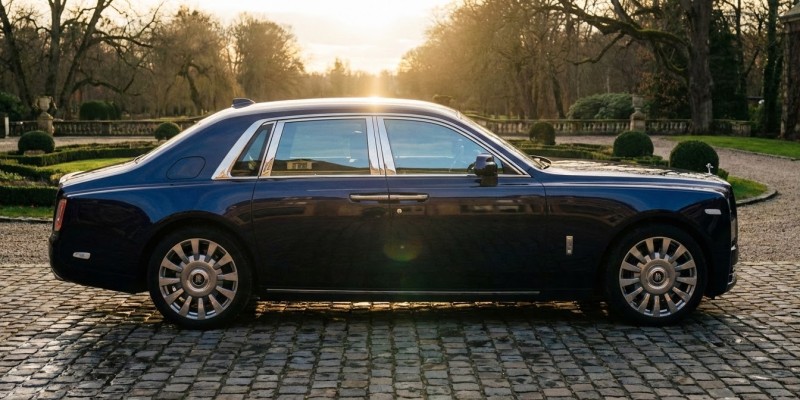
Sun control film is a different category of product. Not a darker version of regular tint. A fundamentally different technology built around different physics.
Premium sun control films, specifically ceramic and nano-ceramic films, work by rejecting solar energy rather than absorbing it. The ceramic particles embedded in the film interact with infrared radiation and reflect it away from the glass before it enters the cabin. The film does not need to be dark to do this. A high-quality ceramic film can be nearly transparent at 70 percent VLT and still reject up to 80 to 90 percent of infrared heat.
This distinction matters enormously for luxury car owners. The interior of a BMW 5 Series, a Mercedes E-Class, or a Range Rover Sport has leather seats, wood or carbon fibre trim, and complex electronics that are all sensitive to sustained heat exposure. The dashboard surface temperatures in an unprotected car parked in Bengaluru’s afternoon sun can exceed 80 degrees Celsius. That kind of repeated heat exposure cracks leather, degrades adhesives, causes wood veneer to lift, and accelerates the deterioration of interior plastics.
A proper ceramic sun control film keeps cabin temperatures five to eight degrees Celsius lower than no film at all. It blocks 99 percent of ultraviolet radiation, which is what actually causes fading and material degradation. And it does all of this without interfering with GPS navigation, mobile signals, or the wireless charging systems that most modern luxury cars now include as standard.
The Four Types of Window Film and Where They Sit
Understanding the market properly means knowing what you are actually being offered when you walk into a shop. The industry in India has four main categories.
Dyed films are the entry-level option. They cost the least, they fade the fastest, and they offer the lowest performance on heat rejection and UV protection. Their only genuine advantage is price. For a luxury car, they are not the right choice regardless of how they look on day one.
Metalized films are a step up. They use microscopic metal particles to reflect some solar energy, which means better heat rejection than dyed films and better durability. The problem is the metal content. Metalized films interfere with radio frequency signals, which means your GPS becomes less reliable, your mobile reception degrades inside the car, and your wireless toll tag can start throwing errors. For a car with integrated navigation and advanced driver assistance systems, this is not a trade-off worth making.
Carbon films sit in a reasonable middle ground. They use carbon particles rather than metal, so signal interference is not an issue. They offer decent heat rejection, a clean matte appearance, and better longevity than dyed films. They are a solid option for cars where budget is a consideration. But their infrared rejection is in the 40 to 55 percent range, noticeably below what ceramic films deliver.
Ceramic and nano-ceramic films are the top tier. They use non-conductive ceramic nanoparticles that reject infrared radiation without the signal issues of metalized films. They can achieve infrared rejection above 90 percent while maintaining the high VLT percentages that keep the glass legally clear. They last ten years or more without fading or colour shifting. For a luxury or performance car, this is the only category that makes sense.
The Key Technical Numbers You Need to Understand
The film industry uses a set of measurements to describe performance. Most shops in Bengaluru will not explain these unless you ask. You should ask.
VLT (Visible Light Transmission) is the percentage of visible light that passes through the film. Higher VLT means a clearer, less dark appearance. India’s legal framework specifies minimum VLT levels for different windows. This number has nothing to do with heat rejection.
IRR (Infrared Rejection) is the percentage of infrared radiation that the film blocks. This is the number that tells you how much cooler your cabin will actually be. A film with 85 percent IRR will make a real, noticeable difference. A dyed film with 15 percent IRR will not.
UV Rejection is the percentage of ultraviolet radiation blocked. Quality films from established brands achieve 99 percent UV rejection. This is what protects your leather, your dashboard, and your skin from long-term sun damage.
TSER (Total Solar Energy Rejection) is the broadest measure. It combines infrared, UV, and visible light rejection into a single percentage that represents total solar energy blocked. A film with 50 percent TSER is blocking half of all solar energy from entering the glass.
When you are evaluating any film for your car, ask for the IRR and UV rejection figures specifically. A salesperson who cannot answer these questions with specific numbers is selling you on appearance, not performance.
The Legal Reality in Bengaluru (and the Rest of India)
This is where the conversation gets complicated, and most shops either do not know the full picture or prefer not to explain it clearly. Here is what the law actually says.
The Central Motor Vehicles Rules (CMVR), Rule 100, set the base standards for window glass in India. The rule specifies that front and rear windshields must allow a minimum of 70 percent VLT, and side windows must allow a minimum of 50 percent VLT.
In 2012, the Supreme Court of India issued a judgment in the case of Avishek Goenka vs. Union of India that went further. It banned all aftermarket films applied to car windows, regardless of their VLT level. The reasoning was public safety and security concerns around heavily tinted vehicles. This judgment technically makes all aftermarket window film illegal as a blanket matter.
However, the situation has evolved. The Bureau of Indian Standards published IS 2553:2019, which introduced the concept of Safety Glazing Films as a category. These are films that, when combined with the car’s existing glass, meet the prescribed VLT standards and conform to safety glazing specifications. The Kerala High Court issued a judgment in 2024 that recognised films conforming to IS 2553:2019 and meeting VLT requirements as permissible.
In practical terms across Bengaluru’s traffic enforcement: police officers use VLT meters to measure compliance. Films that meet the 70 percent VLT requirement on the windshield and 50 percent on the side windows are the ones that pass checks. What this means for luxury car owners is straightforward.
You need a film that meets these VLT thresholds and is positioned as a safety glazing film under IS 2553:2019. The best ceramic films from established brands like Garware, LLumar, and 3M are available in variants that do exactly this. At Fortify Car Care, the sun control films we recommend and install are specifically selected to meet both performance and compliance requirements.
Do not install a film that makes your windows visibly dark. A dark film does not block more heat than a clear ceramic film anyway. It just attracts police attention and makes your car harder to see out of at night.
What Bengaluru’s Climate Actually Does to an Unprotected Luxury Interior
Bengaluru sits at roughly 920 metres above sea level, which moderates the temperature compared to coastal cities. But the city’s UV index is consistently high year-round, and it has grown meaningfully hotter over the past decade due to urban heat island effects as the city has expanded.
A car parked outdoors in Bengaluru from 10 AM to 3 PM can accumulate interior temperatures well above 60 to 65 degrees Celsius on the dashboard and seat surfaces. The UV index in Bengaluru regularly touches 8 to 10 during summer months, classified as very high. This level of UV exposure on an unprotected leather interior is not a long-term concern. It is a short-term one. Colour shift in quality leather can begin within six months of regular sun exposure without UV protection.
For cars with light-coloured interiors, cream or beige leather, light-coloured headliners, and natural wood trim, the visible degradation happens faster and is harder to repair. A full interior restoration of a luxury car’s leather in Bengaluru can cost anywhere from Rs. 30,000 to Rs. 1,50,000 depending on the vehicle. A quality sun control film installation that prevents this from being necessary costs a fraction of that.
The Impact on Electronics and Connectivity
This is a concern that comes up constantly with luxury car owners, and it is a legitimate one.
Modern luxury cars are essentially rolling computers. The Range Rover Sport, the BMW 7 Series, the Mercedes GLE, and similar vehicles have GPS navigation systems, ADAS sensor arrays, wireless charging pads, Bluetooth connectivity, and in some cases active suspension management systems that all rely on uninterrupted signal transmission and reception.
Metalized films create a Faraday cage effect around the car’s cabin. They reflect radio frequency signals, which means GPS accuracy degrades, mobile signals weaken inside the cabin, and some wireless features stop working reliably. For a car where these systems are integrated at the factory level, this is a serious problem.
Ceramic films are non-conductive. They have no metal content. They do not interfere with any radio frequency signals. GPS works normally. Mobile reception is unaffected. Wireless charging functions as it should. This is one of the reasons that ceramic film is the only genuinely appropriate option for a modern luxury vehicle. The physics is straightforward: no metal, no interference.
Sun Control Film for Luxury Cars vs. PPF: Are They the Same Thing?
A question we get regularly at Fortify Car Care. No, they are not the same thing and they solve different problems.
PPF, or Paint Protection Film, is applied to the car’s painted exterior surfaces. Its job is to protect the paint from stone chips, scratches, and physical impact damage. It is a thick thermoplastic polyurethane film and it goes on the outside of the car. It does not go on the windows.
Sun control film is applied to the interior face of the car’s glass. Its job is to manage solar energy entering through the windows. It deals with heat, UV radiation, and glare. It has no structural thickness and does not protect against physical impacts to the glass.
Many luxury car owners choose both. PPF protects the exterior paint and the investment value of the car’s body. Sun control film protects the interior and the occupants. They are complementary treatments that address different aspects of protecting a premium vehicle.
At Fortify Car Care, we offer both services. If you are already protecting your paint with PPF, adding quality sun control film to the windows is the logical next step. They are not substitutes for each other.
What to Look for When Choosing Where to Get Sun Control Film Installed in Bengaluru
The film itself is one part of the result. The installation quality is the other part, and it matters at least as much.
Film brand and specifications. Ask which brand of film they are using and ask for the IRR and UV rejection specifications in writing. Garware, LLumar, and 3M are established brands with documented performance data. Generic films with no traceable brand behind them are a risk regardless of what the salesperson claims.
VLT compliance. Any installer who cannot tell you the specific VLT percentage of the film they are recommending for your car is not equipped to install film on a vehicle where legal compliance matters. Ask the question directly.
Installation environment. Sun control film installation requires a clean, dust-controlled environment. Film applied in an open garage in dusty conditions will have contamination particles trapped under it. Ask to see where the installation happens.
Installer experience with luxury vehicles. The glass on a BMW, Mercedes, or Land Rover is curved and often larger than on mainstream cars. Installing film on complex curves without creasing, stretching, or creating edge bubbles requires skill and experience.
Warranty. A quality film from a reputable brand should carry a manufacturer warranty on the film itself. The installer should also stand behind the quality of their installation work.
At Fortify Car Care (the best car detailing in Bangalore), our sun control film service uses quality films from established brands. We install in a controlled environment and we do not rush the process. If you want to discuss the right film specification for your specific car, call or WhatsApp us on +91 9945562288 and we will walk you through the options before you commit to anything.
A Straight Comparison: Regular Tint vs. Sun Control Film
For clarity, here is what actually separates the two.
Heat rejection. A dyed regular tint blocks 10 to 20 percent of infrared heat. A quality ceramic sun control film blocks 80 to 90 percent. This is not a marginal difference. It is the difference between a cabin that cools down in three minutes versus ten.
UV protection. Dyed films offer minimal UV protection. Quality sun control films block 99 percent of UV radiation, which is what actually protects leather, dashboard materials, and trim from fading and cracking.
Clarity and VLT. A regular dark tint achieves its visual effect by blocking visible light, often well below legal VLT limits. A ceramic sun control film at 70 percent VLT looks nearly clear while still delivering superior heat and UV performance.
Signal compatibility. Metallic regular tints interfere with GPS and mobile signals. Ceramic sun control films do not.
Longevity. Dyed films fade within two to three years in Bengaluru’s UV conditions. Quality ceramic films maintain their performance and appearance for ten years or more.
Cost. A dyed regular tint installation costs Rs. 3,000 to 6,000 for a full car. A quality ceramic sun control film installation for a luxury vehicle starts from around Rs. 12,000 to 15,000 and goes up depending on the brand and the specific film selected. The longevity and performance difference makes the ceramic option the more economical choice over a five-year period.
Why This Decision Is Different for Luxury Car Owners
A person buying a Maruti Swift has a different calculation to make than someone owning a BMW X5 or a Porsche Cayenne. The stakes are different.
The interior materials in a luxury car, full-grain leather, open-pore wood veneer, aluminium trim, premium fabric headliners, are expensive to replace when they degrade. A cracked dashboard on a mainstream car costs a few thousand rupees to address. The same damage on a Mercedes GLE can cost several lakhs.
The electronics in a modern luxury car are deeply integrated and sensitive to interference. A regular tint that disrupts GPS is a nuisance on a basic car. On a car with lane-keeping assist, adaptive cruise control, and a heads-up display that relies on satellite accuracy, it is a safety consideration.
And luxury car owners in Bengaluru tend to keep their vehicles for longer periods and care more deeply about resale condition. A well-maintained interior with quality sun protection retains value. A sun-faded cabin with cracked leather and a purple-tinted aftermarket film does not.
The sun control film decision is not really a comparison of products. It is a decision about whether the protection matches the vehicle it is protecting.
Questions We Get Asked About Sun Control Film at Fortify Car Care
Will sun control film make my car’s interior noticeably darker?
At legal VLT levels, a quality ceramic film at 70 percent VLT on the windshield is nearly invisible. Side window films at 50 percent VLT will have a mild reduction in brightness inside the car, but nothing dramatic. The heat and UV performance do not depend on the film being dark.
How long does quality sun control film last?
Premium ceramic films from established brands are rated for ten years or more under normal Indian driving conditions. Garware’s Safety Glazing films and LLumar’s ceramic range both carry substantial warranty periods. Dyed films, by contrast, typically show visible degradation within two to three years.
Can sun control film be applied to a car that already has factory-tinted glass?
Yes, but VLT measurements need to be taken before installation to ensure the combined transmission still meets legal thresholds. Factory glass often has 80 to 85 percent VLT. Adding a compliant sun control film over this requires selection of the right film specification to stay above 70 percent on the windshield and 50 percent on the sides. This is why professional installation matters: a good installer measures first.
Does the sun control film go on the inside or outside of the glass?
Inside. It is applied to the interior face of the glass. This protects the film from weathering, physical abrasion from exterior washing, and contamination.
Will it interfere with my car’s heads-up display?
Quality ceramic films are optically neutral and do not distort or interfere with heads-up display projections. If you have a HUD, mention it when discussing film options. Some very high-performance anti-reflective films can occasionally affect HUD readability, and a good installer will know which products to avoid.
What is the right film for a car with a panoramic sunroof?
Panoramic sunroofs let in a large amount of infrared radiation directly from above. A high-IRR ceramic film on the sunroof glass makes a substantial difference to cabin temperature. The installation on curved, multi-panel sunroofs requires experience. We handle this at Fortify Car Care and it is a service we recommend specifically to owners of cars like the BMW 5 Series, the Volvo XC90, and the Range Rover Sport, all of which have large panoramic openings.
Bengaluru is a city where you will spend real time inside your car. The traffic, the distances between work and home, the weekend drives up to Nandi Hills or down to Mysuru, all of it adds up to hours each week in a cabin that the sun is actively working against. A quality sun control film is not a luxury add-on. It is maintenance for one of the most expensive environments you occupy regularly.
If you want to understand which film is right for your car, what it will cost, and what you should expect from a proper installation, reach out to us at Fortify Car Care. We will give you straight answers before you spend a rupee.