
You’ve decided to invest in Paint Protection Film, but now you’re faced with another decision: Saint-Gobain Sapphire PPF or Saint-Gobain Hydro PPF? While both promise premium paint protection, they aren’t designed for exactly the same type of car owner.
One focuses on exceptional clarity and everyday protection, while the other offers enhanced hydrophobic performance for easier maintenance and long-term durability. Understanding these differences can help you choose a film that matches not only your vehicle but also how you drive and maintain it.
At Fortify Car Care, we recommend the right film based on your vehicle, driving habits, and ownership goals. This guide helps you compare both options and choose with confidence.
Understanding the Saint-Gobain PPF Product Range
Saint-Gobain has built its reputation through advanced surface protection technologies, and its Paint Protection Film range is designed to cater to different driving needs and budgets.
Whether you drive a daily commuter, luxury sedan, or SUV, Saint-Gobain offers films engineered to protect against stone chips, UV rays, scratches, and road debris.
The most popular premium options include the Sapphire variant and Hydro variant, both featuring advanced TPU construction and self-healing technology. While they share several protective qualities, they are designed for different ownership expectations.
Saint-Gobain Sapphire vs Hydro: What's the Difference?
A proper Saint-Gobain PPF comparison goes beyond warranty periods or glossy marketing claims. The real distinction lies in performance, finish, durability, and maintenance.
Saint-Gobain Sapphire PPF
Designed for car owners who value exceptional clarity, Sapphire enhances your vehicle’s original paint with a virtually invisible finish. Its self-healing technology helps minimise light scratches while maintaining a glossy, showroom-like appearance, making it ideal for luxury sedans, premium hatchbacks, and SUVs.
Saint-Gobain Hydro PPF
Built for long-term protection, Hydro PPF features enhanced hydrophobic properties that repel water, dirt, and road contaminants for easier maintenance. Its durable, stain-resistant finish makes it well suited for vehicles driven regularly on highways and in varying weather conditions.
Hydro PPF vs TPU PPF
Hydro isn’t a different material; it’s an advanced TPU-based PPF.
In reality, both premium films are built using Thermoplastic Polyurethane (TPU), widely regarded as the industry standard for high-quality Paint Protection Films because of its flexibility, impact resistance, and longevity.
Hydro represents an advanced evolution of TPU technology, incorporating improved hydrophobic properties and enhanced surface performance without compromising clarity or protection.
Gloss vs Matte Finish: Which Should You Choose?
Your preferred finish plays a major role in selecting the right protection film.
Gloss Finish: Ideal if you want to retain your car’s factory shine.
Benefits include:
- Richer paint depth
- Enhanced reflections
- Premium showroom appearance
- Suitable for metallic and pearl finishes
Matte Finish: Perfect for drivers seeking a distinctive, understated look.
Benefits include:
- Satin appearance
- Reduced glare
- Premium styling without repainting
- Unique visual appeal
If preserving the original paint finish is your goal, both Sapphire and Hydro deliver excellent gloss while maintaining the vehicle’s natural colour and finish.
The Advantage of Self-Healing Technology
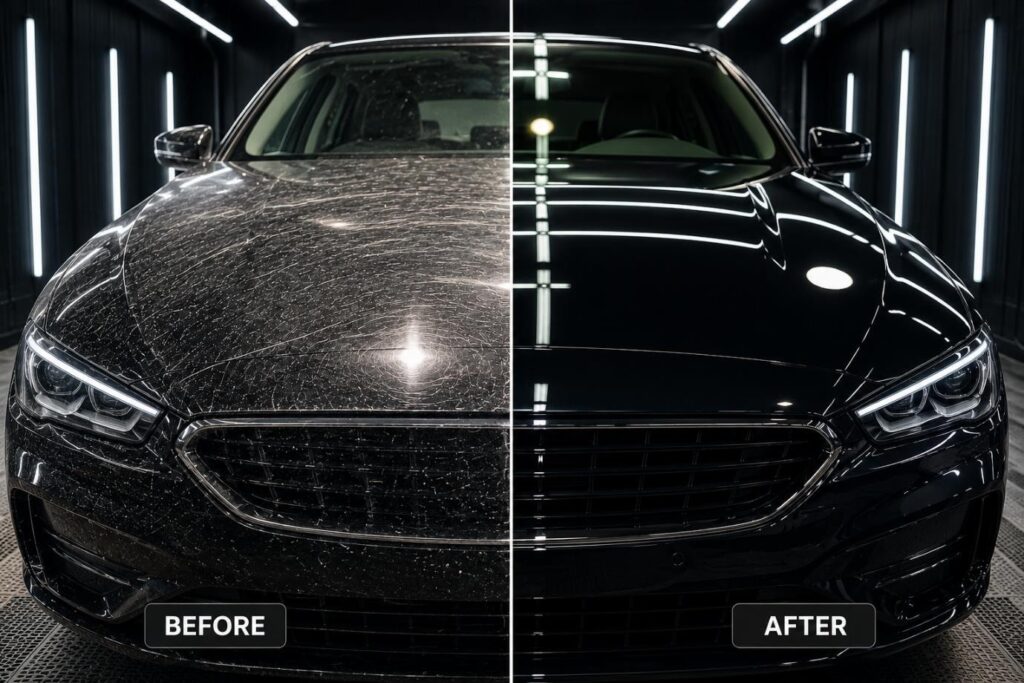
Modern premium PPF features self-healing technology that helps preserve your vehicle’s finish. Minor swirl marks, light scratches, and everyday surface abrasions gradually disappear when exposed to sunlight or moderate heat. This significantly reduces visible wear and helps your vehicle retain a freshly detailed appearance for much longer. Saint-Gobain’s premium films incorporate this self-healing topcoat to improve long-term aesthetics and reduce maintenance.
Best PPF for Luxury Cars
Luxury vehicles benefit from Paint Protection Film because premium paint systems are expensive to repair, and maintaining the factory finish helps preserve long-term value. When choosing a PPF for a luxury car, look beyond the price. Consider factors such as:
- Superior optical clarity
- Self-healing technology
- Resistance to stains, bird droppings, and UV exposure
- Long-lasting gloss retention
- Professional installation for a seamless finish
Both Saint-Gobain Sapphire PPF and Saint-Gobain Hydro PPF are excellent choices for premium vehicles. Sapphire is ideal for exceptional paint clarity and a showroom-like finish, while Hydro offers enhanced water repellency and easier maintenance.
Ultimately, the best PPF depends on your driving habits and long-term ownership goals. Choosing the right paint protection film and an experienced installation studio ensures lasting protection and a flawless finish.
PPF Thickness Comparison
When comparing Paint Protection Films, thickness is often seen as the deciding factor. However, a thicker film doesn’t always guarantee better protection. The overall performance of a PPF depends on the quality of its TPU construction, top coat, adhesive, and installation, not just its thickness.
Factor | Standard PPF | Premium TPU PPF |
Thickness | Varies by manufacturer | Optimised for durability and flexibility |
Impact Resistance | Good | Excellent due to advanced material construction |
Scratch Protection | Moderate | Superior with self-healing top coat |
Flexibility | Average | High, allowing better contouring on complex panels |
Optical Clarity | May reduce over time | Maintains high clarity and gloss for longer |
Long-Term Durability | Depends on material quality | Enhanced with premium TPU and surface technology |
Rather than choosing a film based on thickness alone, consider its overall construction and installation quality. A premium PPF with advanced materials and professional installation offers more reliable, long-lasting paint protection.
Ceramic Coating vs Paint Protection Film
Ceramic coating and Paint Protection Film serve different purposes. While ceramic coating enhances your vehicle’s appearance and makes routine maintenance easier, PPF is designed to provide physical protection against everyday road hazards. Understanding what each solution offers can help you choose the right level of protection for your vehicle.
Feature | Ceramic Coating | Paint Protection Film (PPF) |
Primary Purpose | Enhances gloss and repels contaminants | Protects paint from physical damage |
Scratch Protection | Limited | Excellent against minor scratches and stone chips |
Self-Healing | No | Available in premium PPF variants |
UV & Chemical Resistance | Yes | Yes |
Water Repellency | Excellent | Excellent (Hydrophobic premium variants) |
Paint Impact Protection | No | Yes |
Lifespan | Varies with maintenance | Long-lasting with professional installation |
If your goal is to keep your car looking cleaner with enhanced shine, ceramic coating is an excellent choice. However, if protecting the paint from stone chips, road debris, and everyday wear is your priority, Paint Protection Film offers a higher level of defence.
Cost of Premium PPF in Bangalore
The cost of premium Paint Protection Film depends on several factors, including:
- Vehicle size
- Coverage area
- Film variant selected
- Body panel complexity
- Installation quality
- Warranty support
While pricing matters, installation quality is equally important. If you’re considering PPF Bangalore, choosing an experienced installation studio ensures proper panel preparation, precision fitting, seamless edges, and long-lasting results.
PPF Installation Process
Proper installation is essential for the long-term performance of any Paint Protection Film.
- Vehicle Inspection
The vehicle is inspected to identify existing paint defects, scratches, or chips that may require correction before installation.
- Surface Preparation
The exterior is thoroughly washed, decontaminated, and cleaned to remove dirt, tar, iron particles, and other contaminants, creating a perfectly smooth surface.
- Paint Correction (If Required)
Minor swirl marks and surface imperfections are corrected to ensure the film is applied over a flawless paint finish.
- Precision Film Application
The PPF is carefully aligned and applied to each panel using specialised installation techniques, ensuring a seamless fit with minimal visible edges.
- Final Inspection & Curing
Once installed, the film is inspected for alignment and adhesion before being left to cure. Proper curing allows the adhesive to bond securely, ensuring long-lasting performance.
A professionally installed PPF not only looks virtually invisible but also provides consistent protection, helping your vehicle maintain its finish for years to come.
How to Choose the Right Paint Protection Film
If you’re still deciding between the two options, ask yourself a few practical questions:
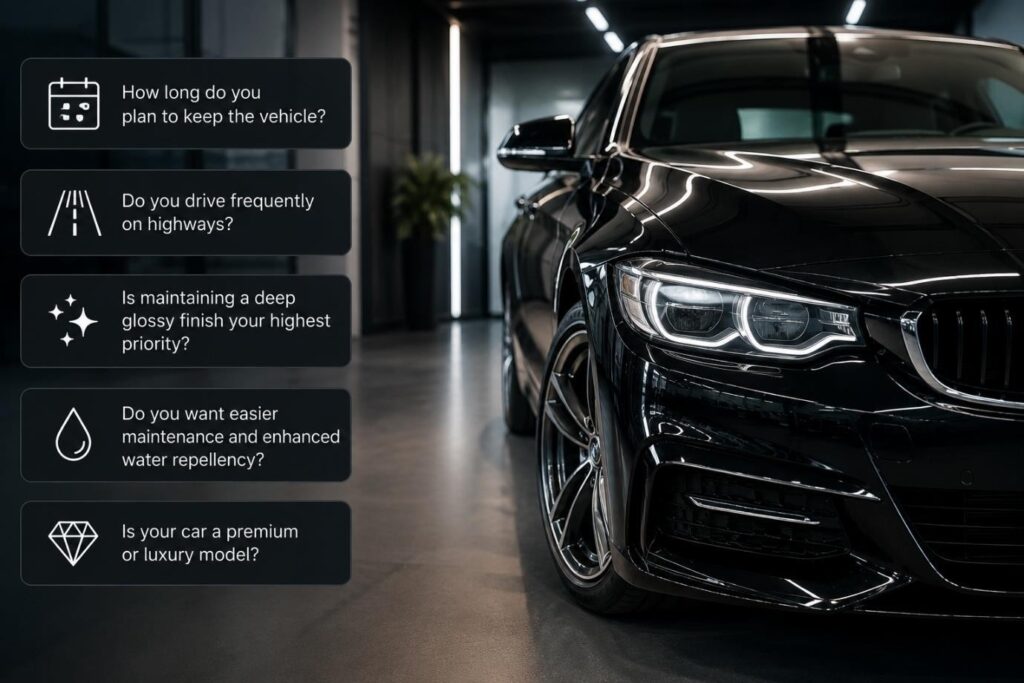
A thorough Saint-Gobain PPF comparison should always consider your ownership goals rather than focusing only on technical specifications. The right film is the one that complements your driving habits, maintenance routine, and long-term expectations.
Final Thoughts: Choosing the Right PPF for Your Car
Lorem ipsum dolor sit amet, consectetur adipiscing elit. Ut elit tellus, luctus nec ullamcorper mattis, pulvinar dapibus leo.
Both Saint-Gobain Sapphire PPF and Saint-Gobain Hydro PPF offer premium paint protection, but the right choice depends on your driving habits, maintenance preferences, and long-term ownership goals. While Sapphire is ideal for those seeking exceptional clarity and a refined finish, Hydro stands out for its enhanced water-repellent properties and easier maintenance.
Beyond choosing the right film, professional installation plays an equally important role in ensuring lasting performance and a seamless finish. At Fortify Car Care, our team helps you select the most suitable solution based on your vehicle and delivers precision installation that maximises both protection and aesthetics.
If you’re considering premium Paint Protection Film for your vehicle, connect with Fortify Car Care for expert guidance and a tailored recommendation that keeps your car looking its best for years to come.