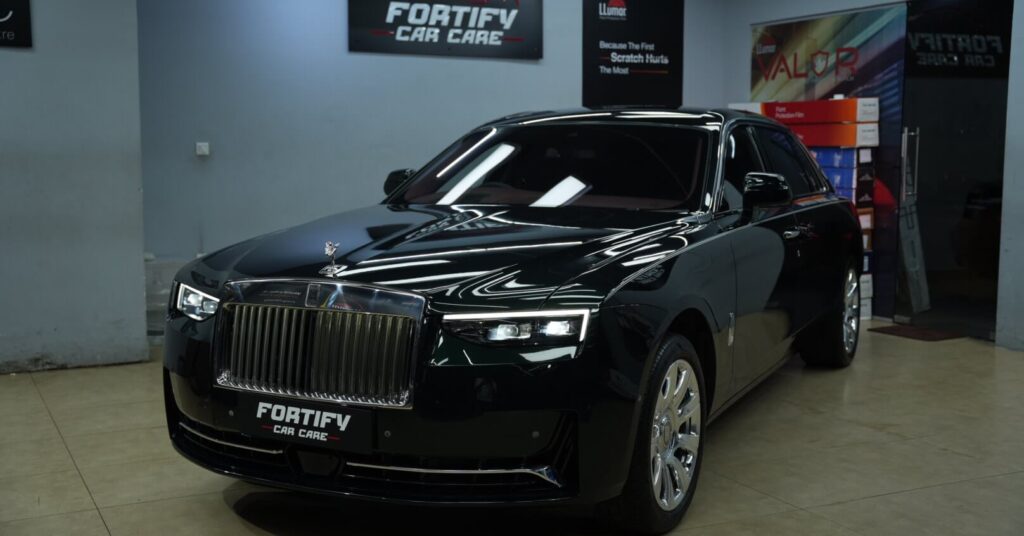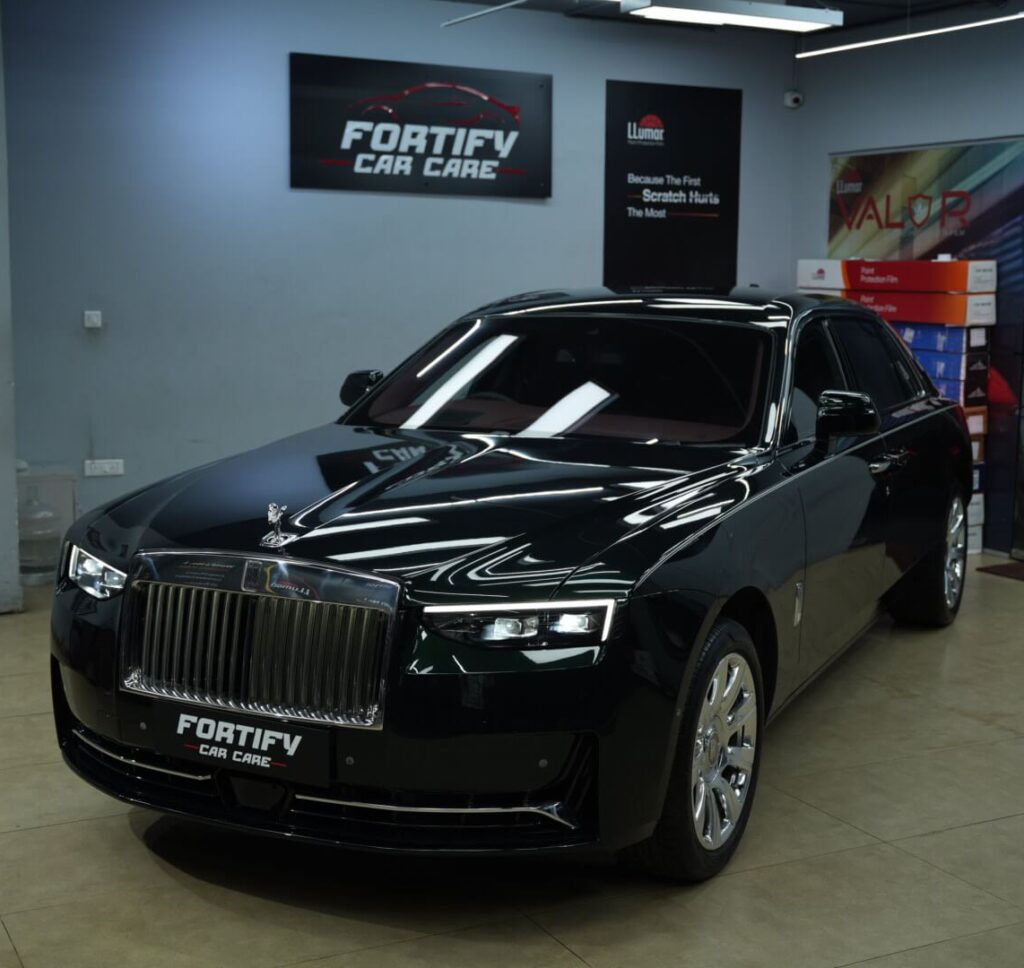
PPF coating in Bangalore has become one of the most searched car care services in the city, and it’s easy to see why. Between the granite dust on Outer Ring Road, the gravel trucks near Whitefield, and the unpredictable monsoon showers that pelt everything from Hebbal to Electronic City, a car’s paint takes a real beating here. If you’ve started researching Paint Protection Film (PPF) for your car, you’ve probably run into four names again and again: LLumar, Saint-Gobain, Garware, and Matte PPF. Each one has loyal fans, strong marketing, and a slightly different story to tell.
This guide breaks down what actually separates these films — not in vague marketing language, but in terms that matter to someone driving on Bangalore roads every day. By the end, you’ll know which film fits your car, your budget, and how you actually use your vehicle.
The right window film can do more than change the appearance of your car’s glass. Depending on the film selected, Solar Shield window film can help manage heat, UV radiation and glare while improving everyday driving comfort.
Heat Rejection High-performance window films are designed to reduce the amount of solar heat entering the cabin through the glass. This can help make the interior more comfortable when the vehicle is parked or driven under direct sunlight. A suitable solar shield film for windows can support this solar-control function. | Interior Protection Continued exposure to sunlight can contribute to fading and deterioration of interior materials. Reducing solar and UV exposure can help preserve the appearance of dashboards, upholstery and other interior surfaces. |
UV Protection Quality window films can reduce UV radiation entering through vehicle glass. This can help limit prolonged UV exposure and reduce the effects of sunlight on interior materials. | Improved Cabin Comfort By controlling solar heat entering through the glass, solar shield film for windows can help create a more comfortable cabin environment, particularly during Bangalore’s sunny conditions. |
Glare Reduction Direct sunlight can create uncomfortable glare, particularly during early morning and evening drives. A suitably specified solar shield window film can reduce glare and improve visual comfort. | Better Privacy Depending on the film’s shade and visible-light transmission, window film can also provide greater privacy for passengers and reduce visibility into the cabin. |
| Film type | Different films offer different levels of solar-control performance, appearance and visibility. |
| Vehicle size | Larger vehicles generally have more glass area to cover.
|
| Glass configuration | Curved, large or complex glass surfaces can require additional installation work. |
| Coverage required | The number and location of windows being covered affect the final price. |
| Existing film removal | Removing an existing film may involve additional work.
|
| Installation complexity | The shape and accessibility of the vehicle’s glass can affect installation time and effort. |
Fortify provides a vehicle-specific quotation based on these requirements rather than applying one price to every car.
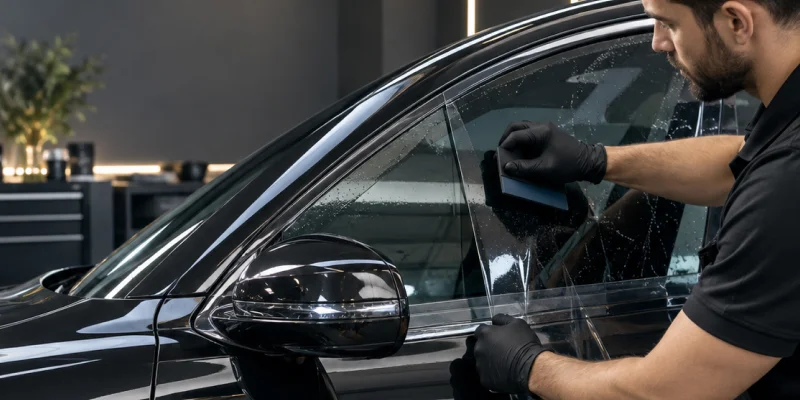
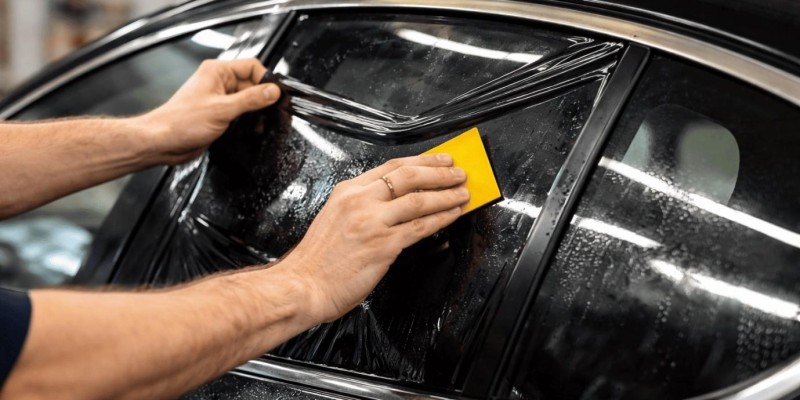
A clean installation starts with properly prepared glass and careful application. At Fortify Car Care, the solar shield window film process includes:
We inspect the vehicle’s glass configuration and understand your requirements for appearance, visibility and solar control.
Our team recommends a suitable solar shield film for windows based on your vehicle and the requirements discussed during the consultation.
The glass is thoroughly cleaned to remove dust, dirt and other contaminants before the film is applied.
The film is measured and cut according to the dimensions and shape of the vehicle’s glass.
The solar shield window film is carefully positioned and applied to the prepared glass using the appropriate installation method.
The film is worked across the glass to achieve consistent coverage and minimise visible air pockets or installation imperfections.
The completed installation is inspected for coverage, alignment, edge finish and optical clarity before delivery.
Customers receive post-installation instructions, including guidance on the curing period and window operation.
Not all window films are designed in the same way. Conventional dyed films primarily alter the appearance and visible-light transmission of the glass, while higher-performance films can be engineered to provide additional solar-control properties.
The important factors to consider are the film’s construction and its tested specifications, rather than simply how dark the film looks. Solar shield window film should be evaluated based on the same performance criteria.
Feature | Regular Dyed Tint | SolarShield Window Film |
Primary purpose | Changes appearance and light transmission | Solar control, UV protection and glare reduction |
Heat control | Depends on product | Depends on selected SolarShield variant |
UV protection | Depends on product | Depends on selected variant |
Optical clarity | Depends on film quality | Depends on selected variant |
VLT options | Varies | Depends on available variant |
Technology | Dye-based construction | Depends on selected SolarShield technology |
Performance | Product-specific | Should be evaluated using manufacturer specifications |
The best option depends on the vehicle, intended use, visibility requirements and the applicable requirements for vehicle glazing.
Professional Installation
Window-film installation requires proper preparation, accurate positioning and careful finishing. Fortify’s team handles the process according to the vehicle’s individual glass configuration.
Controlled Studio Environment
Fortify Car Care operates from a dedicated studio in HRBR Layout, Kalyan Nagar, with a dust-managed and professionally maintained environment for protection and detailing work.
Quality Film Solutions
Fortify offers solar shield film for windows as part of its automotive protection services and focuses on films selected for heat rejection, UV blocking and optical clarity.
Vehicle-Specific Application
Every vehicle has different glass dimensions, curves and configurations. The installation is assessed according to the individual vehicle rather than using a one-size-fits-all approach.
Transparent Pricing
Fortify quotes window-film installation according to the film type, coverage and complexity of the vehicle. Customers receive the price before the work is confirmed.
Final Inspection
Every solar shield window film installation is inspected before handover. Fortify checks the installation for cleanliness, edge adhesion, coverage and optical clarity.
Solar shield film for windows can help manage solar heat, UV exposure and glare while making everyday driving more comfortable.
At Fortify Car Care, every installation is handled with careful preparation, precise application and attention to the final finish.
Ready to Upgrade Your Drive?
Solar shield window film is an automotive window-film solution designed to help manage solar heat, UV exposure and glare through vehicle glass. The exact performance depends on the selected film variant.
Depending on the selected variant, solar shield film for windows can help reduce solar heat and UV exposure, minimise glare, improve cabin comfort and help protect interior surfaces from prolonged sunlight.
The level of UV protection depends on the specific SolarShield film selected. The exact UV-rejection specification should be checked against the manufacturer’s technical data for the variant being installed.
Heat-rejection performance varies between film types and variants. The appropriate product should be evaluated using its manufacturer-published solar-control specifications.
VLT stands for Visible Light Transmission. It indicates the amount of visible light that passes through the vehicle’s glass and film.
Installation time depends on the vehicle, number of windows, glass configuration and whether existing film needs to be removed.
The lifespan depends on the film technology, installation quality, usage and maintenance. The manufacturer’s warranty and durability specifications should be checked for the specific Solar Shield product selected.
Not necessarily. A darker appearance does not automatically mean better solar-control performance. Film should be selected based on its tested specifications, visibility requirements and applicable regulations.
Yes, existing film can be removed before a new film is installed, subject to the condition of the glass and installation requirements.
Follow Fortify’s post-installation instructions, particularly during the initial curing period. Avoid operating the windows until the recommended curing period has passed and use suitable cleaning methods afterwards.